

Meta Pixel Explained: What It Is, How It Works, and How to Set It Up
 Gretchen Oestreicher
20 January 2026
Gretchen Oestreicher
20 January 2026 
If you run Facebook or Instagram ads and send people to your website, the Meta Pixel quietly does a lot of the heavy lifting behind the scenes.
It helps you see what happens after someone clicks your ad. Did they read a page, sign up, add something to their cart, or buy? It also helps Meta show your ads to people who are more likely to take those actions next time.
In this guide, you’ll learn what the Meta Pixel is, what it’s used for, how it works, and how to set it up step by step. We’ll also cover common mistakes, simple fixes, and how tools like Metricool fit into the bigger picture of tracking and reporting.
What the Meta Pixel Is
The Meta Pixel, previously called the Facebook Pixel, is a small piece of tracking code that lives on your website.
Technically, it’s a tiny 1×1 pixel plus a JavaScript snippet. Practically, it’s a way for your website and Meta’s ad platform to talk to each other.
Once installed, it tracks visitor actions such as:
- Page views
- Product views
- Add to cart
- Purchases
- Signups or form submissions
That data is sent back to Events Manager inside Meta Business Suite in a privacy-compliant, hashed format.
Think of the pixel as a translator. Your website reports what people do, and Meta uses that information to improve ad delivery, reporting, and audiences.
What the Meta Pixel Is Used For
The Meta Pixel supports three main jobs. Most advertisers use all three, even if they don’t realize it yet.
Measure Ad Performance
The pixel shows you whether your Facebook and Instagram ads lead to real actions on your site.
Instead of guessing, you can see:
- Which ads lead to purchases or leads
- Cost per result for each campaign
- How people move through your funnel after clicking
This helps you understand what’s actually working, not just what gets clicks.
Build Audiences
Pixel data lets you create audiences based on real behavior, not assumptions.
Examples include:
- People who visited your site in the last 30 days
- Visitors who viewed a product but didn’t check out
- Users who reached a pricing page
You can also create Lookalike Audiences based on your best visitors or customers, which helps you reach new people with similar behavior patterns.
Improve Delivery and Results
Meta uses pixel events to learn who is more likely to convert.
When you tell Meta to optimize for actions like purchases or leads, the system uses past pixel data to show ads to people who tend to complete those actions. Over time, this usually improves cost per result and return on ad spend.
How the Meta Pixel Works
Here’s the process in plain language.
- Someone clicks or sees your Facebook or Instagram ad.
- They land on a page on your website where the pixel is installed.
- The pixel fires and records specific events, such as PageView or Purchase.
- That event data is sent to Meta and appears in Events Manager.
- Meta uses aggregated data to report results, attribute conversions, and guide ad delivery.
Events can include extra details like:
- Purchase value
- Currency
- Product IDs
- Content category
Meta can also match activity across devices, such as clicking an ad on mobile and completing a purchase on desktop, when allowed by privacy settings.
Core Capabilities of the Meta Pixel
The Meta Pixel is a versatile tool that helps you understand what people do on your website, reach the right audiences, and improve ad performance.
With it, you can track meaningful actions, see which campaigns drive results, retarget visitors based on their behavior, and even feed data directly into Meta’s systems for smarter ad delivery.
Conversion Tracking and Analytics
The pixel tracks a wide range of standard events out of the box.
Pixel events include::
- Add Payment Info – Someone adds payment details during checkout, like entering credit card info.
- Add To Cart – A visitor adds a product to their shopping cart or basket.
- Add To Wishlist – A visitor saves a product to their wishlist for later.
- Complete Registration – Someone submits information to register for a service, like signing up for an email list or membership.
- Contact – A visitor reaches out to your business via phone, email, chat, or SMS.
- Customise Product – A visitor customizes a product using a tool on your site, like choosing color or size.
- Donate – A visitor makes a donation to your organization or cause.
- Find Location – Someone uses your site to find a physical location, like a store or office.
- Initiate Checkout – A visitor starts the checkout process, for example by clicking a checkout button.
- Lead – A visitor submits info showing interest in your product or service, like signing up for a trial or download.
- Purchase – A visitor completes a purchase and reaches a confirmation or thank-you page.
- Schedule – A visitor books an appointment, consultation, or reservation.
- Search – A visitor searches your website, app, or property, like looking for products or information.
- Start Trial – A visitor begins a free trial for your product or service.
- Submit Application – A visitor submits an application for a product, service, or program (e.g., credit card, job, course).
- Subscribe – A visitor starts a paid subscription for a service or product.
- View Content – A visitor views a page you care about, such as a product page, blog post, or landing page.
You can also create custom events for actions that matter to your business, such as scrolling past a certain point, clicking a specific button, or choosing a plan.
Adding parameters like order value or product category gives you clearer revenue reporting and better ad delivery.
Audience Building
With pixel data, you can build Custom Audiences based on behavior.
Common examples:
- Visitors in the last 7, 14, or 30 days
- People who added to cart but didn’t purchase
- Users who visited one page and skipped another
From there, you can create Lookalike Audiences to reach people who resemble those users.
This is especially helpful for small brands and creators who want smarter targeting without large budgets.
Retargeting and Dynamic Ads
The pixel powers retargeting ads that follow up based on behavior.
Examples include:
- Showing reminder ads to people who abandoned checkout
- Promoting a service to users who read a related blog post
- Displaying products someone viewed earlier
For ecommerce, the pixel also supports dynamic catalog ads, which automatically show relevant products from your feed to each user based on what they browsed.
Optimization and Conversions API Pairing
Meta uses pixel events to guide bidding and delivery.
When paired with the Conversions API, which sends server-side events, tracking becomes more reliable. This helps reduce data loss from ad blockers, browser restrictions, and cookie consent limits.
Using both together gives Meta a clearer picture of performance.
How to Create and Use a Meta Pixel
Setting up the Meta Pixel is easier when you think about it in two clear phases. Each phase has a different job, and they always happen in the same order.
Phase 1 is about creating the pixel inside Meta.
Phase 2 is about setting it up on your site and using it in ads.
Once you separate those two steps, the whole process feels much more manageable.
Phase 1: How to Create a Meta Pixel in Events Manager
This phase creates the pixel inside Meta’s system and gives you the pixel ID and base code. At this point, nothing is tracking yet.
- Open Meta Business Suite and go to Events Manager.
- Select the correct ad account.
- Click Connect Data Sources, then choose Web.
- Select Meta Pixel and click Connect.
- Name your pixel something clear, like BrandName_MainPixel.
- Enter your website URL and click Create.
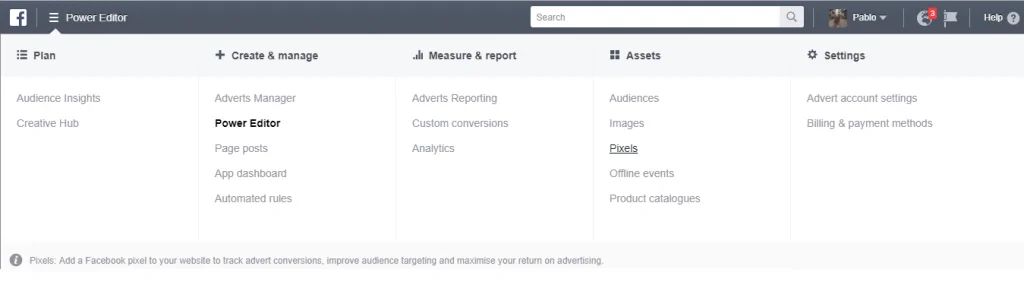
After this step, Meta generates:
- Your pixel or dataset
- A pixel ID
- The base tracking code
Important to know: Right now, the pixel exists inside Meta, but it is not tracking anything yet. It has not been added to your website.
Most ad accounts use one main pixel per verified domain. This keeps reporting cleaner and avoids duplicate data later.
Phase 2: How to Set Up and Use the Meta Pixel
Once the pixel exists, this phase connects it to your site and puts it to work in your campaigns.
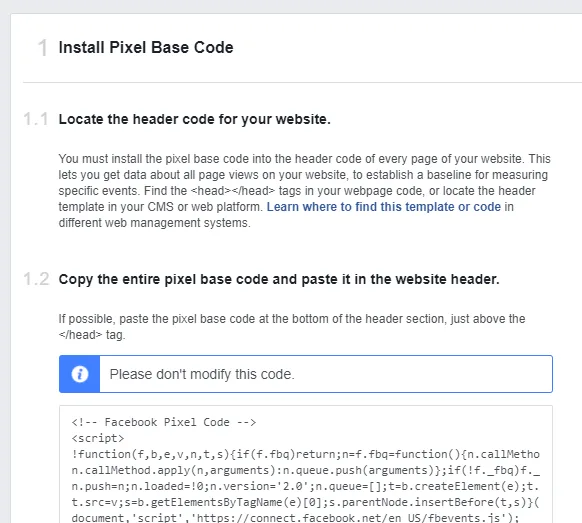
Step 1: Install the Base Code on Your Website
This step allows the pixel to see page loads and basic activity.
Option A: Partner Integrations
Platforms like Shopify, WordPress, WooCommerce, and Wix offer built-in Meta integrations. These usually handle the base code and common events for you through guided setup.
Option B: Manual Installation
If you install it manually:
- Copy the base pixel code from Events Manager.
- Paste it into the global <head> section of your site so it loads on every page.
- Publish your changes.
Verify Installation
After installation:
- Use the Meta Pixel Helper Chrome extension, or
- Open Test Events in Events Manager
Confirm that the pixel fires once per page load.
Step 2: Configure Events
This step tells Meta which actions matter on your site.
You can set up events using:
- Event Setup Tool for point-and-click setup
- Standard event snippets added to specific pages or actions
- Custom events for unique behaviors
For ecommerce and lead generation, track events across the full journey, such as:
- ViewContent
- AddToCart
- InitiateCheckout
- Purchase
- Lead
These events turn basic page visits into meaningful conversion signals.
Step 3: Prioritize Events
Due to iOS and privacy rules, you can prioritize up to eight events per domain.
In Events Manager:
- Open Aggregated Event Measurement.
- Select your verified domain.
- Rank events by importance, such as Purchase first, then Lead.
This helps Meta focus on your most valuable actions when tracking is limited.
Step 4: Build Audiences and Conversions
Create Custom Audiences
In Ads Manager, build audiences using pixel events and URLs.
Example:
- AddToCart in the last 14 days
- Exclude Purchase
This is useful for retargeting and follow-up campaigns.
Create Custom Conversions
Set up custom conversions using:
- Event rules, or
- A specific URL, like a thank-you page
Custom conversions keep reporting consistent even if your site structure changes.
Step 5: Use the Pixel in Campaigns
When creating ads:
- Choose a campaign objective that matches your tracked events.
- Select your pixel and conversion event at the ad set level.
- Apply your Custom or Lookalike Audiences where relevant.
This connects your ad delivery directly to real actions on your site.
Step 6: Monitor and Improve
Inside Events Manager and Ads Manager, regularly review:
- Event volume
- Diagnostics and warnings
- Cost per result
- Conversion trends
Shift budget toward campaigns and audiences that show steady performance over time, and fix any tracking issues as they appear.
What is the Meta Pixel Helper
The Meta Pixel Helper is a Chrome extension that helps you check if your Pixel is working correctly, troubleshoot issues, and improve performance. It runs in the background and detects Meta Pixels on any page you visit.
Once installed, a small </> icon appears in your browser. When a page has a Pixel, the icon turns blue and shows how many Pixels are active. Clicking the icon opens a popup with details about each Pixel and any errors.
How to Use It
- Install the Pixel Helper from the Chrome Web Store.
- Open your website in Chrome and click the Pixel Helper icon.
- Check if the Pixel loads successfully and review any notifications or warnings.
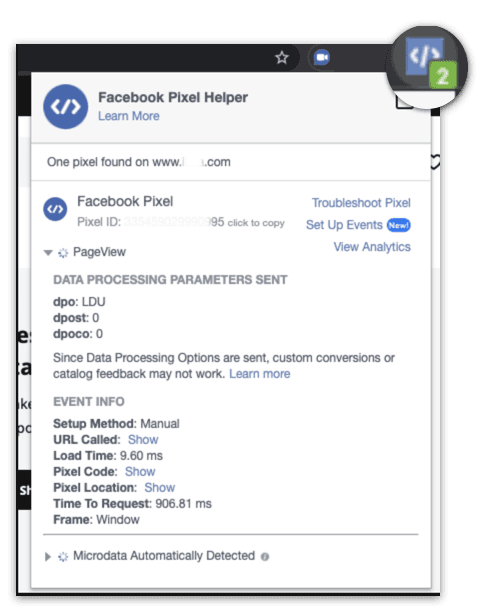
Common Alerts
- Pixel Did Not Load – The Pixel code is on the page, but no call reached Meta.
- Not a Standard Event – The event name doesn’t match Meta’s predefined events.
- Pixel Activated Multiple Times – The same event fired more than once; combine parameters into a single event.
- Invalid Pixel ID – The ID doesn’t match any Pixel in your Meta account.
- Product Catalog Issues – The Pixel isn’t paired with a catalog, or the catalog ID isn’t found.
- Advanced Matching Errors – The data sent for fields like email is missing or formatted incorrectly.
Tips for Smooth Tracking
- Place the Pixel code early in the <head> to avoid slow loading.
- Use only one conversion Pixel per event to prevent duplicate tracking.
- Check for warnings regularly and fix errors to ensure accurate data.
The Pixel Helper is a quick way to confirm your Pixel is active and your events are firing correctly before diving into ads and reporting.
Common Mistakes and How to Fix Them
Even experienced advertisers run into issues with the Meta Pixel. The good news is that most problems are straightforward to solve once you know what to look for.
Duplicate or Incorrect Installation
Installing the pixel more than once or in the wrong place can make Meta count the same action multiple times, which skews your data and misreports conversions.
How to Fix It:
- Pick a single installation method: either a partner integration like Shopify or WordPress, or a manual install in your site’s <head>.
- Verify that the pixel fires once per page using the Meta Pixel Helper Chrome extension or the Test Events tab in Events Manager.
- Remove any old or duplicate pixel scripts that may have been added in previous tests.
Tip: On platforms like WooCommerce, updates or plugins sometimes add another pixel automatically. Double-check after major changes.
Missing Event Parameters
Pixel events are most useful when they include extra details like purchase value, currency, or product IDs. Accurate parameters give Meta a clearer picture of which ads drive real results. Without them, reporting and campaign optimization become limited.
How to Fix It:
- For ecommerce stores, make sure your platform passes dynamic values from each order (e.g., total amount, product IDs).
- If using custom code, include parameters in your events
- Check standard events like Purchase, AddToCart, and Lead to confirm they send all relevant information.
Under-Tracking Important Steps
Tracking only a generic PageView event hides important insights about how people move through your funnel. Even small gaps can cause big discrepancies in reporting, especially on multi-step funnels.
How to Fix It:
- Map your full conversion funnel, from landing page to final purchase or signup.
- Add events at each meaningful step, such as:
- ViewContent – someone visits a product or service page
- AddToCart – they show intent to buy
- InitiateCheckout – they start the checkout process
- Purchase – they complete the transaction
- Regularly test these events with Test Events to ensure they fire correctly after website updates.
Skipping Event Prioritization
iOS privacy rules limit tracking, so Meta needs to know which events matter most. If you skip prioritizing, conversions for your most valuable actions may not report correctly.
How to Fix It:
- Open Aggregated Event Measurement in Events Manager.
- Select your verified domain.
- Rank up to eight events by importance, such as Purchase, Lead, CompleteRegistration, then secondary actions.
Prioritization helps Meta focus on the outcomes that matter most, even when tracking is limited.
Not Using Conversions API
Relying only on the Meta Pixel in the browser can cause missing data. Some actions might not be tracked if visitors use ad blockers, decline cookies, or if browsers block tracking scripts. This means your ad results may look lower than they actually are.
How to Fix It:
Use the Conversions API (CAPI) to send event data directly from your server to Meta. This adds a second, more reliable layer of tracking.
You can set it up in a few ways:
- Partner integrations: Platforms like Shopify, WooCommerce, and Wix have built-in CAPI connections.
- Gateways or tools: Use a third-party service to connect your server to Meta.
- Manual server setup: Developers can send events from your server using code.
Deduplicate events: When both the pixel and CAPI send the same action, match the event_id so Meta counts it only once. This keeps your reporting accurate.
Why the Meta Pixel Matters
The Meta Pixel shows what people do on your website, helps you reach the right audiences, and improves ad performance. Tracking events, building audiences, and using the Conversions API keeps your data accurate and reliable, even with privacy limits and ad blockers.
With Metricool, you can track and analyze all your social media accounts in one place. See how campaigns perform, monitor engagement, and measure results on Facebook, Instagram, Twitter, LinkedIn, TikTok, and more. Using Meta Pixel data alongside Metricool gives you a complete view of your audience, your content, and what drives results, helping you make informed decisions for every post and campaign.
