

LinkedIn Copywriting Guide: How to Stand Out and Convert in 2026
 Kata
15 May 2026
Kata
15 May 2026 
Personal voices are winning the visibility race on LinkedIn in 2026. According to Metricool’s 2026 LinkedIn study, which analyzed over 673,000 posts across 63,000 accounts, Personal Profiles now outperform Company Pages. That’s great news for anyone building – or considering building – a personal brand on the platform. If you know how to use your own unique voice, LinkedIn copywriting is one of the most powerful B2B conversion tools out there.
Formal writing and AI-generated content are both losing momentum on LinkedIn, so focus on the type that feels original. This will attract the right people, build trust, and move them toward working with you, without feeling like a sales pitch.
Here’s how to apply LinkedIn copywriting across every section of your profile.
What Is LinkedIn Copywriting and Why Does It Work for B2B?
Copywriting is persuasive writing designed to make the reader take an action – visit your website, request your portfolio, book a meeting, or simply follow you and stay in your orbit.
On LinkedIn, that action rarely happens in one step. Unlike a sales landing page, LinkedIn works on proximity and trust. You show up consistently, you say something useful or real, and over time you attract the right people who want to work with you. Much like SEO, this is a long-term strategy that won’t miraculously bring you new clients overnight.
The good news is that LinkedIn copywriting applies to almost every part of your presence on the platform: your profile, your posts, and your direct messages. Let’s break each one down.
1. LinkedIn Copywriting for Your Profile
Your profile is your digital first impression. Most people set it up once and forget it. The ones who treat it as a piece of copy that is intentional and built to convert are the ones who get found and remembered.
Your banner
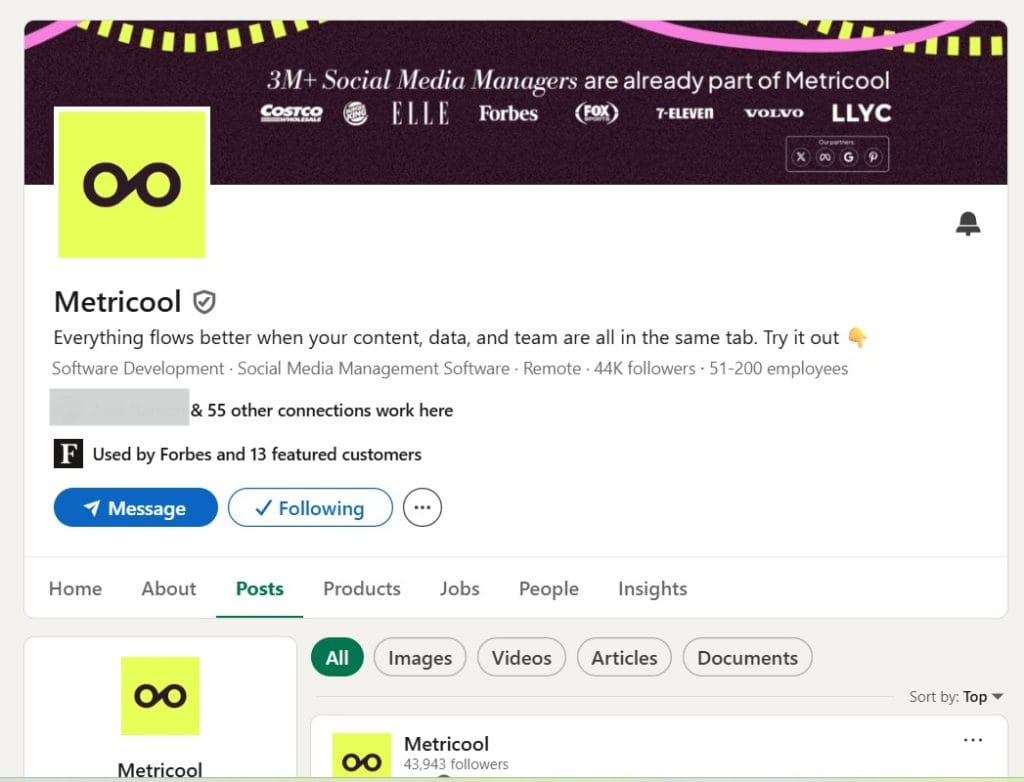
After your profile photo, your banner is the first thing that catches your visitors’ eyes. Many people leave it blank or use a generic template. That’s a lost opportunity right there.
Use it to include a short, clear message that tells visitors exactly what you do and who you do it for. Touch a pain point, state a clear outcome, or make a bold claim your audience will recognize as true. One sentence is enough; the goal is to make them keep reading.
Your headline
our headline is not your job title. Your job title tells people where you work. Your headline should tell them why that matters to them.
Instead of: “Marketing Manager at Balloons Ltd.” Try: “Helping B2B SaaS companies turn content into pipeline | Content Strategy & LinkedIn”
A strong headline also works as SEO. LinkedIn functions like a search engine — the keywords in your headline determine whether you show up when someone searches for what you do. Use the terms your ideal clients actually search for, not internal job titles that only mean something inside your own company.
Your About section
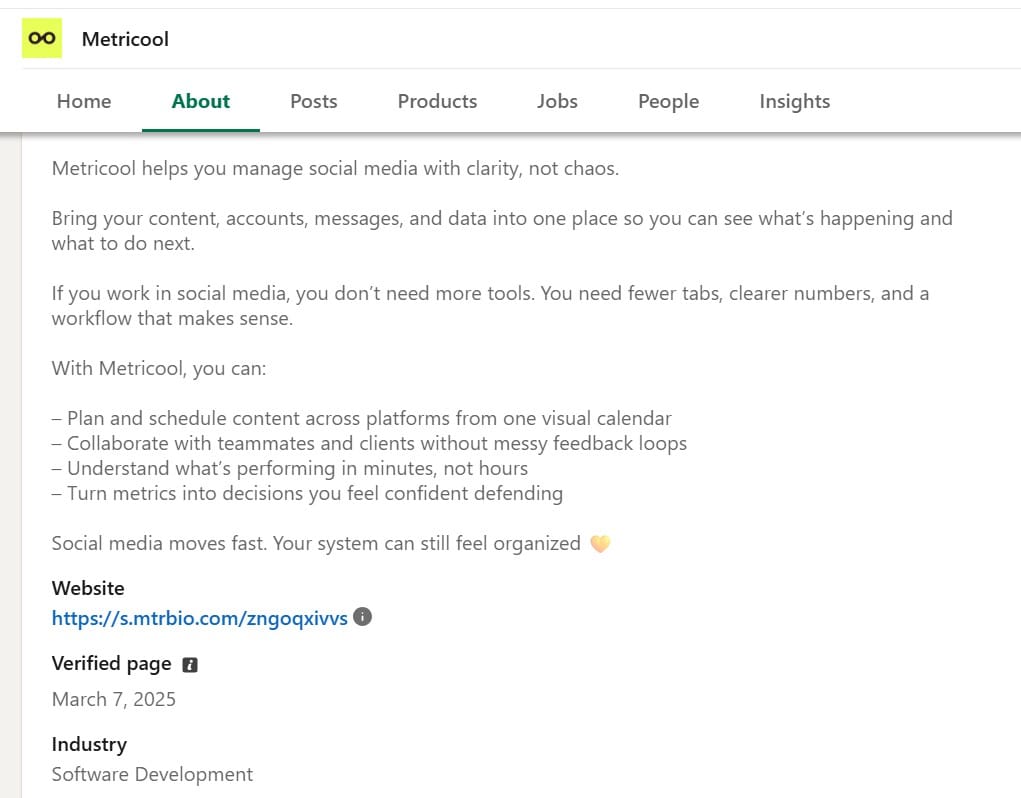
This is your 2,000-character pitch, so don’t fall into the trap of listing your CV again or defaulting to vague corporate jargon.
Here’s the structure that works:
- Open with a question that names your prospect’s problem, pain, or goal
- Introduce the solution briefly, without overselling
- Tell your story: who you are, what you’ve done, why you’re the right person
- Explain specifically how you help clients, with enough detail to be credible
- End with a clear call to action: connect, follow, message, download, etc.
Write in the first person and just like you speak. And don’t try to sell directly – on LinkedIn, the goal of your About section is to make the right person curious enough to reach out.
Your experience section
Don’t describe what you were responsible for. Describe what changed because you were there.
“Responsible for social media management” tells a recruiter or prospect nothing. “Grew organic LinkedIn reach by 180% in 8 months through a weekly thought leadership series” tells them just the right insight about your skills.
Results-first writing in your experience section builds credibility before anyone has spoken to you. Recruiters and buyers scan dozens of profiles; the ones with specific, measurable outcomes are the ones that stop the scroll.
Recommendations
Recommendations are social proof that you can’t write yourself, which is exactly what makes them so valuable. Before asking for one, make it easy: give your contact a brief, a specific project to reference, or a couple of skills you’d like them to focus on. A guided recommendation is almost always better than an open-ended one.
2. LinkedIn Copywriting for Your Posts
A great profile gets people to your page. Great posts keep you in front of your audience between visits and in 2026, posts are where LinkedIn copywriting really compounds.
A few things the data makes clear before we get into tactics.
Personal Profiles get 238% more comments per post than Company Pages. People talk to people, not brands. If you’re writing as an individual, lean into that – your personal perspective and story are assets, not liabilities.
Half of a post’s lifetime impressions happen in the first 48 hours. That means timing matters, but it also means your opening line matters more than anything else. If you don’t hook the reader in the first sentence, the algorithm never gets a chance to do the rest.
Want to learn more about the trends that shape LinkedIn in 2026?
Write hooks that earn the scroll
The first line of a LinkedIn post is what shows before the “see more” cut. Everything rides on it. The best hooks do one of three things:
- name a problem your audience has
- make a counterintuitive claim
- or open a loop the reader needs to close.
Weak hook: “I’ve been thinking a lot about content strategy lately.” Strong hook: “Most B2B LinkedIn posts get ignored and it’s not because the content is bad…”
Ask questions
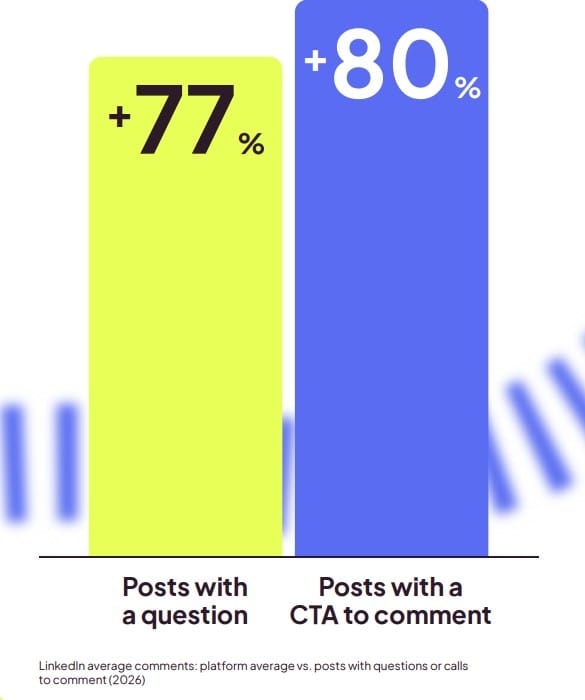
Posts that include a question get 77% more comments than posts that don’t. Posts with an explicit call to comment get 80% more. If you want your posts to generate conversation, you have to invite it. End your post with a real question – not a rhetorical one, but one you’d really want people to answer.
Use formats that perform
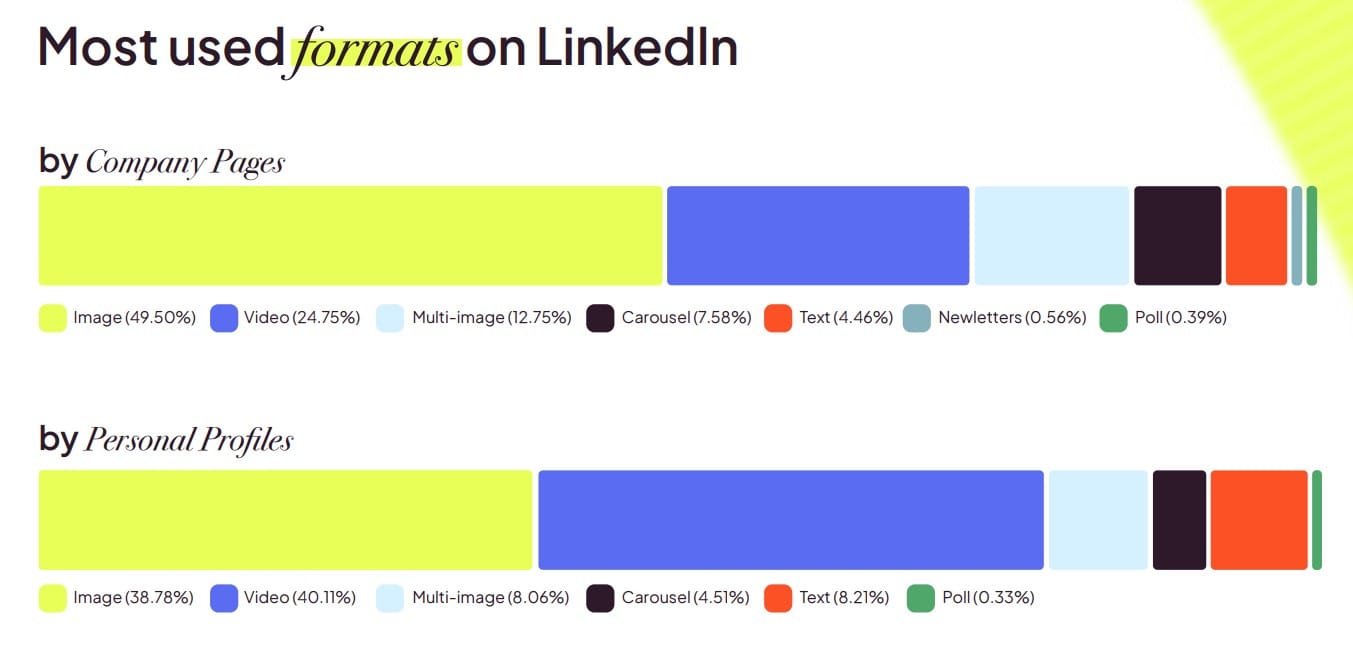
Images and video account for nearly 75% of all posts on LinkedIn, yet carousels and multi-image posts consistently outperform them on interactions, engagement, and reach. Carousels get 11x more interactions than single images. The gap between what people post and what actually works has never been wider.
Text posts on Personal Profiles get 2.86x more impressions than on Company Pages, which means if you’re building a personal brand, a well-written text post with no image can outperform a polished visual from a company account.
A practical format mix for B2B LinkedIn copywriting:
- Text posts for opinions, stories, and lessons: hook, insight, question
- Carousels for frameworks, step-by-step guides, and case studies
- Polls when you want to surface your audience’s challenges and spark discussion
- Multi-image for behind-the-scenes content and process walkthroughs
On links and hashtags
Links on Company Pages actually boost performance – posts with links get around 50% more impressions. On Personal Profiles, the effect reverses and both impressions and interactions drop. If you’re posting from your personal account, either leave the link in the comments or make the post itself strong enough to justify the click.
For hashtags: posts with at least one hashtag get 85% more impressions on average. Keep it between 1 and 5, and choose hashtags that are truly relevant.
3. LinkedIn Copywriting for Connection and Prospecting Messages
The best profile and the most consistent content won’t close a deal on their own. At some point, you need to reach out and how you write that message determines whether the conversation takes off.
The rule here is simple: write like a human.
Connection request messages should be short, specific, and more about them, than about you. Reference something real: a post they wrote, a mutual connection, a problem their industry is facing. Give them a reason to accept that isn’t just “I’d like to add you to my network.”
Follow-up messages after connecting should do the same. Don’t open with a pitch. Open with something useful, like a relevant article, a question about their work, a real observation. The goal of the first message is a reply, not a sale.
The best B2B LinkedIn copywriting in DMs sounds exactly like how you’d open a conversation at a professional event: direct, warm, and about them first.
Put It Into Practice With Metricool
Writing great LinkedIn copy is one thing. Knowing what’s working and showing up consistently enough to build momentum, is another. That’s where Metricool comes in.
With Metricool, you can plan and schedule your LinkedIn posts in advance. Write your hooks on Monday, schedule for peak times, and let the posts do the work while you focus on everything else.
Once your content is live, Metricool’s analytics show you exactly what resonated, which formats drove the most engagement, which topics sparked comments, which posts drove clicks. Over time, that data becomes a feedback loop: you stop guessing and start writing more of what you already know works.
If you manage LinkedIn for multiple brands or clients, you can track all of them from one dashboard, compare performance side by side, and build reports that are ready to share.
LinkedIn copywriting strategy is only as strong as your ability to act on it consistently. Metricool handles the operational layer so you can stay focused on the writing.
The Through-Line: Write for One Person
Whether you’re optimizing your About section, drafting a post, or writing a connection message, the most important LinkedIn copywriting principle is this: write for one specific person, not for a generic audience.
The more precisely you can name the person you’re writing for (their role, their challenge, what they’re trying to achieve), the more your copy will feel like it was written just for them. And on a platform where personal voice now outperforms brand voice by 63% in engagement, that feeling is the whole game.
