

Instagram Hashtag Tracker: Measure What Your Hashtags Are Doing
 Gretchen Oestreicher
19 August 2026
Gretchen Oestreicher
19 August 2026 
Hashtags still matter on Instagram, but the rules around them keep shifting. Instagram capped them at five per post in late 2025, removed the option to follow hashtags the year before, and Adam Mosseri has said more than once that hashtags don’t push reach. The more useful question now is what your hashtags are actually doing for your posts, and that’s what an Instagram hashtag tracker helps you see.
With the Metricool Hashtag Tracker, you can check how your hashtags perform on Instagram, pull insights tied to your own account, and let that data shape what you do next.
What an Instagram Hashtag Tracker Tells You
A hashtag tracker pulls together everything happening around a tag, so you can see whether it’s earning its place in your posts. With Metricool, that means data on:
- Reach: How many people saw posts using a specific hashtag, which tells you whether a tag is helping you get in front of new people.
- Usage: How often a hashtag gets used, so you can tell how active it is and whether it’s worth joining.
- Conversations Generated: The comments and back-and-forth a hashtag sparks, useful for community-building tags.
- Origin: Where people are using a hashtag, by location and audience, so you can shape content for the groups most engaged with your brand.
- Active Users: The accounts using a hashtag most, a shortcut to finding the people already in the conversation you want to join.
- Influence: The reach and engagement a hashtag generates, so you can spot the ones worth doubling down on.
You don’t need to track all of this at once. Track what helps you make a decision: keep the tag, swap it, or build a campaign around it.
What Changed for Instagram Hashtags in 2026
Instagram is the platform where hashtags have changed the most, and the one where people still wonder if they should use them at all. A few recent changes explain why:
- The five-hashtag cap arrived in late 2025.
- The option to follow a hashtag was removed in December 2024.
- Adam Mosseri has said more than once that hashtags don’t push reach.
The counterintuitive part is that posts with hashtags now tend to get less reach than posts without them. Metricool’s 2026 Instagram Study found that posts using at least one hashtag saw 31% fewer views and about a third fewer interactions than posts that skipped them. That’s a wide gap, so read it with care: it looks more like a correlation than a proven cause, since accounts that lean hard on hashtags may just be less active in the other ways the algorithm rewards. Either way, the direction matches what Instagram has been signaling for a while, so it’s worth leaning toward fewer tags rather than more.
Hashtags aren’t dead, but their role has changed. They work more like a filing system now, sorting your post into a category, while the words in your caption do most of the discovery work. Instagram indexes captions through keyword search, and since July 2025 public posts also show up in Google and Bing. The keywords you used to stuff into hashtags belong in the caption now, where they keep working for you on and off the platform.
In practice:
- Use Fewer Hashtags: One or two is the safe play on Instagram now. You can go up to five, but more rarely helps, and generic tags are more likely to bury a post than lift it.
- Write Search-Friendly Captions: Natural language with keywords tied to your topic or business does the discovery work hashtags used to.
- Track What Sticks: Instagram analytics in Metricool show you views, likes, comments, and post counts per hashtag for your own account, so you can find the tags that are actually helping.
Less time spent on hashtag stuffing means more time for the content itself, which is what carries the post anyway.
Types of Hashtags Worth Tracking
Not every hashtag does the same job, and the ones worth tracking depend on what you want to find out. There are four types to know.
Broad Hashtags
The high-volume ones tied to wide topics, like #fitness, #marketing, or #photography. They have reach, but they also have noise. Tracking a broad hashtag helps you spot trends in your category, though they don’t usually deliver much engagement on their own. Treat them as research input rather than a posting tactic.
Niche Hashtags
Smaller, more specific tags like #yogateachers, #b2bsaas, or #freelancersofparis. They reach fewer people, but the people they reach are more likely to care. Tracking niche hashtags shows you which sub-conversations match your audience, and which ones already have an active community you can join.
Branded Hashtags
The ones tied to your business, your campaign, or your community, like #ShareACoke or your own #YourBrandName. They group everything connected to you in one place, which makes them the easiest hashtags to measure. Tracking yours tells you who’s using it, what they’re saying, and whether your community is showing up.
Event Hashtags
Tags built around a specific moment: a conference, a launch, a webinar, a product drop. They have a short shelf life, but they’re useful while they’re live. Tracking an event hashtag during the day gives you:
- Live Updates From Attendees: A running feed of what people are saying as the event happens, which you can save, share, and react to.
- A Pool of UGC: Photos, videos, and posts gathered under one tag, ready to reshare during the event or repurpose later.
- Engagement Data for Sponsors: Reach and participation numbers that make it easier to bring sponsors back next year, or sell the slot for the first time.
- A Longer Tail: The conversation can keep going for days after the event ends, so the hashtag keeps working past the closing keynote.
If you’re planning an event hashtag, keep it short (around 15 to 20 characters), make it easy to spell, check that nobody else is already using it, and put it everywhere people will see it: the registration page, the speaker slides, the printed signage.
How to Use the Metricool Hashtag Tracker
The Metricool Hashtag Tracker works for both Instagram and X (Twitter), though this guide focuses on Instagram. It runs on a pay-per-use model, separate from the subscription plans, so you can use it for a single campaign without committing to anything extra.
Step 1: Open the Hashtag Tracker
Log into your Metricool account, free or paid. Go to Reporting > Hashtag Tracker in the top menu. You’ll see your dashboard, where you can start a new session, buy credits, and review your saved hashtags.
Step 2: Buy Credits
The tool runs on credits. One day of balance covers a single hashtag for 24 hours, up to 10,000 posts. Pricing is €25 per day, and for every 4 days of credit you buy, you get 1 extra day free.
Step 3: Connect Your Instagram Account
Your Instagram account needs to be connected to Metricool before you can track. Connect it in the Settings section. If it isn’t connected, the tracking button stays greyed out until it is.
Step 4: Set Up a Session
From the dashboard:
- Add the Hashtag: One hashtag per session, entered with the pound symbol (#).
- Set Start Date and Duration: Choose when to start and how many days to monitor, from your available balance.
- Confirm: Create the session.
A few things to know about how Instagram tracking works:
- It Starts From Day One: Tracking runs from the day you set up the session onward. There’s no historical data on Instagram.
- Posts and Reels Only: The tracker picks up hashtags used in feed posts and Reels, not Stories.
- Data Refreshes Every 8 Hours: It updates on its own, and you can refresh it manually up to 3 times a day for a more recent snapshot.
If you change your mind, you can cancel for a refund as long as the session hasn’t started yet.
Your Hashtag Analytics Dashboard
This is where everything you’ve tracked lives. You can come back to any saved session whenever you want, and download monitoring demos from the Saved Hashtags section if you want to see the reports before you buy credits.
For any hashtag you track, you’ll see:
- Post Types: A breakdown of pictures, carousels, and videos using the tag.
- Activity: Total interactions, likes, comments, and posts.
- Top 100 Posts: The most engaging content tied to the hashtag.
- Related Hashtags: Other tags showing up alongside yours, a way to find combinations worth testing.
For your own account, the Instagram Analytics tab adds:
- Views: How many times your posts with the hashtag were seen. Instagram replaced impressions with views in April 2025.
- Posts: How many you’ve published with each hashtag.
- Likes and Comments: Engagement per hashtag, so you can see which tags pull their weight.
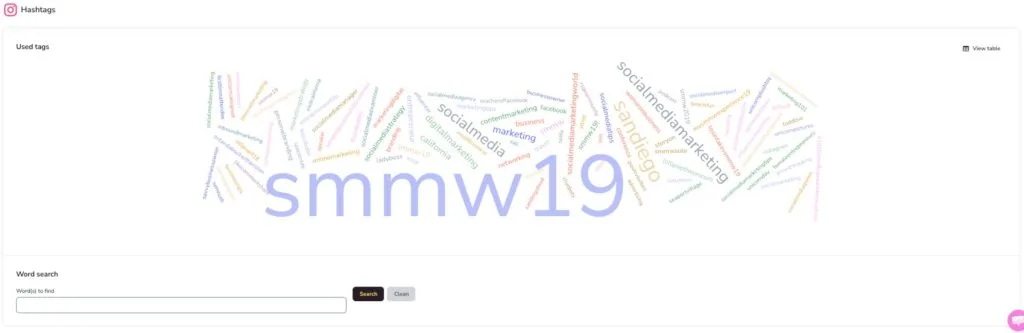
This is where your Instagram hashtag analytics live, tied to your own account rather than the wider conversation.
The Metricool Hashtag Generator
If you’re not sure which hashtags to use in the first place, Metricool has a generator for Instagram and TikTok that suggests popular and relevant tags based on a keyword. To find it:
- Open Your Dashboard: Log in and go to Planning.
- Create a Post: Click “+ Create post” or pick a slot from the calendar.
- Upload Your Content: Image or video, plus a caption.
- Click the # Button: Pick Instagram, type a keyword, and choose from the suggestions.
From there you can schedule, publish, save as a draft, or send for review.
Best Practices for Instagram Hashtags in 2026
How you use hashtags has changed, and a few habits are worth keeping.
Do’s
- Use Relevant Hashtags: Tags tied to your content reach people who care about the topic. Anything else waters the post down.
- Keep the Number Low: One or two relevant hashtags is the safe play. Instagram allows up to five, so you can pair a broader tag with a niche one.
- Write Keyword-Rich Captions: Instagram indexes captions through search, and public posts now show up in Google and Bing too. Natural keywords help people find you on and off the platform.
- Build Branded Hashtags: Tags for your brand or campaigns give your community a place to gather and a way to find each other.
- Track What Works: A hashtag analytics tool lets your next choices come from data instead of guesswork.
- Capitalize Multi-Word Hashtags: #FlashbackFriday reads more clearly than #flashbackfriday, and screen readers handle it better too.
- Use Trending Hashtags When They Fit: If a relevant tag is trending, add something to the conversation. If it doesn’t fit, skip it.
- Watch What Your Niche Is Doing: The hashtags strong accounts in your space use can give you ideas worth testing.
Don’ts
- Skip Irrelevant Tags: Tags that don’t match your post confuse people and pull engagement down.
- Don’t Overload Your Posts: Too many tags reads as spammy, and the Instagram cap means stacking them isn’t possible anymore.
- Stay Away From Banned Hashtags: Some tags are blocked on Instagram, and using them can get your posts hidden.
Track Your Hashtags With Metricool
Hashtags aren’t the reach engine they used to be, but they’re still useful for organizing conversations, building community, and joining bigger moments when they fit. The ones worth keeping are the ones you can measure.
The Metricool Hashtag Tracker gives you that view on Instagram, with hashtag analytics that show what’s working and what isn’t. Use it on a free or paid plan, pay only for the days you need, and start tracking your next campaign whenever you’re ready.
Turn Hashtag Numbers Into Decisions
Views, likes, and comments per tag, laid out so you can tell which hashtags to keep and which to drop.
