

How To Deal With Stress At Work As A Social Media Professional
 Gretchen Oestreicher
01 April 2026
Gretchen Oestreicher
01 April 2026 
Working in social media often looks exciting from the outside: creative campaigns, trending content, and the satisfaction of seeing posts perform well. Behind the screens, though, it can be a very different story. Tight deadlines, constant notifications, multiple platforms, and the pressure to perform in real time can make even small tasks feel overwhelming. Stress in this field is not a sign that you’re failing. It’s a normal response to the unique demands of the job.
This guide walks through where that pressure comes from, how it shows up in your day-to-day work, and practical steps you can take to regain control, protect your energy, and make your social media workload feel more manageable.
Stress Isn’t The Exception. It’s The Job
From the outside, social media looks creative and flexible. From the inside, it often means tight deadlines, last-minute edits, and performance numbers that keep moving.
Metricool’s Social Media Well-Being Report 2026 found that:
- 54% of professionals describe their work as stressful or very stressful
- 69% experience mental fatigue
- 73% report a drop in motivation or creativity
- 44% struggle to disconnect after working hours
- 73% work overtime regularly or sometimes
Many social media professionals have considered leaving the industry because of stress or burnout.
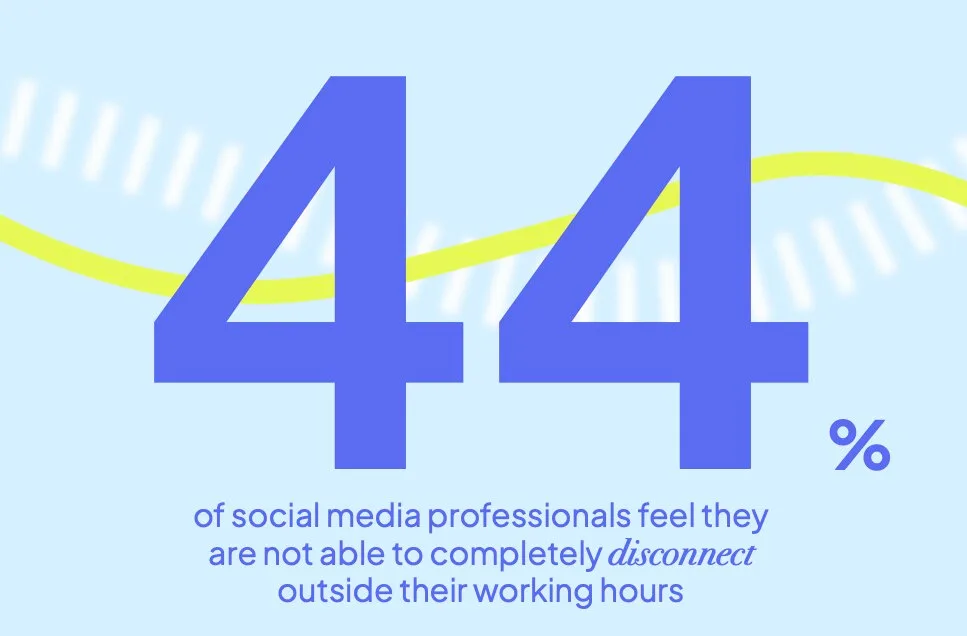
These numbers highlight something important: feeling pressure in this role is very common. Social media work combines creative output with real-time feedback, public visibility, and ongoing communication. It asks you to think strategically while also reacting quickly. That combination can be rewarding, but it can also be draining without the right structure in place.
This is not about being “good” or “bad” at handling pressure. It is about working in an environment where expectations change quickly and the work is always visible. The more clearly you understand where stress comes from, the easier it becomes to adjust how you approach your workload.
Where Social Media Stress Really Comes From
Before trying to fix the feeling of stress, it helps to understand what is actually creating it. Social media roles come with specific pressures that do not always exist in other types of work.
Constant Performance Pressure
In many roles, performance is reviewed occasionally. In social media, performance is visible almost immediately.
Each post, Story, Reel, or campaign is tied to numbers. Reach, engagement, clicks, saves, watch time. These metrics can change within minutes of publishing, and they are often used to evaluate the success of your work.
What this often looks like:
- Checking metrics throughout the day
- Feeling pressure to prove results consistently
- Stress when performance dips or algorithms shift
When results are constantly updating, it can feel like your work is always being evaluated in real time. Even strong performance can create pressure to repeat results again and again. Over time, this can make it difficult to feel finished with a task, because the feedback loop never fully stops.
Too Many Roles At Once
Most social media professionals are not doing one job. They are doing several at the same time.
You might be handling:
- Strategy and planning
- Content creation and copywriting
- Video editing and design
- Analytics and reporting
- Community management and DMs
- Client or stakeholder communication
- Trend tracking and sometimes crisis management
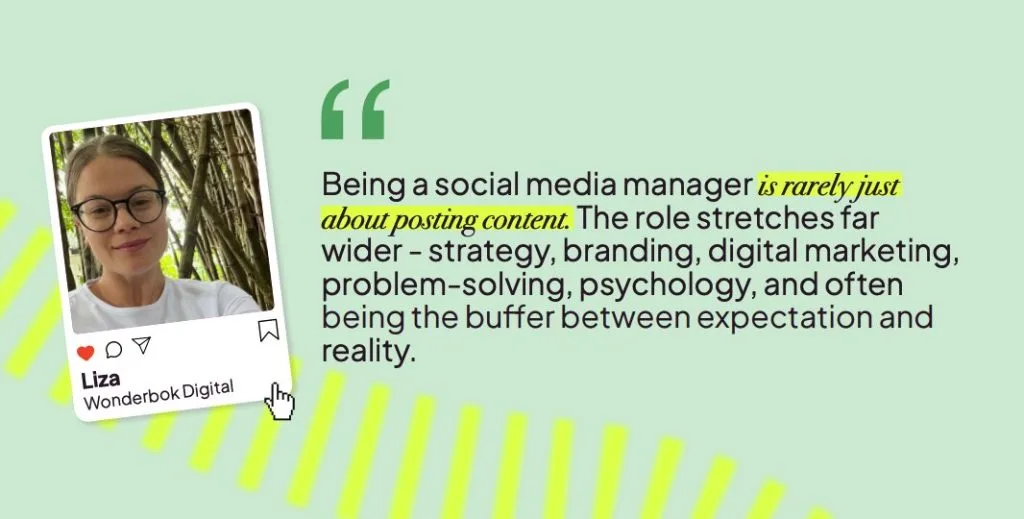
This kind of work requires both deep focus and quick reactions. Switching between creative tasks, technical tasks, and communication tasks uses a lot of mental energy. Even when each task is manageable on its own, the constant transitions can leave you feeling mentally tired by the end of the day.
This often happens across multiple brands or accounts at once. Each brand has its own tone, audience, and goals, which adds another layer of complexity.
The “Always On” Expectation
Social media does not pause at the end of the workday. Posts continue to receive comments, messages can arrive at any time, and trends can appear quickly.
Because of this, many professionals feel a subtle pressure to stay connected outside working hours.
Common situations include:
- Messages outside working hours
- Last-minute edits late in the day
- Campaigns or launches that stretch into evenings or weekends
Even when no one explicitly asks you to be available 24/7, the structure of social platforms can make it feel that way. Over time, this can blur the boundary between work time and personal time.
When it becomes difficult to fully disconnect, mental fatigue builds faster and creative energy becomes harder to maintain.
Creative Pressure On Demand
Creativity works best with space, time, and variety. Social media often asks for creativity on a tight schedule.
Many professionals are expected to produce content regularly across multiple formats, including short-form video, carousels, Stories, graphics, and written posts.
This can create pressure to:
- Always have a new idea ready
- Adapt quickly to new formats or trends
- Create content even when energy is low
- Balance originality with consistency
When content cycles move quickly, ideas may feel disposable, even when they require significant effort to produce. Over time, this can make creative work feel repetitive instead of rewarding.
It is very common for motivation and idea generation to fluctuate when creative output is tied closely to deadlines and performance metrics.
Managing Stress Based On How You Work
Your setup changes how stress shows up. Here is how to handle it depending on your environment.
Whether you work remotely, in an office, or a mix of both, the common thread is clarity. When your time, tasks, and expectations are visible, your workday feels more predictable and less reactive. Small adjustments to how you structure your day can reduce mental fatigue and make your workload feel more manageable over time.
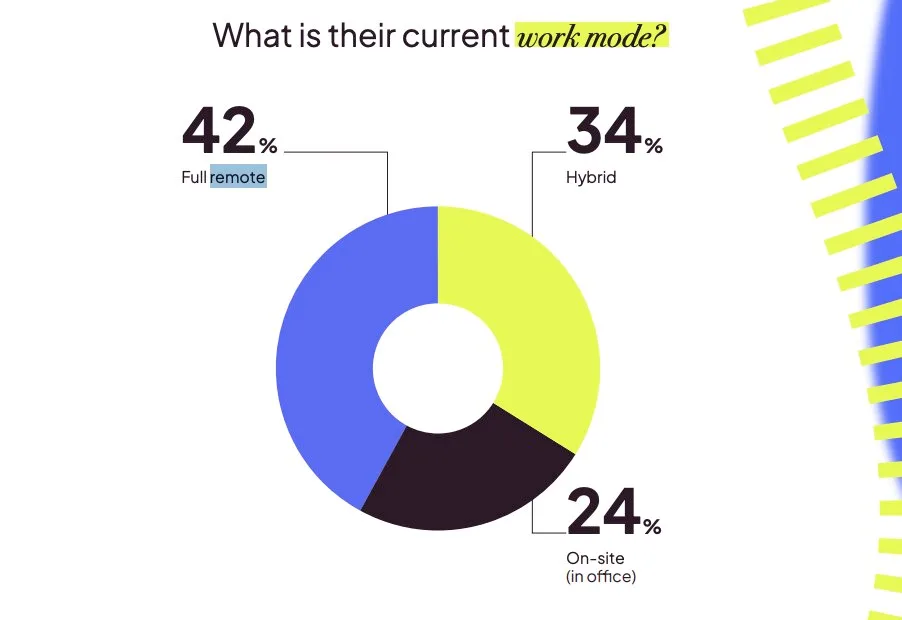
If You Work Remotely: When Work Is Always Within Reach
Working from home or working remote can make social media roles more flexible, but it can also make it harder to switch off. When your workspace is also your living space, the line between personal time and work time can start to disappear.
Many social media professionals who work remote notice:
- Work notifications appearing throughout the evening
- Checking comments or analytics from the sofa or bed
- Extending the workday without realizing it
- Feeling like you should always be reachable
Without clear boundaries, it becomes easy for the workday to slowly expand. A quick check after dinner can turn into replying to comments, reviewing performance, or making last-minute edits until late into the night.
These boundaries might include:
- Create A Defined Work Zone: Choose a consistent place where work happens, even if it is just one end of a table. Over time, your brain starts to associate that space with focus and productivity. When you step away from that spot, it becomes easier to mentally step away from work too.
- Set Clear Start And End Times: Decide roughly when your workday begins and ends, and stick to it. Logging in and out at consistent times helps prevent work from slowly filling the gaps in your day. Even a simple routine, like closing your laptop or writing tomorrow’s task list, can signal that work is finished.
- Turn Off Notifications After Hours: Social media apps are designed to pull your attention back in. Silencing notifications outside working hours helps create distance from constant updates. When your phone is not lighting up with every comment or message, it becomes easier to relax without feeling like you are missing something important.
- Schedule Check-Ins Instead Of Constant Monitoring: Choose specific moments during the day to review notifications, comments, and performance. For example, one check in the morning, one after posting, and one before logging off. This keeps you informed while reducing the urge to constantly refresh analytics or inboxes.
If You Work In An Office: When Everything Feels Urgent
Office and hybrid environments often come with more visible pressure. When people can reach you quickly, requests can feel immediate, even when they are not truly urgent.
Common situations include:
- Colleagues stopping your desk by with last-minute edits
- Requests labeled as quick that take longer than expected
- Feeling pressure to respond immediately to messages
- Switching between meetings, reporting, and content creation
This constant context switching can make it harder to get into a focused creative flow. Even short interruptions can make tasks take longer than planned.
To avoid this mental switching, try to:
- Block Focus Time In Your Calendar: Set aside time for content creation, planning, or reporting and mark it as busy. Protecting even one or two uninterrupted blocks per day makes it easier to concentrate and finish tasks without rushing.
- Group Similar Tasks Together: Batching similar tasks helps your brain stay in one mode for longer. Writing captions in one block, reviewing analytics in another, and answering messages at set times reduces the mental effort of switching between different types of work.
- Set Clear Expectations Around Timing: When requests come in, provide a realistic timeline instead of responding immediately by default. For example, letting a colleague know you can review something later that afternoon creates clarity while protecting the time you already planned.
- Document Your Workload: Keep a simple overview of your accounts, deliverables, and recurring tasks. This can be a spreadsheet, project board, or shared document. Having a visible workload makes conversations about priorities easier and helps prevent everything from feeling equally urgent.
Practical Ways To Handle Stress During The Workday
These are changes you can apply immediately while you work.
1. Reduce Constant Task Switching
Switching between writing captions, replying to comments, checking analytics, creating reports and editing videos might feel productive, but it drains mental energy quickly. Every time you change task types or switch tabs, your brain needs a moment to adjust. Over a full day, those small shifts add up.
Instead of trying to handle everything at once, group similar tasks together so you can stay in the same mindset for longer.
- Create A Content Block: Set aside a dedicated window for writing captions, scripting videos, designing visuals, or outlining posts. Staying in creative mode for a longer stretch often leads to stronger ideas and faster execution because you are not constantly interrupting your flow.
- Create An Engagement Block: Respond to comments, messages, and mentions during one or two planned sessions. This helps you stay present with your audience without feeling like you need to monitor notifications all day. It also makes engagement feel more intentional instead of reactive.
- Create An Analytics Block: Review performance metrics in one focused session rather than checking numbers throughout the day. Keeping insights in one place makes it easier to notice patterns and reduces the pressure that comes from watching metrics change in real time.
And remember to block this off in your calendar, this way you’re less likely to be interrupted by meetings or “quick chats” from colleagues, managers, or clients. Over time, this structure makes your workload feel more manageable because each task has a clear place in your day.
2. Limit How Often You Check Performance
Social media metrics are visible at all times, which makes it tempting to refresh analytics frequently. While data is useful, constant checking can create unnecessary pressure and distract you from the work that actually improves results.
Creating simple boundaries around when you review performance helps you stay informed without feeling tied to real-time numbers.
- Set 1–3 Check Times Per Day Or Post: Choose specific moments to review performance, such as shortly after publishing and once more at the end of the day. This keeps you aware of how content is performing right after publishing while reducing the habit of refreshing analytics every few minutes.
- Schedule A Weekly Or Monthly Review: Looking at trends over time provides more useful insights than focusing on individual posts. A weekly or monthly review gives you a clearer view of what resonates with your audience, which makes it easier to adjust your strategy calmly and confidently.
When performance reviews are structured, metrics become a helpful guide instead of a constant source of pressure.
3. Build Buffer Time Into Your Schedule
Social media rarely goes exactly as planned. Trends appear unexpectedly, edits come in late, and new requests can shift priorities quickly. Without extra space in your schedule, even small changes can make the day feel overwhelming.
Adding flexibility helps your workload stay realistic.
- Leave Open Space In Your Week: Avoid filling every hour with scheduled tasks. Keeping small gaps in your calendar gives you room to respond to changes without needing to push everything else back. Even one or two flexible blocks per week can make deadlines feel less stressful.
- Use That Space For Flexible Tasks: Open time can be used for testing trends, adjusting posts, or creating extra content when inspiration strikes. This makes it easier to adapt without feeling like your schedule is already full.
Buffer time creates breathing room so unexpected tasks feel manageable rather than disruptive.
4. Separate Creative Work From Reactive Work
Creative tasks and reactive tasks require different types of energy. Trying to do both at the same time can make everything feel slower and more tiring.
Separating these tasks helps you protect the mental space needed for focused work.
- Do Creative Work During High-Energy Hours: Many people find that their focus is strongest earlier in the day. Using that time for writing, designing, or brainstorming often leads to better ideas in less time because your attention is not divided.
- Handle Reactive Tasks In Short Sessions: Comments, messages, and quick edits can be grouped into shorter blocks later in the day. Keeping these tasks contained prevents them from interrupting deeper work and helps you stay responsive without feeling constantly distracted.
When creative energy is protected, your workload often feels lighter even if the number of tasks stays the same.
Building Workflows That Reduce Stress Long Term
Daily adjustments can make your workday smoother, but long-term structure is what truly reduces pressure. When your workflow is clear and repeatable, you spend less time deciding what to do next and more time actually doing the work.
1. Plan Content In Advance
Planning ahead does not mean filling every slot weeks in advance. It simply means starting the week with direction instead of starting from zero every day.
Outline upcoming posts by platform, topic, or campaign. Even a simple plan helps you begin each day knowing what needs to be created. This reduces decision fatigue and helps prevent last-minute stress.
With Metricool, you can see all planned content in one calendar view, which makes it easier to spot gaps and keep your schedule balanced across platforms.
2. Create Repeatable Content Systems
Not every post needs to start from scratch. Repeating formats that already work can save time while maintaining consistency for your audience.
- Choose 2–4 Recurring Formats: Recurring content formats create a rhythm for your schedule. For example, a weekly tip series, a recurring Q&A, or a monthly performance recap gives you a reliable starting point each time you plan content.
- Build Simple Templates: Templates for captions, visuals, or video structures reduce the effort required to create new posts. Instead of designing from zero each time, you adjust an existing structure to fit the topic.
- Use Content Themes: Content themes (such as content pillars or content buckets) create a loose structure for your ideas. For example, one day might focus on tips, another on behind-the-scenes content, and another on testimonials or product highlights. Themes reduce the pressure to constantly invent new ideas because you already have a starting point.
Metricool’s analytics help you identify which formats perform consistently, so you can focus your energy on content that already resonates with your audience.
3. Standardize Your Workflow
When each week follows a similar structure, your workload becomes more predictable. You spend less time deciding when to plan, create, or review content, and more time moving projects forward.’
This could look like:
- Monthly – Review Performance And Set Themes: Looking at performance trends helps you decide which topics or formats to continue using. This gives your content direction and helps you avoid guessing what to create next.
- Weekly – Create And Schedule Content: Setting aside time each week to produce and schedule posts keeps your calendar consistent and prevents last-minute publishing stress.
- Daily – Check Posts And Messages At Set Times: Checking notifications at planned moments keeps engagement manageable while preventing constant interruptions.
- Monthly Or Quarterly – Review Trends And Adjust: Stepping back regularly helps you spot patterns in audience behavior and adjust your strategy gradually, rather than making reactive changes.
With Metricool, planning, scheduling, and analytics live in one place, making it easier to maintain this rhythm without adding extra administrative work.
4. Use Tools To Simplify Your Work
Tools should make your work feel lighter, not more complicated. The right platform reduces repetition, keeps your information organized, and helps you focus on the work that requires creativity and judgment.
A tool is usually helpful when it:
- Saves time on repetitive tasks like scheduling posts
- Brings performance data into one clear view
- Reduces the number of platforms you need to check daily
Metricool combines planning, auto-publishing, and analytics in one place, which helps reduce tab switching and keeps your workflow more streamlined. When your tools support your process, your workload becomes easier to maintain over time.
What To Do When Burnout Starts To Build
Stress rarely flips on overnight. It tends to build in the background, little by little, until even simple tasks start to feel heavy. The earlier you notice it, the easier it is to adjust before it turns into full burnout.
Recognize The Signs of Burnout
Burnout usually shows up in patterns, not big moments.
You might notice:
- Ongoing mental fatigue, even after resting
- Lower motivation or struggling to come up with ideas
- Difficulty focusing on tasks that used to feel simple
- Feeling disconnected from your work or your audience
- Trouble switching off at night, even when you are done for the day
If this feels familiar, it is not a sign that you are doing something wrong. It is a signal that your current way of working needs adjusting.
Step 1: Lighten The Load (For Now)
When everything feels like too much, you don’t need to push through.
You do not need to stop posting or disappear from your platforms. Small adjustments can make a big difference.
- Post less, but keep it consistent. Instead of aiming for more, focus on a rhythm you can actually maintain. A slightly lighter schedule often feels more manageable and helps you show up with better energy.
- Pause anything non-urgent. If you are running multiple series, testing formats, or managing extra platforms, it is okay to put some of that on hold. Clearing even a small part of your workload can give you room to breathe again.
Step 2: Bring Back Some Structure
Burnout often grows when your days feel scattered and reactive. Adding a bit of structure can help you feel more in control again.
- Reset your working hours. Decide when your day starts and ends, and stick to it as much as possible. Having a clear finish line makes it easier to mentally step away from work.
- Plan just a little ahead. You do not need a full content calendar. Even mapping out a few days or a week can remove the daily pressure of starting from zero.
- Group your tasks again. If everything is mixed together, your brain never gets a break. Separating content creation, engagement, and reporting into their own blocks can help you focus and feel less overwhelmed.
Step 3: Speak Up Early
A lot of social media stress comes from silent pressure. You are handling a lot, but others may not fully see it.
- Show your workload clearly. Share what you are managing in simple terms, like number of accounts, posts per week, or campaigns. This makes your workload visible in a way that is easy to understand.
- Suggest small changes. You do not need a complete reset. Adjusting a deadline, reducing a platform, or shifting priorities can make your day-to-day feel much more realistic.
Step 4: Take Real Breaks From The Feed
Stepping away from work also means stepping away from platforms.
- Take short, full breaks. A day or even a weekend without checking notifications or analytics can help your mind reset. You will come back with more clarity than if you stay half-connected the whole time.
- Log out of non-essential accounts. If you only keep access to what is truly necessary, it becomes easier to avoid the habit of checking “just in case.”
- Spend time offline. Do something that has nothing to do with screens. It does not need to be productive. The goal is to give your brain a different kind of input so your energy can slowly come back.
A Calmer Way To Work In Social Media
Stress is part of social media work, especially when you balance performance, creativity, and constant activity. Burnout does not have to be.
When you:
- Reduce interruptions
- Build simple routines
- Set clearer boundaries
- Use tools that make your work easier
your day starts to feel more manageable.
Metricool is built with this reality in mind. You can plan, schedule, and track your content in one place, which helps you stay organized without adding more to your plate. Less time jumping between tools means more time focusing on the work you actually enjoy.
