

The LinkedIn Algorithm in 2026
 Emerson Tyler
26 March 2026
Emerson Tyler
26 March 2026 
LinkedIn isn’t just a place to update your resume and disappear. It’s where conversations start, brands grow, and professional content gets seen. In 2026, the LinkedIn algorithm is smarter and a lot pickier about what it pushes into people’s feeds. Post something great, and you can reach thousands. Miss the opportunity, and it barely makes it past your own network.
That’s why understanding how the LinkedIn algorithm works matters more than ever. In this guide, we’ll break down the algorithm, what’s changed, and simple ways you can use it to your advantage. By the end of this guide, you’ll know exactly how to turn your content into something the algorithm wants to push.
How Does the LinkedIn Algorithm Work?
Simply put, the LinkedIn algorithm is designed to decide one thing: who should see your content and how far it should go. It’s constantly scanning posts, measuring engagement, and prioritizing content that keeps people on the LinkedIn platform longer.
If you’ve ever wondered, “How does the LinkedIn algorithm work?” the answer comes down to a series of quick decisions the platform makes right after you hit “post.” Let’s break it down step by step so you can see exactly what’s happening behind the scenes.
Step 1: Content Classification
The moment your post goes live, LinkedIn runs it through an initial filter to determine its quality. It’s quickly categorized as spam, low-quality, or high-quality content. Posts that feel overly promotional, misleading, or engagement-baity can get flagged early, limiting their reach almost instantly. On the flip side, clear, authentic, and valuable posts are more likely to pass this first test and move forward.
Step 2: Early Engagement Signals
Next comes the critical wave of engagement. LinkedIn looks at how people interact with your post within the first hour, likes, comments, and shares all play a vital role. However, each engagement metric has its own significance.
For example, comments carry the most weight, especially when they lead to actual conversations. A post that sparks replies and back-and-forth discussion sends a strong signal that it’s worth showing more LinkedIn users.
Step 3: Relevance & Network Strength
Once your post starts to resonate, LinkedIn decides how far to push it based on relevance. It starts with your immediate network and then expands outward if engagement stays strong. The LinkedIn algorithm considers how closely connected your audience is, along with shared interests and past interactions, to determine who else might find your content valuable or incredibly entertaining.
Step 4: Dwell Time & Content Quality
Finally, LinkedIn measures how long people stick around. This is known as dwell time. It shows how much time someone spends reading or engaging with your post before moving on. The longer LinkedIn users pause, the better. That’s why strong hooks, clear formatting, a complete LinkedIn profile, and strong storytelling skills matter more than ever. If your content can stop viewers from moving on and hold attention, the algorithm is far more likely to keep pushing it.
LinkedIn Algorithm Changes in 2026
LinkedIn hasn’t completely reinvented its algorithm, but it has refined what it rewards. In 2026, the focus is clearer than ever: real conversations, original thinking, and consistent value. If your strategy still leans on quick wins or surface-level engagement, it’s probably time for a reset. Here’s what’s changed and what actually matters now:
More Focus on Meaningful Conversations
- Comments carry significantly more weight than likes
- Posts that spark discussion get pushed further
- Thoughtful replies (not just quick reactions) help extend reach
- Conversations between multiple users signal high-value content
AI-Generated Content Detection
- Generic, low-effort AI content is more likely to get suppressed
- Repetitive phrasing and template posts can limit visibility
- Original insight and personal experience are rewarded more
- Posts that feel human, specific, and authentic perform better
Creator Consistency Signals
- Posting regularly matters more than going viral one time
- Consistent activity builds trust with the algorithm over time
- Reliable creators are more likely to get steady reach
- Long-term authority now outweighs short-term spikes
Niche Expertise Over Broad Content
- Industry-specific content performs better than general posts
- Staying focused on one topic helps build credibility
- The algorithm favors depth over wide, unfocused content
- Less “viral fluff,” more practical value and insight
What Our LinkedIn Study Revealed About Content Performance
Understanding how the LinkedIn algorithm works is only part of the equation. To see what actually drives results on the platform, Metricool analyzed over 600,000 posts from over 60,000 LinkedIn accounts worldwide. The findings confirm that LinkedIn is becoming a much bigger priority for brands, with LinkedIn accounts connected to Metricool growing by 88% over the past year.
Here’s a preview of what the data uncovered:
- LinkedIn company pages grew by 6.89% last year
- Carousels generated 17x more interactions than images, yet images were still published 6x more often
- Posts that included a question received 77% more comments
- Nearly 40% of all interactions happened within the first day of publishing
The study also answers some of the biggest questions marketers have about LinkedIn in 2026. The main takeaway is simple: understanding the LinkedIn platform is no longer optional. The more you align your content strategy with real performance data, the better positioned you’ll be to reach the right audience and grow consistently.
Types of Content the LinkedIn Algorithm Loves
Not every post gets the same treatment on LinkedIn. In 2026, the algorithm favors trending content that grabs attention, encourages interaction, and provides real value to your audience. If you want to boost reach and engagement, these are the formats that consistently perform well:
- Text posts with strong hooks: Grab attention in the first two lines
- Carousels/document posts: Great for sharing multiple insights in an easy-to-digest format
- Story-driven posts with personal insights: Authentic stories resonate and spark comments
- Educational or “how-to” content: Practical tips and actionable advice get shared and saved more often
- Polls that spark discussion: Interactive content encourages people to engage directly
- Video content, especially native uploads: LinkedIn favors videos uploaded directly to the platform over links
Tips to Benefit From the LinkedIn Algorithm in 2026
To get the LinkedIn algorithm working in your favor, it’s all about strategy, consistency, and quality. In 2026, LinkedIn rewards posts that spark meaningful engagement, provide real value, and keep people coming back for more. Small tweaks in what you post and how you post it can also make a significant difference. Here’s how to maximize your reach:
- Write better hooks: The first two lines of your posts are crucial. They need to grab attention and keep your audience engaged for a while.
- Prioritize comments over likes: Ask questions, encourage opinions, and spark discussion. While likes are nice to have, real conversations carry more weight than simple reactions.
- Post carousels and native content: Documents, slides, and native videos get boosted more than external links. Avoid outbound links early in your posts to maximize reach.
- Keep content relevant and high-quality: Your focus should be on providing value. Thoughtful, well-written posts with actionable insights generally outperform generic or low-effort content.
- Analyze your content with Metricool: Track engagement, reach, and performance to see what works and refine your strategy. Data-driven decisions beat guesswork every time.
Common Mistakes to Avoid
You hit “post,” feel good about it…and then nothing happens. Low impressions, a couple of likes, maybe one comment if you’re lucky. It’s frustrating, but more often than not, it comes down to a few small mistakes that quietly limit your reach. The tricky part? Most of these don’t feel like mistakes while you’re posting, but the LinkedIn algorithm notices. If your reach has been inconsistent or underwhelming, the following mistakes could be holding you back:
- Posting with no clear goal: If you don’t know what you want your post to do, the algorithm won’t either!
- Ignoring comments after posting: Engagement doesn’t stop once your post is live. Not replying can kill momentum fast.
- Using too many hashtags: A few relevant hashtags can help, but overloading them can make your post look spammy.
- Relying too heavily on outbound links: Sending users off-platform too quickly can limit your reach.
- Writing overly polished, corporate content: Stiff, text-heavy posts don’t invite conversation or connection.
- Posting inconsistently: Sporadic activity makes it harder to build traction and earn the algorithm’s trust.
- Leaning too much on generic or AI-generated content: If it feels inauthentic or AI-generated, it’s easier to scroll past, and the algorithm can quickly pick up on that.
Work With the LinkedIn Algorithm, Not Against It
The LinkedIn algorithm isn’t something you need to beat; it’s something you need to understand. Focus on quality content, stay consistent, and prioritize real conversations. Test, learn, and refine as you go. The better you understand what works, the better your results will be.
With Metricool, you can manage and analyze your LinkedIn account by:
- Following the evolution of your metrics and analyzing the impact of your publications
- Saving time planning content months in advance
- Viewing and replying to messages and comments that you have received
- Generating reports in PDF or PPT
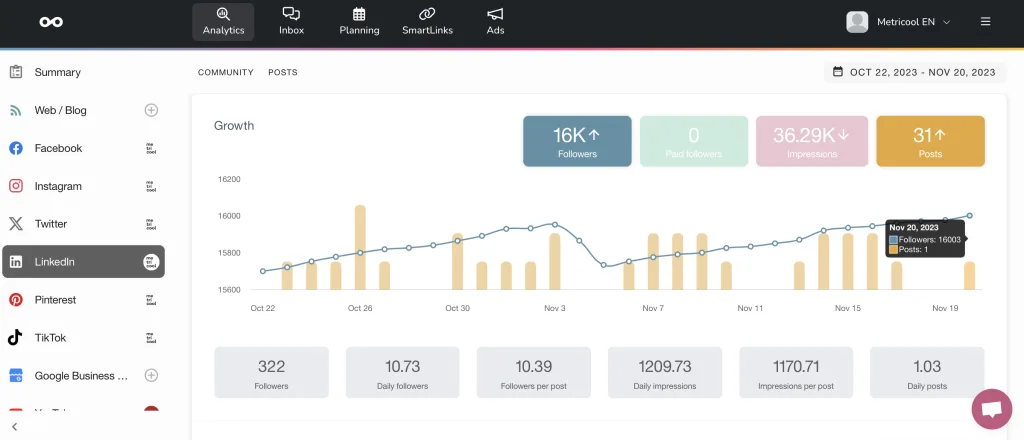
Ready to stop guessing and start growing on LinkedIn? With Metricool, you can plan content, track performance, and see what’s working. Register for Metricool and take control of your LinkedIn strategy today!
