

The Top 5 Social Media Trends for 2026
 Kata
16 December 2025
Kata
16 December 2025 
Social media shows no signs of slowing down. Every year, habits shift, formats evolve, and the way we create content changes — 2026 will be no different. Platforms keep tweaking their algorithms, users continue searching for content that’s useful and authentic, and the competition to stand out is only getting tougher.
In this landscape, understanding where social media is headed is essential if you want to stay ahead. The good news? Once you understand the trends shaping 2026, you can adapt quickly and make the most of what’s coming.
With that in mind, we’ve put together the key social media trends for 2026. Use them to get ahead and start refining your strategy today.
Social Media Trends 2026
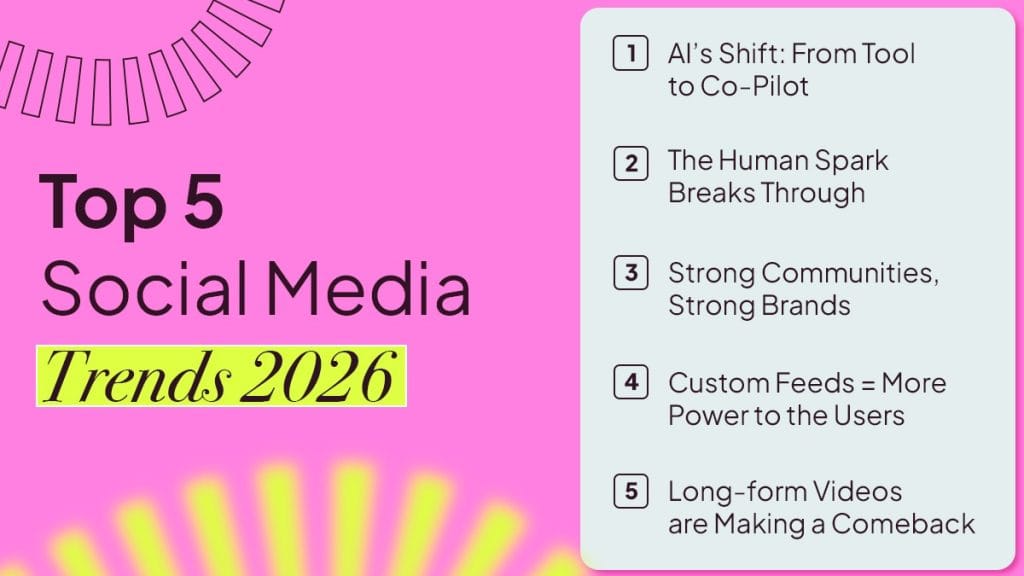
1. AI’s Shift: From Tool to Co-Pilot
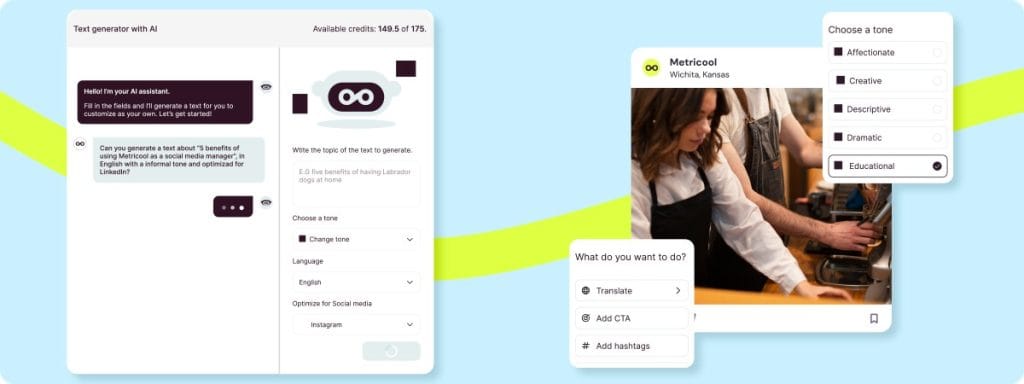
Artificial Intelligence is already doing a lot of the heavy lifting: it helps you plan content, generate reports, and test ideas faster.
But the real magic comes from the person using it the right way. Our role is shifting: We’re moving away from doing everything manually and stepping into something more strategic: guiding the AI, fixing its slip-ups, and making data-based decisions.
The numbers from our AI in Social Media Report 2025 shows this trend clearly:
- 96% of professionals already use AI for social media; 7 out of 10 use it daily.
- 79% say AI helps them create more content in less time.
- But 36% don’t know (or don’t measure) whether AI-generated content actually performs better.
- And 45% limit their use of AI because they’re afraid of losing quality.
In short, AI is already part of the daily workflow, but it’s often used without a real system or strategy.
In 2026, the real difference will come from how you integrate it into your routine, how you measure its impact, and how you adjust the tone so it still sounds like your brand.
2. The Human Spark Breaks Through
Let’s face it: AI slop is everywhere, and we’re all learning to navigate its waves. With tools like Sora that let you generate videos with AI in seconds from simple prompts, creating content has never been easier. But in 2026, the true differentiator will be the human spark brands bring to the table. People connect with people; those with a clear voice, a unique style, and who feel genuinely human will stand out.
That’s exactly what people are craving: authentic voices and real experiences.
A clear example is the decline of virtual influencers. Audiences are slowly but surely turning away. These computer-generated characters lack authenticity and raise some serious questions: Is it ethical to use them without disclosing they’re not actually real? Can you form an emotional connection with someone who doesn’t exist?
In the end, perfectly polished characters may get temporary hits, but real creators will regain traction.
So, how do you make the most of this trend?
Explain why you do what you do, be transparent about your decisions, and maintain a voice so distinctive that people would recognize it even without seeing your name.
3. Strong Communities, Strong Brands
On social media, strong communities will continue to lead the way. Reach still matters, of course, but without a real community behind you, nothing holds up — not interactions, not algorithm changes, not the ups and downs of visibility.
And the data from our latest Social Media Study backs this trend up. Every year, there are more accounts, more posts and also more competition for attention. When the pie is split among so many, reach alone is no longer a guarantee.
Building a close connection with the people who truly matter to your brand becomes even more important.
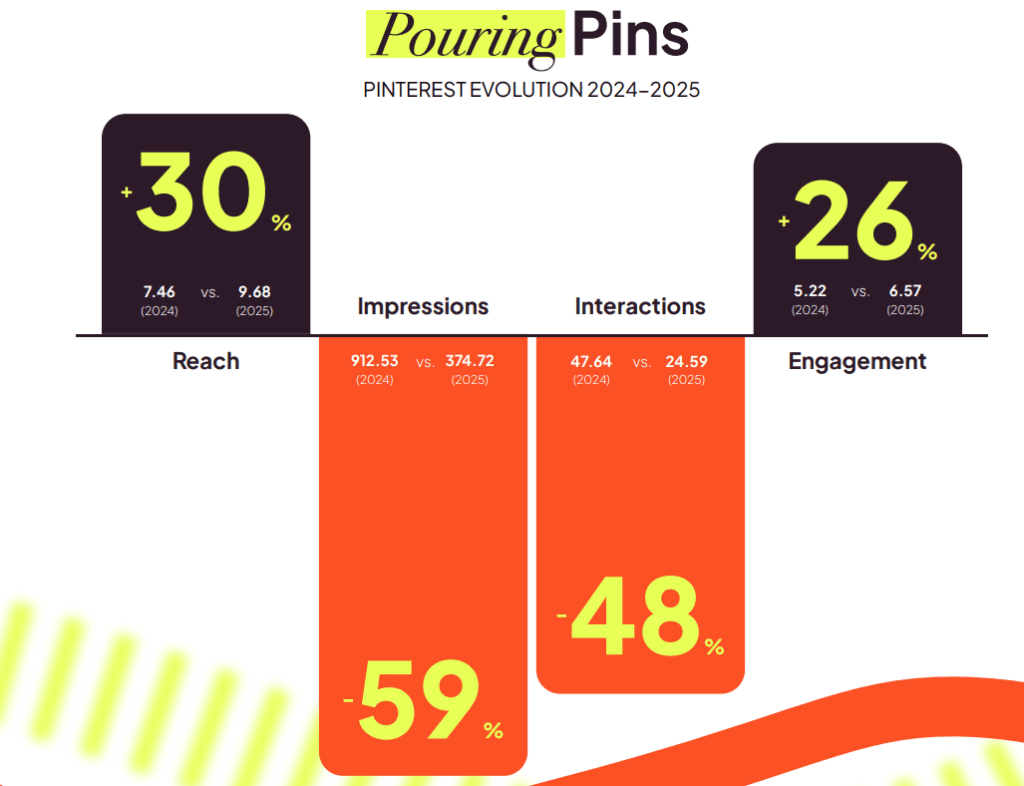
That’s why community has become the metric that holds any strategy together. Pinterest is the perfect example: even though impressions dropped by 58.99% compared to last year’s data, engagement rose by 25.90% — because the audience that does see the content is more aligned and more connected.
The brands that shine in 2026 are the ones creating spaces people actually want to be part of. Posting alone isn’t enough. The real impact comes from listening, engaging, and creating with your community.
And this social media trend isn’t only happening at the brand level. Platforms themselves are investing in more direct and private spaces. TikTok, for example, has launched bulletin boards, a dedicated space where the most loyal followers gather to stay updated on the biggest news from their favorite brands.
Instagram is moving in the same direction. As Adam Mosseri has said, direct messages are one of the features driving the platform’s growth; and they’re doubling down on improving them. YouTube is testing an in-app messaging feature, Spotify has rolled out its own DMs, and Threads has enabled private messages to strengthen that closer connection between creators and their communities.
4. Custom Feeds = More Power to the Users
This year, we’ve seen the rise of new apps like Neptune — with algorithms you can tweak almost like a playlist — along with familiar names like Bluesky and its sister apps Flashes & Pinksky. This social media trend points to a clear shift for 2026: people are gravitating toward platforms where they are in the driver’s seat and moving away from feeds that feel pre-decided.
And this shift isn’t staying in the indie corners of social media. The biggest players like TikTok, Instagram, and, more recently, YouTube are taking note.
TikTok has jumped on this train by introducing the “Manage Topics” and “Smart Keyword Filters” features. These tools let users shape their “For You” page by prioritizing the topics they want more of and filtering out videos with certain keywords or related terms.
Instagram has been testing something similar with its “tune your algorithm” feature, which lets users choose topics they want to hear more (or less) of. And just recently, they’ve officially rolled it out for Reels in the U.S., with other regions set to follow soon.
YouTube has entered the chat as well with its “Your Custom Feed” test, adding an AI-twist to it all by introducing a conversational panel where users can describe their interests in their own words. Just type a simple prompt, and your Home Feed adapts on the spot.
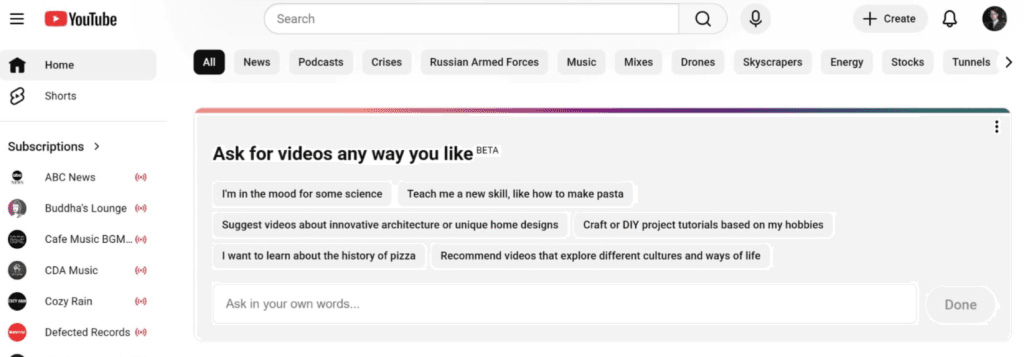
What does this mean for creators and brands?
This trend changes the game. Relevance and niche alignment matter more than ever because users can now actively shape the content they want to see.
The key is knowing your audience inside and out (their needs, struggles, and specific interests) and keeping those front and center when creating your next piece of content. So let go of the pressure to go viral; focus on your core community instead and keep them engaged for the long run.
5. Long-form Videos are Making a Comeback
For the past few years, short videos have ruled our feeds; and our attention spans shrank right along with them. Now, people are getting tired of the endless swiping and are craving depth, context, and real stories again.
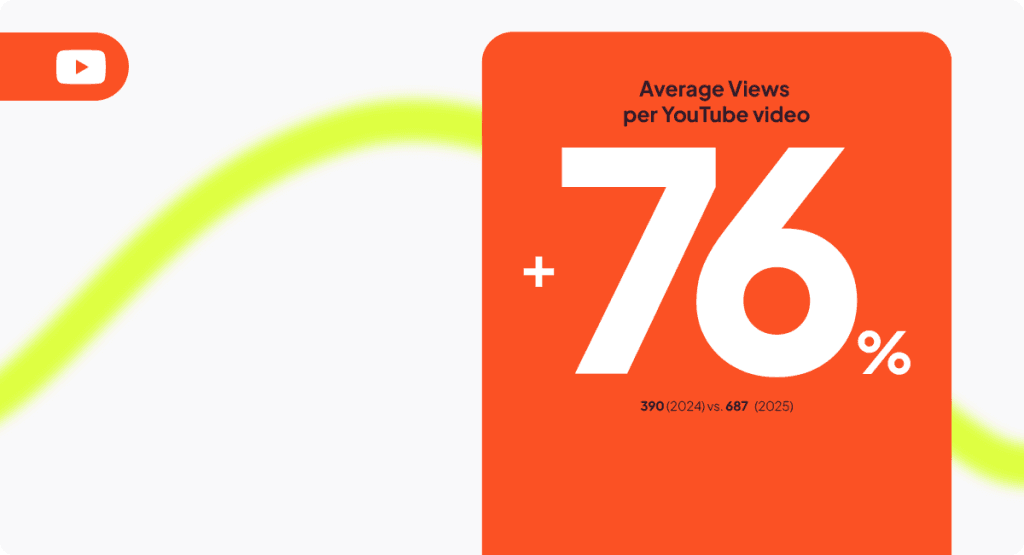
And a clear example of this is YouTube, the go-to platform for long-form video, where views have increased by 76%.
TikTok has allowed uploads of up to 10 minutes for a while now, and Instagram has updated Reels to support videos up to 20 minutes. Different formats still have their place in the marketing funnel — a quick, funny Reel can absolutely capture new audiences —, so there’s no need to go all-in or all-out with this trend.
But one thing is clear: in 2026, longer, higher-quality content will speak to audiences more than ever.
Social Media Trends 2026 Across the 10 Biggest Platforms
Now that we’ve covered the big-picture social media trends for 2026, let’s zoom in and see what’s happening on each platform.
Because this year brings interesting shifts, changes in user behavior, and formats that are taking off fast.
Here’s a quick look at how each platform is evolving and the key insights from the Metricool 2026 Social Media Study.
Download the
2026 Social Media Study
Fill out the form and get your free copy
Metricool Software, S.L. is responsible for processing your data in order to manage the delivery of the full 2026 Social Media Study and to send you updates and promotions if you check the corresponding box. You have the right to access, rectify, delete, limit, oppose the processing of your data, and request data portability. You can exercise your rights by contacting [email protected]. For more information, please refer to our Privacy Policy.
LinkedIn is still growing, but it’s getting harder to get noticed.
In 2025, impressions dropped by 23%, so posting for the sake of posting won’t cut it. You need a strategy: think carefully about what you want to offer and who you’re speaking to.
There’s also a clear shift in style. Formal posts are performing worse, while conversational content — the kind that feels written by a real person, not by a corporate department — is seeing the best results.
When it comes to formats, polls are crushing it (158% more impressions), and carousels continue to drive engagement, with 247% more interactions.
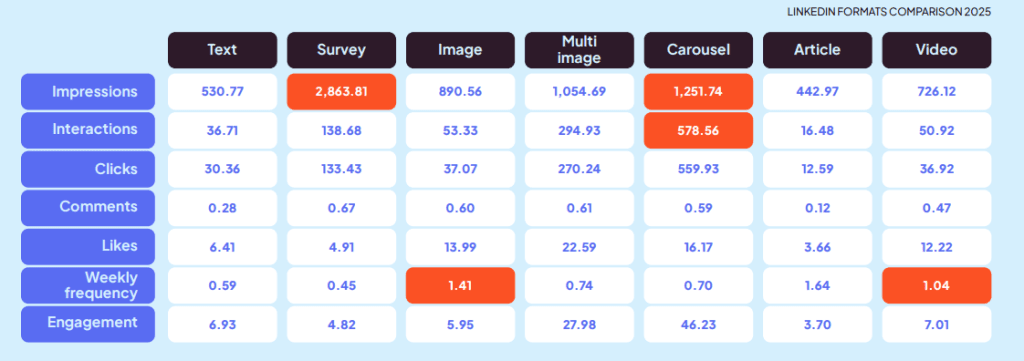
Here’s an interesting insight: the gap between company pages and personal profiles is widening. Once you hit 100K followers, personal profiles outperform company pages by a significant margin.
One way to take advantage of this social media trend is to invest in Employee Generated Content (EGC).
Encourage your team to share their own brand-related content to multiply reach and give your business more visibility. Remember: a more personal approach works better than any corporate message.
Pinterest continues to establish itself as the go-to place for inspiration and discovering ideas — and it shows, with posts increasing by 131% this year.
Interestingly, even with more content, impressions dropped 58.99% and interactions fell 48.37%. Yet engagement rose by almost 26%. Why? Because while content is reaching fewer people, those who do see it are more connected and more willing to engage.
Overall, Pinterest is evolving into a space with more competition and fewer impressions per post, but a broader reach overall: it’s reaching more users, even if posts are competing harder for attention.
Threads
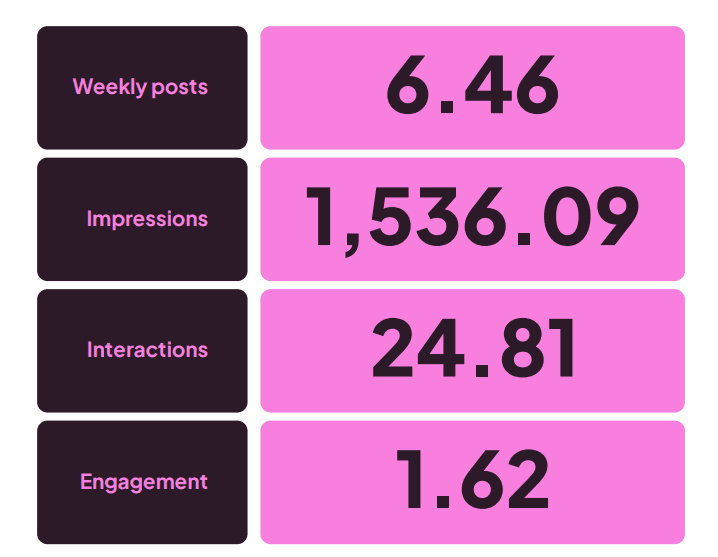
Threads keeps growing non-stop, now surpassing 400 million monthly users, with each post averaging around 1,500 impressions.
An interesting fact: large accounts (100K–1M followers) post more than 53 times per week. Yes, they post a lot, but that’s also the whole point of Threads: driving conversations. In many cases, these accounts are already getting more impressions and engagement here than on X.
And a great thing about Threads is that you don’t need to overcomplicate things. Threads works best when you stop chasing the “perfect” post. Spontaneous, natural content usually performs far better than highly polished posts.
X (Twitter)
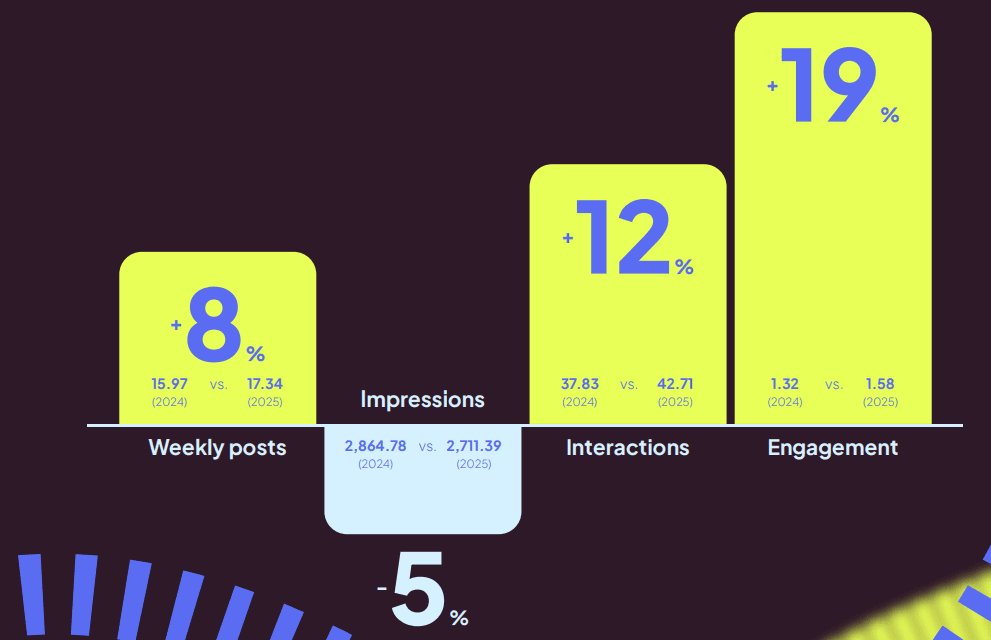
On X, impressions have dropped by 5%, but interactions have risen by 12%. This increase comes mostly from replies and quote retweets, which continue to drive the bulk of conversations.
However, external clicks are still falling (-28%), so X is clearly pushing users to engage within the platform rather than leaving it.
Video continues to rise in popularity, generating 35% more interactions and currently standing out as the best format for boosting visibility.
YouTube
YouTube remains strong. In 2025, views increased by 76%, a clear sign that interest in the platform is growing steadily.
Interactions also rose by 11% and the volume of posts grew by 53%, showing that more and more creators are investing in YouTube.
Shorts continue to be a good way to reach new audiences, but it’s long-form content that truly builds community.
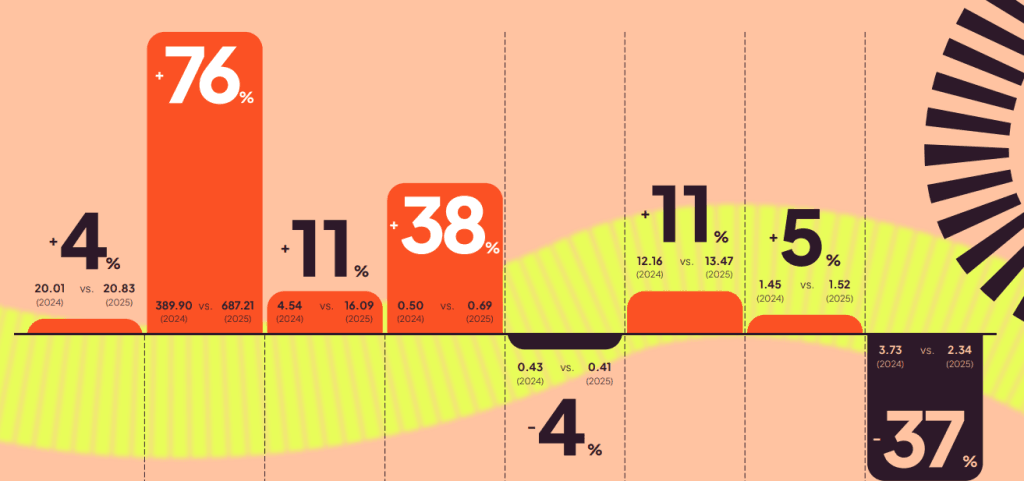
Here’s something interesting: the idea that “YouTube is harder” is becoming outdated. In 2025, the weekly posting frequency was 524% higher than on TikTok and 1007% higher than on Instagram Reels. What used to feel daunting is now driving creators to post more than ever.
Bluesky
Bluesky is steadily carving out its place in the social media landscape. In 2025, it surpassed 40 million registered users and launched key features like 3-minute videos (the format with highest engagement), direct message filters, and an official blue-check verification system.
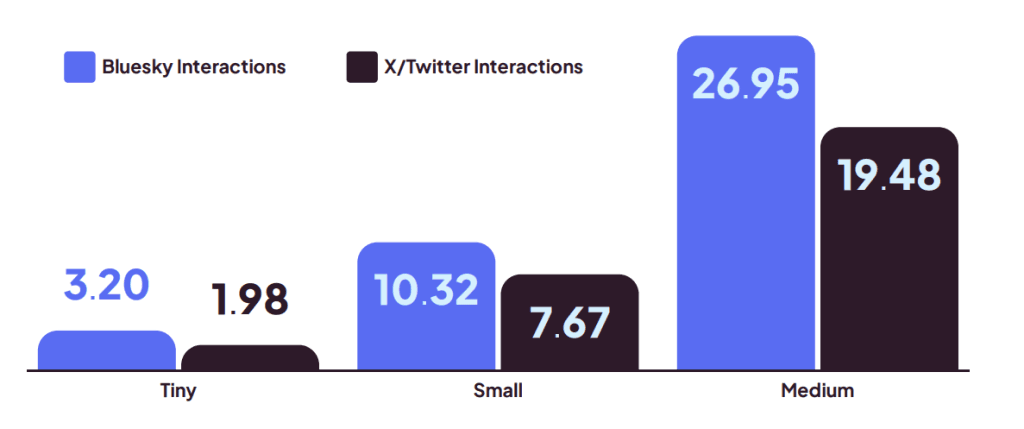
Although overall performance still lags behind other microblogging platforms, Metricool data shows promising signs: accounts with up to 100K followers are seeing more interactions on Bluesky than on X/Twitter.
Facebook ain’t dead.
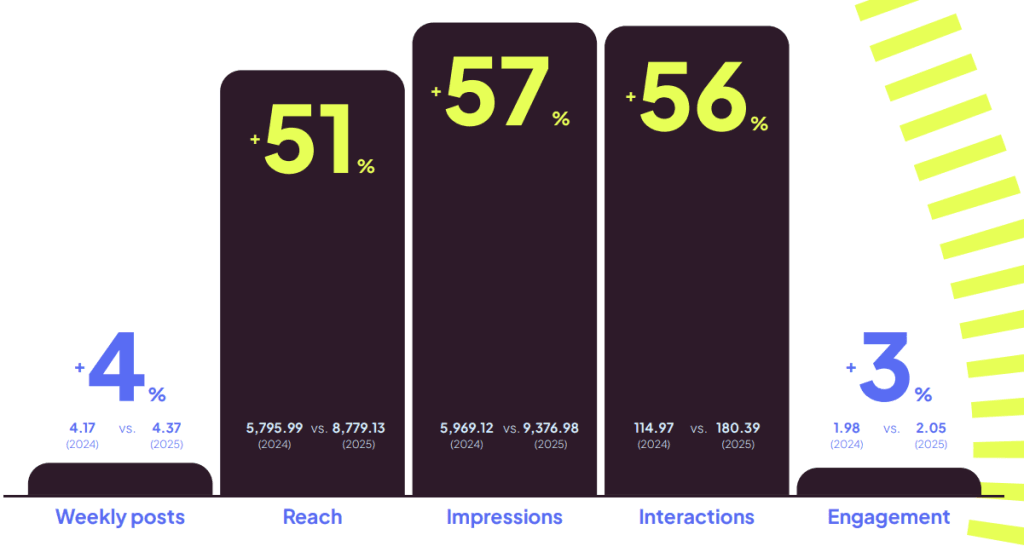
Although it has a reputation for being outdated, Facebook is far from fading away. In 2025, over 3 billion users accessed the platform each month, giving it the largest global reach of any social network.
Our 2025 data speaks for itself: post performance jumped compared to 2024. Average reach increased by 51%, impressions by 57%, and interactions by 56%. Not too shabby.
Google Business Profile
Your best storefront.
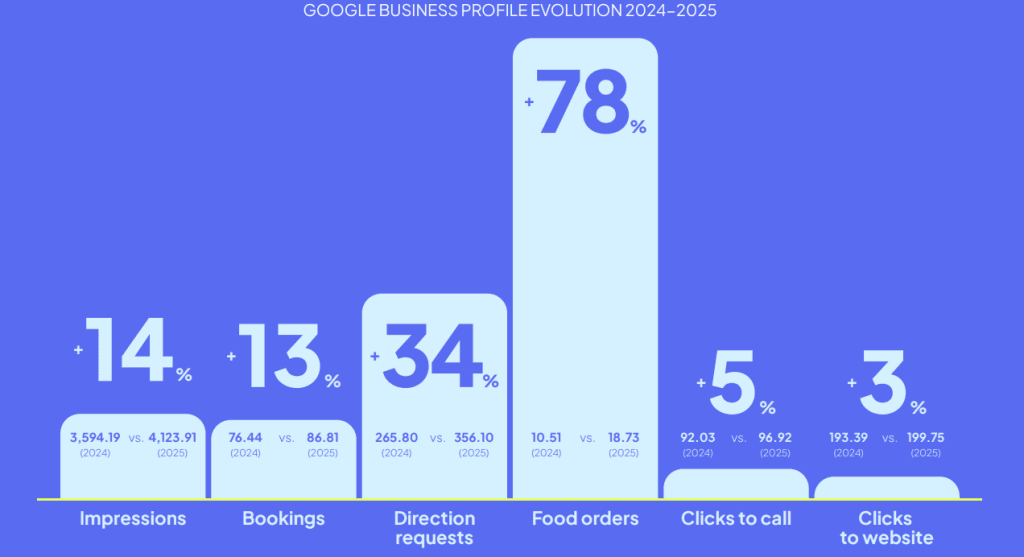
Local visibility starts with your Google Business Profile. Over 46% of Google searches are for nearby services, and verified businesses are 2.7x more likely to build trust.
Metricool data for 2025 shows clear growth: direction requests up 34%, food orders up 78%, and mobile search impressions up 30%. A Google Business Profile doesn’t just display your business but actively boosts it.
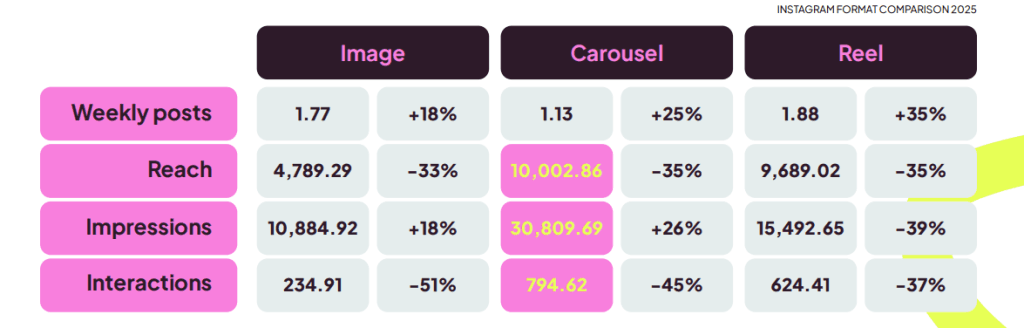
In 2025, Instagram surpassed 3 billion monthly users and doubled down on short-form video with Edits. Accounts connected to Metricool grew 64%, but reach and interactions declined, showing that posting more isn’t enough – quality is key.
Reels generate the most interactions, but carousels are the true winners, delivering the highest reach, impressions, and engagement despite being the least used format. Stories remain effective for nurturing existing followers, with metrics staying relatively stable.
Key takeaway: Focus on quality, use carousels to stand out, and balance Reels with Stories to keep your core audience engaged.
TikTok
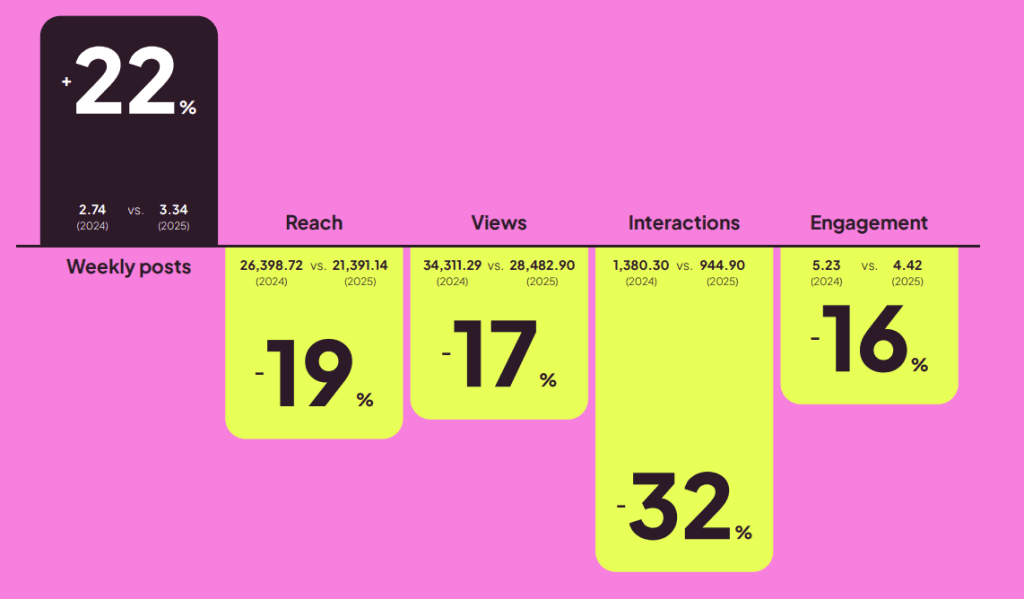
TikTok is still at the top, but 2025 gave us a pretty clear clue: posting more doesn’t mean growing more, as performance has declined. Views dropped by 17%, reach by 19%, and interactions by 32%. There’s more content than ever, and it’s becoming increasingly difficult to stand out.
And pay attention to social commerce: TikTok has doubled the numbers and generated over $26 billion in sales. The platform is pushing hard to make sure users not only come to be entertained but also to shop directly from TikTok Shop.
Conclusions
After looking at how social media is evolving, here are the key trends to keep in mind for 2026:
- Platforms are moving toward private spaces
DMs on Threads and Spotify, in-app messaging tests on YouTube, TikTok’s news boards… it all points in the same direction: more direct, closer conversations with your community.
- Video is still king
It remains the format that drives the most reach and views, making it central to any strategy. Plus, on YouTube, long-form content is performing better than ever.
- Users are regaining control of their feeds
More and more platforms are introducing features that let users tell the app exactly what content they want to see.
Check out our video for a visual look at 2026 Social Media trends:
Do you spot any other social media trends emerging in 2026? We’d love to hear your thoughts in the comments!
