

What is CPA? A Social Ads Cost Per Acquisition Guide
 Kalum
07 October 2026
Kalum
07 October 2026 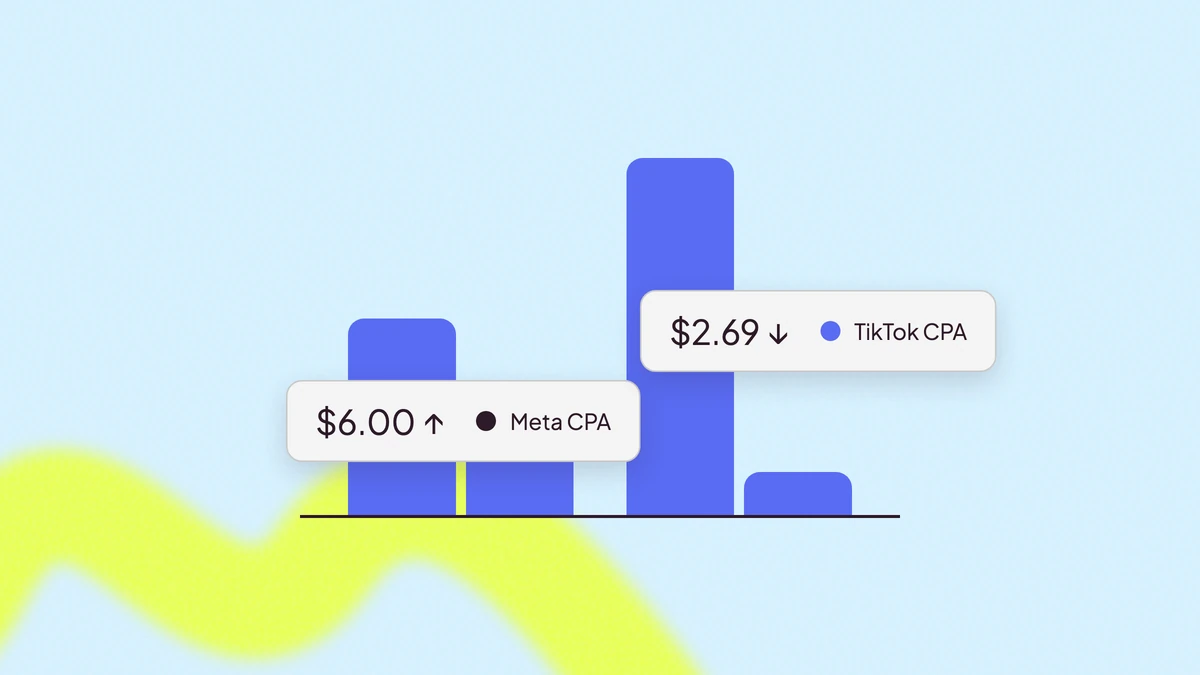
In digital marketing, you can measure the effectiveness of ad campaigns in different ways. One key metric to gauge the success of your efforts is the cost per acquisition (CPA). This metric calculates the cost of securing a new customer or action.
The guide below explains CPA, its advantages, when to use it, and how to calculate it.
What Is CPA in Marketing?
Cost Per Acquisition is a performance marketing metric that measures the total direct spend required to secure a specific, defined conversion. While “acquisition” often refers to a completed customer purchase, it can also represent high-value marketing events like a newsletter sign-up, a free trial activation, or a lead form submission, depending on your campaign goals.
Why CPA Is Essential for Growth
Monitoring your acquisition cost offers several strategic advantages:
- Direct profitability indicator: By comparing your acquisition cost against your Average Order Value (AOV) or Customer Lifetime Value (LTV), you can quickly determine whether your advertising campaigns generate positive ROI.
- Objective budget allocation: Comparing acquisition costs across channels allows you to allocate your marketing budget toward the platforms delivering the highest efficiency.
- Creative testing benchmark: Evaluating acquisition costs across different ad variations reveals which imagery, video concepts, and copy hooks drive actual sales rather than empty clicks.
- Protection against ad fatigue: Rising acquisition costs act as an early warning sign that your audience targeting is saturated or your ad creative needs refreshing.
CPA vs CPC vs CPM
CPA (Cost Per Acquisition) is a method where advertisers pay for specific actions taken by potential customers, such as making a purchase, filling out a form, or signing up for a newsletter. Advertisers only pay for successful sales or leads generated through their ads.
Types of CPA:
- Sales (CPS): Payment based on each sale generated by an ad.
- Leads (CPL): Refers to when users fill out a form.
Cost per acquisition is only one method of advertising payment. Depending on the goals of your ad campaign and what you hope to accomplish, CPC or CPM might be a better choice:
- CPC (Cost Per Click): Advertisers pay each time a user clicks on their ad, which is commonly used to increase web traffic.
- CPM (Cost Per Mille or Cost per thousand impressions): Advertisers pay per thousand impressions, meaning how many times their ad is displayed, regardless of whether it was clicked or not. This method is often used for ads in search engines.
How to Calculate Cost per Acquisition – Formula
To calculate the cost per acquisition, simply divide the total cost (whether media spend in total or specific channel/campaign to acquire customers) by the number of new customers acquired from the same channel/campaign.
For example, if you spend $3,000 on a social media ad campaign and acquire 550 new customers, your CPA would be:
CPA = $3,000 / 550 = $5.45
What is a Good Cost per Acquisition?
While there is no fixed “average” CPA to use as a benchmark, marketing experts generally agree that a 1:3 CPA to CLTV (Customer Lifetime Value) ratio is a good indicator of a profitable campaign. This means that for every dollar spent on acquiring a customer, they are likely to generate three dollars in revenue over their lifetime.
If your ratio is closer to 1:1, it may indicate that your acquisition costs are too high. And you might need to adjust your strategy to optimize your returns. On the other hand, if your ratio is significantly higher, such as 5:1, it could suggest that you are not spending enough to effectively acquire and convert leads.
Social Ads Benchmarks: Meta vs TikTok in 2026
To understand whether your acquisition costs are healthy, you must compare your performance against current industry benchmarks. Metricool’s 2026 Social Ads Report analyzed millions of dollars in social ad spend to reveal how acquisition costs vary across major ad networks and campaign objectives.
Data from the 2026 report highlights significant performance differences between Meta and TikTok across both Lead Generation and Direct Sales objectives.
Meta vs. TikTok for Leads Campaigns (2026)
| Objective | Network | CPA 2026 |
| Leads | Meta | $6.00 |
| Lead generation | TikTok | $2.69 |
For lead generation campaigns, TikTok achieved a significantly lower acquisition cost in 2026, averaging $2.69 per lead compared to Meta’s $6.00 per lead. TikTok’s native lead generation forms and interactive ad formats allowed brands to collect user contact details with minimal friction, delivering leads at less than half the cost of Meta.
Meta vs. TikTok for Sales Campaigns (2026)
| Objective | Network | CPA 2026 |
| Sales | Meta | $11.14 |
| Product sales | TikTok | $1.14 |
The contrast becomes even more pronounced when analyzing direct product sales campaigns. Meta generated completed sales at an average acquisition cost of $11.14. Meanwhile, TikTok achieved an average cost per product sale of just $1.14 in 2026.
Key Insights from the 2026 Benchmark Data
- TikTok shopping is a speedy conversion machine: TikTok Shop integration and native video product showcases drove exceptionally efficient sales conversions in 2026, making it an attractive platform for low-to-mid ticket product offers.
- Meta’s audience is high intent: While Meta showed higher acquisition costs for both leads (6.00)andsales(11.14), Meta audiences often represent higher average order values and longer customer lifetime values, balancing out the higher upfront cost.
- Diversification is necessary: Relying on a single network exposes your business to pricing shifts. Testing ad creative across both Meta and TikTok enables you to find the ideal balance between high volume on TikTok and high ticket size on Meta.
How Metricool Helps You Track and Optimize CPA Across Networks
Managing multi-channel ad campaigns across Meta, TikTok, Google, and LinkedIn without a centralized management tool leads to fragmented reporting and missed opportunities. Simplify your ad management by consolidating cross-channel ad performance, campaign metrics, and organic content analytics into a single dashboard. Metricool aggregates campaign expenditure and conversion results automatically. You can track real-time ad spend, monitor cross-platform performance metrics, compare campaign results against industry benchmarks, and adjust budget allocations from one unified workspace
Key Factors That Influence Your Acquisition Costs
Your target acquisition cost is never fixed. Multiple internal and external variables influence how much you will pay to acquire a paying customer on social media platforms.
- Industry and product price point: Higher-priced products naturally require higher acquisition costs. Selling a $2,000 enterprise software subscription involves a longer consideration process, more touchpoints, and higher ad spend than selling a $25 t-shirt.
- Audience targeting precision and market saturation: Broad targeting allows ad algorithms to discover cheap conversion opportunities, but over-saturating a small, highly competitive audience segment raises auction bids, driving up your acquisition cost.
- Ad quality and creative relevance: Ad networks reward engaging content with lower CPMs (Cost Per Mille). Ads that capture attention quickly, hold watch time, and generate high click-through rates earn lower auction costs from platform algorithms.
- Landing page experience and Conversion Rate Optimization (CRO): Your ad account can only bring interested users to your site; your website must complete the sale. Page loading speed, mobile responsiveness, clear value propositions, and frictionless checkout options directly lower final acquisition costs.
- Offer strength and social proof: An irresistible offer supported by genuine customer reviews, user-generated content, and clear money-back guarantees significantly improves conversion rates, automatically lowering the amount of ad spend needed per sale.
6 Effective Strategies to Lower Your Cost Per Acquisition
If your current ad campaigns show unsustainably high acquisition costs, implementing targeted optimization tactics can quickly improve campaign efficiency.
1. Optimize Your Conversion Funnel to Eliminate Drop-Offs
Examine your website analytics to identify where prospective buyers exit your funnel. If your ad click-through rate is high but site conversions are low, focus on simplifying your checkout page, adding express payment options (like Apple Pay or Shop Pay), and reducing form fields.
2. Implement A/B Creative Testing Pipelines
Creative fatigue is the leading cause of rising acquisition costs. Maintain a continuous testing strategy where you systematically evaluate new video hooks, visual formats, headlines, and call-to-action buttons. Refreshing top-performing ad creative every two to three weeks prevents ad fatigue.
3. Build Custom and Lookalike Audiences
Capitalize on your existing customer data by uploading customer lists to Meta and TikTok ad managers. Creating high-value lookalike audiences based on past repeat buyers directs platform algorithms toward users most likely to convert at a low cost.
4. Retarget High-Intent Site Visitors
Not every visitor converts on their first touchpoint. Set up retargeting campaigns aimed specifically at users who added items to their cart or visited checkout pages within the past 7 to 14 days. Retargeting warm traffic yields significantly lower acquisition costs than cold prospecting.
5. Utilize User-Generated Content (UGC)
Authentic, non-polished video content created by real customers consistently outperforms overly polished commercial ads on short-form video platforms like TikTok and Instagram Reels. UGC feels natural in user feeds, leading to higher click-through rates and lower conversion costs.
6. Test Broad Targeting with Clear Creative Messaging
Modern ad algorithms rely heavily on Machine Learning to identify buyers. Instead of layering restrictive interest filters, use broad targeting and let your ad creative do the qualifying. Placing explicit product benefits in the first three seconds of your video ensures only qualified buyers click through.
