

How To Get More Out Of Your Social Media Tools (Without Adding More Stress)
 Gretchen Oestreicher
25 March 2026
Gretchen Oestreicher
25 March 2026 
If you manage social media, chances are you already have a full toolkit. Scheduling platforms, analytics dashboards, AI assistants, content apps… most professionals are not lacking tools.
According to the 2026 Metricool Social Media Well-Being Report:
- 63% use social media marketing tools
- 72% use AI or automation tools
So the question isn’t whether tools exist. The real question is whether they’re actually making work easier.
The same report shows that many social media professionals still feel stretched thin:
- 75% say they are expected to do too many things at once
- 57% feel overwhelmed by their workload sometimes or very often
- 1 in 3 rate their well-being working in social media as negative
- 46% have considered leaving the industry because of stress or burnout
Clearly, tools alone don’t remove pressure. What often makes the difference is how effectively those tools are used and whether they actually simplify daily work.
Let’s break down where stress tends to build up in social media work, and how to get more value from the tools you already use.
Why Social Media Work Feels So Heavy
Many people outside the role still assume social media work mainly means posting content.
But in reality, the job usually includes much more.
Professionals report handling tasks like:
- Strategy and planning
- Content creation
- Copywriting
- Video editing
- Graphic design
- Community management
- Analytics and reporting
- Stakeholder or client communication
- Trend monitoring
- Paid social campaigns
- Influencer partnerships
- Reputation or crisis management
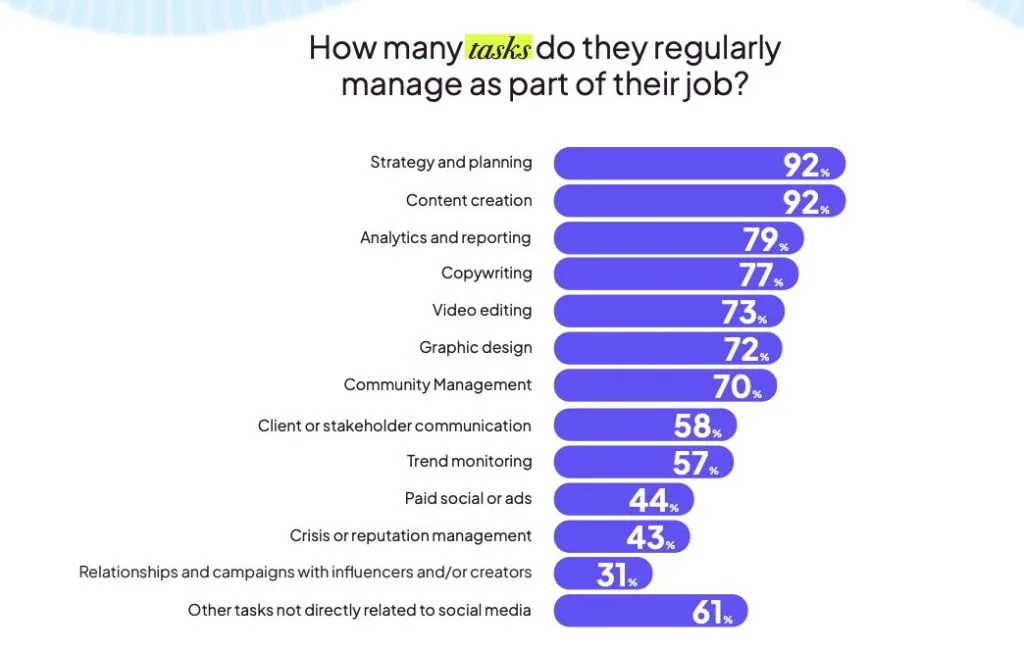
This wide range of responsibilities helps explain why 75% of professionals say they feel like they’re wearing too many hats at once.
And many teams are small. According to the Metricool Social Media Well-Being Report 2026, 59% say they are the only person responsible for social media in their team.
Even if tools make individual tasks easier, the overall workload can still feel fragmented and constant.
Where Stress Actually Builds Up
One of the biggest sources of pressure is how often plans change.
Social media work moves quickly, and priorities can shift without much warning. Campaign updates, new announcements, internal feedback, and quick requests can interrupt even a carefully planned content schedule.
Among professionals who work overtime:
- 53% say last-minute changes are the main reason
- 52% report urgent updates as a major cause of overtime
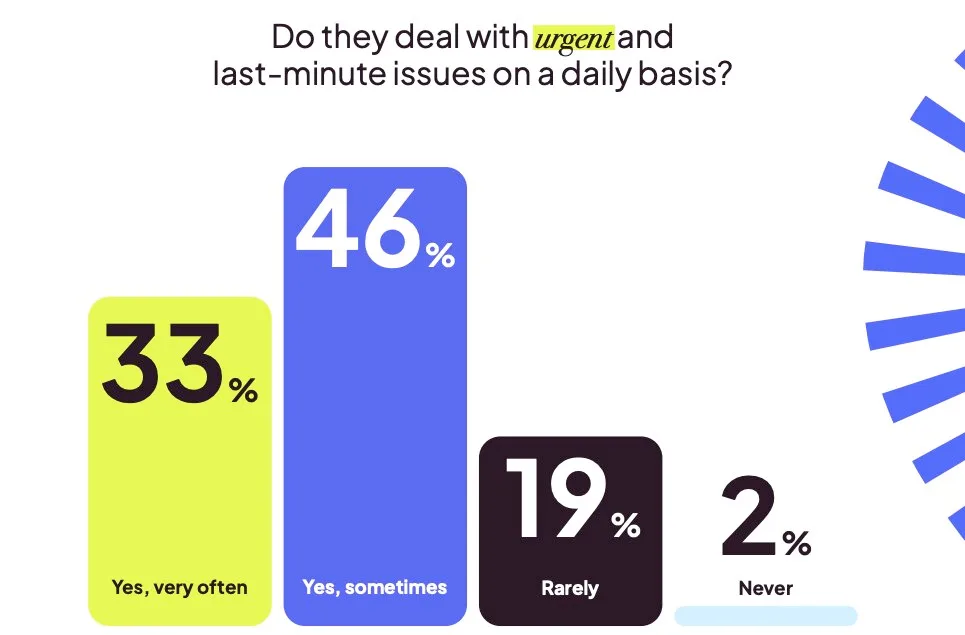
This creates a pattern where planning happens, but the plan rarely stays stable for long. When new requests appear throughout the week, the work becomes reactive instead of structured.
Over time, this kind of environment makes it harder to focus on bigger goals like strategy, campaign planning, or performance analysis. Most of the day ends up focused on adjustments.
This is where tools can make a difference when they help you visualize and adjust your work quickly. A flexible content calendar, like the one in Metricool, allows teams to reorganize posts, move campaigns, and update schedules without having to rebuild everything from scratch.
This doesn’t mean getting rid of all last‑minute requests. Social media will always involve some degree of real‑time adaptation. What helps most is having tools that allow those changes without disrupting everything else you already planned.
The Pressure To Always Have New Ideas
Another major source of stress comes from the creative demands of the job.
When social media professionals were asked what creates the most pressure, the most common answer was related to creativity:
- 58% say constantly coming up with new content ideas creates the most stress
Producing fresh content consistently is a central part of social media work, but it can become mentally draining when there is no clear structure around it.
Without a content framework, each post starts from the same place: deciding what to create next. This repeated decision-making process adds up over time, especially for professionals managing multiple accounts or platforms.
This is where tools become most useful when they support content planning and performance insights, not just publishing.
Analytics dashboards can reveal which formats, topics, and types of content perform best with a specific audience. Reviewing these patterns inside tools like Metricool helps reduce guesswork and gives creators a clearer direction for future content.
Instead of relying entirely on new ideas every day, content planning becomes more informed by what already works.
Always-On Expectations
Another factor that contributes to stress is the constant activity surrounding social media platforms.
Unlike many other types of work, social media conversations do not follow traditional working hours. Comments, messages, mentions, and notifications can arrive at any time, creating a sense that attention is always required.
The Metricool Social Media Well-Being Report 2026 found:
- 73% of professionals work outside their normal hours at least sometimes
- 37% say they work overtime very often
- 44% say they struggle to fully disconnect after work
This constant flow of activity can make it difficult to step away mentally, even when the workday ends.
Tools can help reduce some of this pressure when they allow more tasks to happen in advance. Scheduling posts ahead of time, monitoring engagement from a single dashboard, and reviewing performance data in one place all reduce the need to stay constantly connected.
Using a platform like Metricool to organize publishing and analytics in one workspace helps consolidate these activities and limits the need to check multiple tools and platforms throughout the day.
Mental And Emotional Load
Finally, there is a part of social media work that goes beyond productivity and time management: the emotional side of the role.
Social media professionals spend a significant amount of time interacting with public conversations, reading comments, monitoring audience reactions, and responding to feedback. This ongoing exposure to public responses can be mentally demanding.
The Metricool Social Media Well-Being Report 2026 highlights how common this experience is:
- 54% describe their work as quite or very stressful
- 73% have experienced a loss of motivation or creative energy
- 69% report mental fatigue
- 62% say disconnecting from work is difficult
Maintaining creativity while managing deadlines, performance expectations, and audience feedback requires continuous mental effort.
This is why simplifying the tools you rely on can have such a meaningful impact. When platforms handle repetitive tasks like scheduling, tracking analytics, and organizing content plans, they remove some of the operational load that builds up during the day.
Platforms like Metricool can’t eliminate the emotional side of the job, but they can simplify the parts of social media management that create unnecessary friction.
When everything works together smoothly and you reduce repetitive tasks, it becomes easier to focus on the work that actually requires creativity, judgment, and human perspective.
Why Tools Alone Don’t Solve The Problem
Social media tools absolutely help. They speed up scheduling, simplify reporting, and make data easier to understand.
But when professionals were asked what would improve their day-to-day work, the answers were revealing:
- 34% want new tools to increase efficiency
- 37% want better processes and planning
- 14% want clearer limits on working hours
- 7% want more autonomy
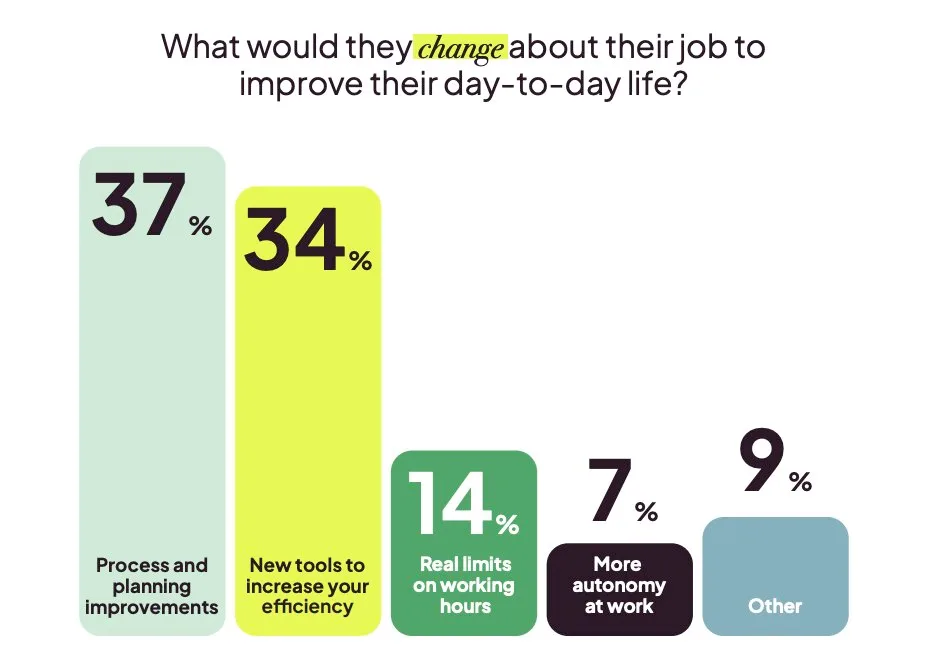
In other words, slightly more professionals believe better systems would help more than adding new tools.
This doesn’t mean tools aren’t valuable. Most teams rely on them every day, and many tasks would be far more difficult without them. What the data suggests is that tools work best when they simplify work instead of adding more complexity.
Without that structure, even great tools can feel like just another thing to manage.
How To Get More Value From The Tools You Already Use
Most social media professionals already have the tools they need to manage their work effectively. The challenge is often how those tools fit into the overall process.
Instead of expanding your tool stack, it can be more helpful to refine how your current platforms support planning, publishing, and performance tracking.
A few small adjustments can often unlock much more value from the tools you already use.
1. Plan Content Earlier And More Visually
One of the most common sources of pressure in social media work is late planning. When content is created one post at a time, the work rarely feels finished. There is always another idea to generate, another caption to write, or another piece of content to prepare.
Planning earlier creates a clearer rhythm for the work.
Setting a regular planning window shifts content creation away from constant decision-making throughout the week. Instead of figuring out what to post in real time, ideas and formats are mapped out in advance.
A visual content calendar makes this process easier because it allows you to see your upcoming posts across multiple days or weeks. When the schedule is visible at a glance, it becomes easier to balance different types of content, adjust campaign timing, and identify gaps before they become urgent problems.
Tools like Metricool support this by bringing multiple platforms into a single calendar view. When posts, drafts, and scheduled content all appear in one place, planning becomes less fragmented and more intentional.
Over time, this type of visibility can turn content planning into a structured activity rather than something that happens in the background throughout the week.
2. Turn Ideas Into Repeatable Content Formats
If constant idea generation is your biggest pressure point, structure can help.
Instead of inventing a new concept every time, create repeatable formats.
Examples include:
- Weekly educational tips
- Customer stories or testimonials
- FAQ posts
- Short tutorial videos
- Monthly recap posts
Planning tools play an important role here because you can see these formats mapped across a calendar in advance. Once the structure is visible, the creative process shifts from inventing ideas repeatedly to filling in and refining the formats that already exist in the plan.
Performance insights also support this process. Reviewing which formats and themes perform well over time helps social media managers gradually shape their content around patterns that actually resonate with their audience.
3. Use Scheduling To Reduce Daily Pressure
Manual posting can quietly shape the entire structure of a workday. When posts need to go live at specific times, it becomes difficult to focus on larger tasks without interruptions.
Scheduling posts in advance removes that pressure.
Platforms like Metricool allow you to:
- Prepare content ahead of time
- Publish automatically across multiple platforms
- Adjust scheduled posts without starting from scratch
- Repurpose successful content to other channels
- Discover the best times to post by platform
Prepared content also means posts can be reviewed, edited, and scheduled in batches rather than individually throughout the day. This change may seem small, but it can significantly reduce the number of moments when work stops to accommodate a publishing time.
4. Let Analytics Guide Your Next Decisions
Another hidden source of stress in social media work is uncertainty. When performance is unclear, planning future content becomes more difficult.
Without reliable data, each post can feel like an experiment. This constant uncertainty adds pressure to every decision.
Analytics tools help you see:
- Which content formats perform best
- What posting times drive engagement
- Which platforms bring the most results
Your analytics dashboard in Metricool centralizes this information, making it easier to review performance across platforms without needing separate reports or spreadsheets. Over time, these insights support more confident planning and reduce the pressure of constantly testing new ideas without direction.
5. Keep Your Tool Stack Simple
Because social media work touches so many areas, it’s easy for tool stacks to grow quickly. New platforms are constantly introduced, and each one promises to solve a specific problem. But, as we see, more tools don’t always lead to a smoother workflow.
When too many platforms are involved, work can become fragmented. Planning may happen in one place, publishing in another, and analytics somewhere else entirely. Moving between multiple tools throughout the day can slow down even simple tasks and make it harder for teams to work cohesively.
A more sustainable approach is to simplify the stack and give each tool a clear role.
Centralizing core activities like planning, scheduling, analytics, and reporting reduces the need to switch between platforms and keeps information easier to track.
Using a platform such as Metricool as a central hub for social media management brings these all together in one place. Planning, publishing, and performance tracking become part of a single process rather than separate tasks spread across multiple tools.
Over time, this type of structure helps social media work feel more organized and less reactive, even when the pace of the platforms remains fast.
Where AI Fits Into Social Media Management
With 72% of professionals using AI tools, automation is already part of many workflows.
AI can help with tasks like:
- Drafting captions
- Brainstorming post ideas
- Creating variations of content
- Summarizing performance data
But AI works best when it supports a clear process and when it doesn’t replace human creativity.
Without a clear structure for planning and publishing, AI can unintentionally create more, lower quality, work. If every brainstorming session produces dozens of new ideas, or if automation makes it easy to produce more content without a clear strategy, the result can be a faster pace without less pressure.
Think of AI as an assistant that speeds up specific tasks, not the system that organizes and does your work for you.
Small Changes Can Make A Big Difference
Many professionals are already trying to improve their work routines.
According to the Metricool Social Media Well-Being Study:
- 49% of social media professionals have taken steps to improve their well-being
- 47% say those changes had a positive impact
Simple actions can help create better boundaries, like:
- Turning off notifications after work
- Setting clear planning days
- Scheduling posts in advance
- Creating repeatable content formats
- Taking small breaks throughout the day
Small changes like these may not completely transform the workload overnight, but they can make daily work more predictable and less reactive.
Most professionals already have access to tools, automation, and AI. The technology is there, and many teams are actively using it. Yet a large number of people in the industry still feel overwhelmed by the pace and scope of the job.
The biggest improvements often come from better workflows, clearer planning, and simpler systems.
When your tools fit into an organized process, they stop feeling like extra work and start doing what they’re meant to do: making social media management easier.And when planning, scheduling, analytics, and reporting live in one place with Metricool, it becomes much easier to stay organized, reduce last-minute pressure, and focus on the work that actually matters.
