

How to Go Viral on YouTube
 Gretchen Oestreicher
10 August 2026
Gretchen Oestreicher
10 August 2026 
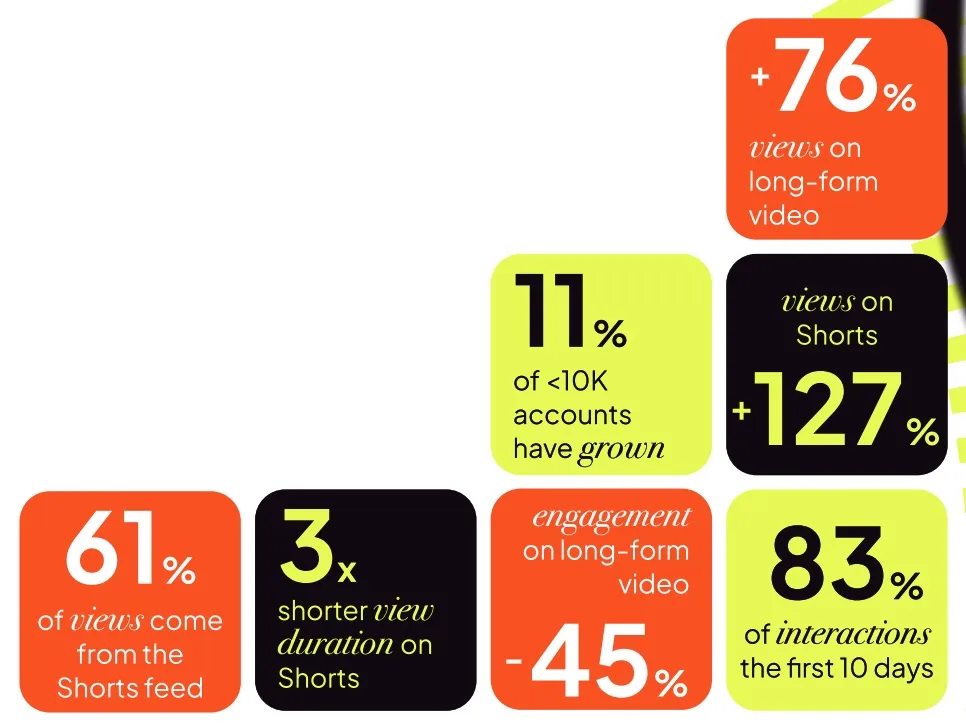
Going viral on YouTube in 2026 looks different than it did a year ago. Views are climbing fast, long-form is up 76% and Shorts are up 127%, but people watch each video for less time, and more often from the Shorts feed.
To understand what’s driving reach today, Metricool analyzed 799,718 videos from 71,177 accounts across industries, niches, and account sizes. If you’re working out how to go viral on YouTube now, the data points to Shorts first, backed by a handful of habits that hold across formats.
What Going Viral on YouTube Actually Means in 2026
There’s no single view count that marks a video as viral. It depends on your niche, your channel size, and how fast the views arrive:
- Long-Form Video: Often called viral once it passes around 5 million views in its first week.
- Shorts: Can hit that level faster, sometimes within a day or two, and with fewer views.
- Smaller Channels and Niches: Viral is relative, so 50,000 views in 48 hours can be a breakout for a 2,000-subscriber account, even if a bigger channel would treat that as an off day.
- Over Time: Some videos build to viral slowly through steady sharing and search, rather than all at once.
A viral hit brings reach, new subscribers, and recognition, but it doesn’t always bring matching revenue, something the monetization data makes clear.
How YouTube Decides What Goes Viral
YouTube doesn’t run one algorithm. It runs separate recommendation systems for the Home feed, Search, Suggested videos, and the Shorts feed, each with its own logic. That’s why a Short can take off in the feed while its Suggested traffic stays flat.
The bigger shift in 2026 is that YouTube weighs watch time by satisfaction, measured through surveys and return visits, so a shorter video people finish can outperform a longer one they abandon. Subscriber count matters less than it used to.
A few signals carry the most weight:
- Click-Through Rate: How often people click when they see your title and thumbnail.
- Watch Time and Retention: How much of the video people actually stay for.
- Engagement: Likes, comments, and shares.
- Session Contribution: How well your video keeps people watching YouTube afterward.
- Consistency: A steady upload rhythm gives the algorithm more to test and distribute.
Where Your Views Actually Come From
Reach comes from a handful of sources, and they’re far from evenly split:
- Shorts Feed: Over 61% of all organic views, the platform’s main way people discover content.
- Subscribers: Around 11% of views.
- YouTube Search: Nearly 9%, from people already looking for your topic.
- Direct Channel Visits: Only about 3%.
Most of your reach depends on recommendations, so working with the algorithm isn’t something you can skip anymore.
How to Make Shorts Viral on YouTube
If you want to know how to make Shorts viral on YouTube, start with where the views are. Shorts now drive over half of all views on the platform, and views on them rose over 125% year over year, so this is the fastest way for new people to find you.
The tradeoff is attention. The average Short is watched for about 16 seconds now, far less than in 2025, with interactions dropping as well. That puts the weight on your first two seconds, because completion rate is the signal the Shorts algorithm cares about most.
A few things give a Short its best chance to take off:
- Design for Replays: Clips that loop back on themselves push completion rate, the metric the feed leans on most.
- Keep One Idea per Short: Tight, single-topic videos around 15 to 20 seconds hold attention better than ones that stall in the middle.
- Ride Relevant Trends and Sounds: Trending audio and formats help the algorithm place your Short with the right viewers, as long as they fit your topic.
Smaller creators have a real edge here. Shorts is one of the few places where being small helps:
- Under 10K Subscribers: The strongest Shorts growth of any tier.
- 2K to 10K Subscribers: Views up over 210% and interactions up 41%.
- Up to 100K Subscribers: Doubled their Shorts views in 2026.
Long-Form Still Holds Attention and Revenue
Long-form video is having a strange year. Overall consumption is up, but each view is getting shorter and people are engaging less:
- Views: Up 76% year over year.
- Total Minutes Watched: Up about 11%.
- Average View Duration: Down 37%, now about two and a half minutes versus just under four in 2025.
- Engagement: Down 45%.
That shorter watch time has a cost. Ad impressions and monetized playbacks both fell by more than half, and estimated ad revenue dropped 55%. Fewer minutes per video means fewer chances to run mid-roll ads, so if long-form is part of your plan, your revenue follows retention.
How Often to Post for the Best Reach
More uploads don’t automatically mean more reach. The right pace depends on the format:
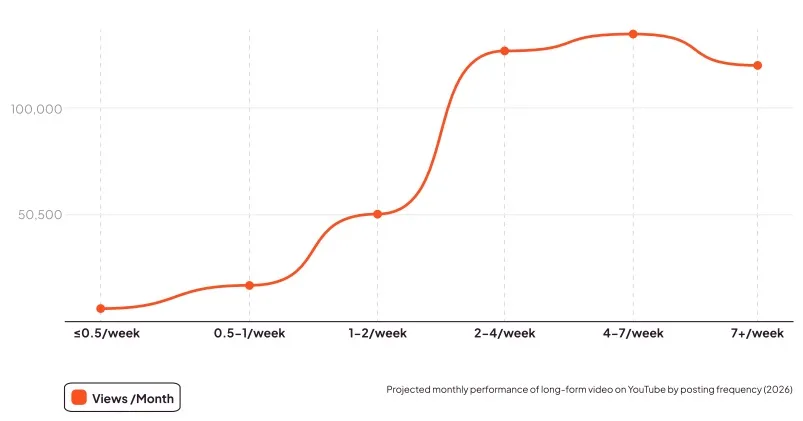
- Long-Form: 2 to 4 videos a week performs best per post, averaging about 10,550 views. More than that and your views are more than likely to drop.
- Shorts: 2 to 4 a week is the strongest range per post, but there’s no real limit. The more you publish, the more your monthly totals climb, because each one is another chance to show up in the feed.
So the tradeoff comes down to how much you can produce without the quality slipping.
How Long a YouTube Video Keeps Working
One of YouTube’s real advantages is shelf life. After you publish, the first three days are usually the strongest, as the algorithm shows the video to your subscribers and to people with similar interests. That’s when most interactions come in and views peak, and most interactions happen within the first 10 days.
After that early spike, the pace slows and settles into a steadier, lower rhythm. YouTube keeps testing the video with new audiences through Suggested content, and if it’s relevant and your titles and descriptions match what people search for, it can keep pulling views for months or even years. That’s the difference between YouTube and platforms where content goes quiet within days.
What Actually Makes a Video Spread
Reach comes down to a handful of things the data keeps pointing to, and none of them are tricks. They’re the habits that show up again and again in the accounts that outperform their size.
- Own a Specific Niche: You don’t need to appeal to everyone. One creator in the study built 100,000-plus views per video around fermentation, cucumbers, kimchi, and kefir, by serving an audience nobody else was talking to.
- Hook People in the First Seconds: For Shorts, the opening two seconds decide if someone keeps watching. For long-form, get to the point inside the first 30 seconds. Both feed directly into how far your video travels.
- Deliver What Your Title and Thumbnail Promise: Satisfaction is the metric the algorithm leans on. A title that overpromises earns the click and loses the retention. Test different thumbnails and titles to see what your audience responds to, and keep them true to the video.
- Mix Your Formats: Test longer explainers, short dialogue-led clips, and no-voiceover pieces. The accounts growing fastest treat variety as part of the process.
- Use Shorts to Feed Your Long-Form: Channels posting around 5 Shorts a month averaged 46% more views on their long-form videos than the global average. Turn full episodes into clips that point people back to the complete video, though past roughly 35 Shorts a month that benefit fades.
- Post Consistently, Not Constantly: 2 to 4 videos a week is enough to stay visible to the algorithm without burning out or watering down quality.
Set Your Videos Up to Be Found
Great content still needs to be findable. A few basics help the algorithm and your audience connect with each video:
- Get Your Titles and Descriptions Right for Search: Nearly 9% of views come from search, so use the words people actually type in your title and description. Add one or two relevant tags, and resist stuffing the description with search terms.
- Invest in Clear Audio and Visuals: People stay longer when a video is easy to hear and watch, so clean sound and sharp footage do more for retention than expensive gear.
- Make It Easy to Watch on Mobile: Most people watch on their phones, so use readable text, clear visuals, and captions or subtitles that hold up on a small screen.
- Promote in the First 24 Hours: Share new videos to your other platforms early. The response a video gets on day one shapes how far the algorithm carries it.
- Keep Hashtags Light: Hashtags won’t make a video go viral. On long-form, adding them slightly lowered views but raised engagement, since the traffic they bring is more targeted. Stick to 1 or 2 that genuinely match your content, up to 5 on Shorts.
Going viral on YouTube in 2026 comes down to understanding how reach actually works. Shorts help new people find you, long-form builds depth and earns most of the revenue, the algorithm rewards how satisfied viewers are, and posting on a steady schedule keeps you visible. Build those habits into your routine and you give every video a real chance to spread.
Plan, Schedule, and Analyze Your YouTube Content in One Place
Metricool brings your whole YouTube workflow together. Schedule long-form videos and Shorts ahead of time, track watch time, retention, and subscriber growth to see what’s connecting, and check your channel against others in your niche.
You can also find your best posting times and share the same video to your other platforms without switching tools. Create your free Metricool account and take control of your YouTube presence.
