

How to Bulk Upload, Schedule, and Review Content with Metricool
 Gretchen Oestreicher
02 September 2026
Gretchen Oestreicher
02 September 2026 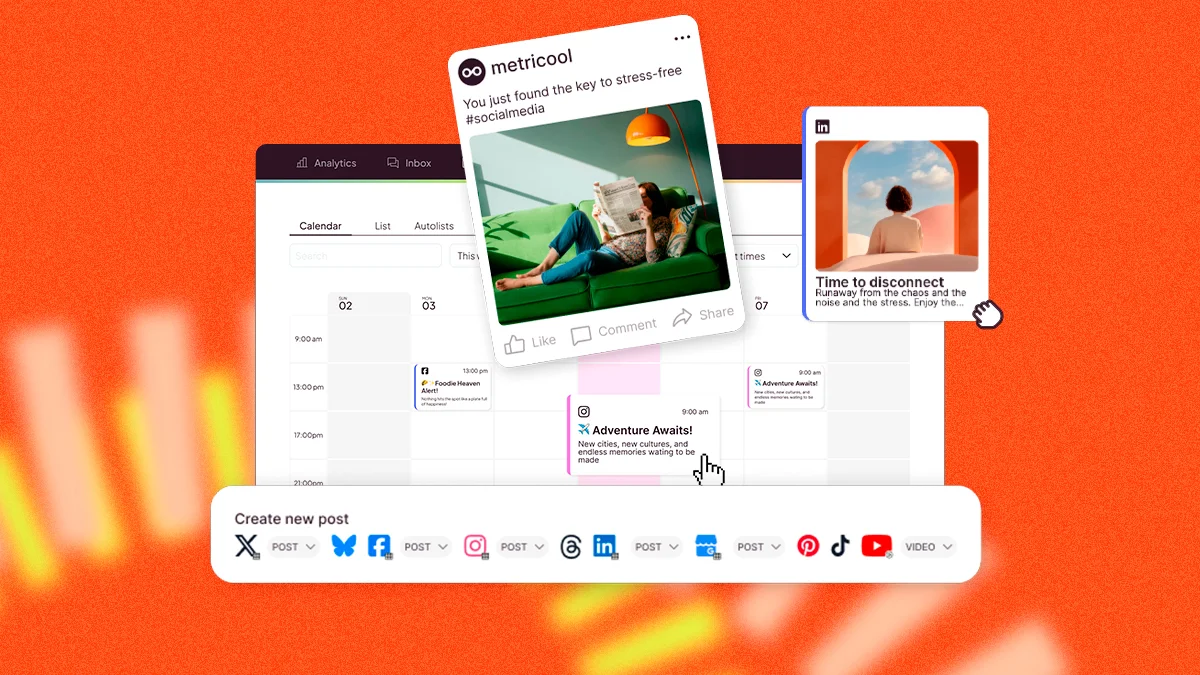
If you post for more than one account, you already know where the hours go. A lot of them disappear into the posting itself, doing it by hand, one platform and one day at a time. Metricool bulk upload takes that off your plate. You set up a batch of content once, and it publishes on schedule while you get on with the rest of your work.
There are two ways to bulk upload on Metricool, and both end the same way, with your posts scheduled and going out on their own. You can build a Metricool CSV file and import a whole batch at once, or connect Google Drive and pull your assets in as you go. If a client or manager signs off on content first, you can also send, approve, and reject posts in bulk so nothing sits waiting.
Benefits of Metricool Bulk Upload
Loading content in batches changes how the week feels. Here is what you get out of it:
- Hours Back in Your Week: Schedule a month of posts in one sitting and spend that reclaimed time on strategy and talking to your audience.
- One Place for Everything: Plan, schedule, analyze, reply to messages, build a link-in-bio page, and run ads without jumping between tools.
- A Clearer Head: A single file or a connected Drive folder shows you everything queued to go out, so nothing slips through.
- Better Content: Planning ahead gives you room to sharpen captions, polish visuals, and catch mistakes before they go live.
- Posts That Connect: Mapping a batch at once lets your posts build on each other instead of feeling random.
- Easier Reporting: Publishing from a planned calendar makes it simpler to see what is working and adjust.
You can do all of this on Metricool’s free plan. For LinkedIn publishing, downloadable reports, and other advanced features, there are Premium plans too, but the free account is a no-catch place to start.
How to Bulk Upload with a Metricool CSV File
A CSV file is the quickest way to move a big batch of posts into Metricool at once. It is a simple table, one row per post, and Metricool reads the whole thing and schedules it for you. Here is how to do it, start to finish.
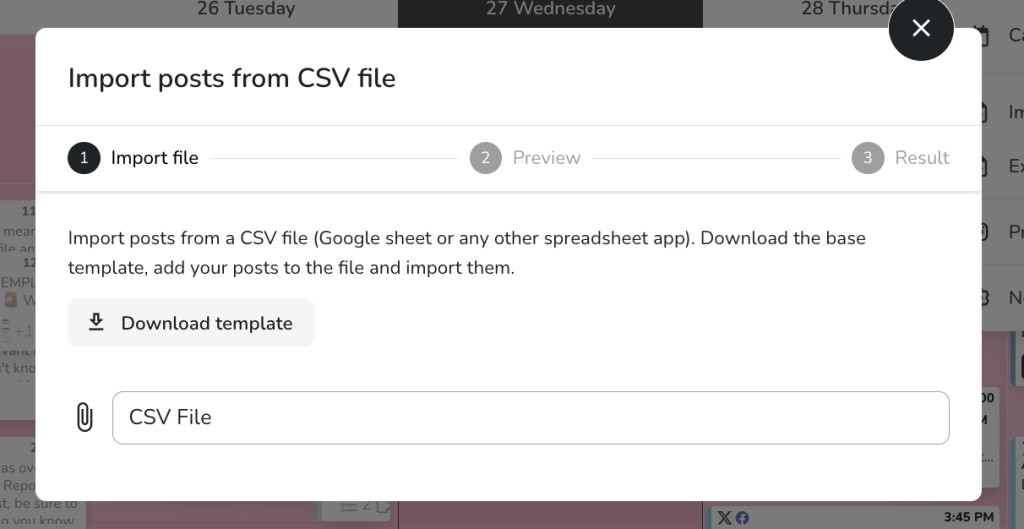
- Start with the template. Rather than building columns yourself, download the ready-made template so your file matches what Metricool expects. From your Calendar, open the options menu (the three dots in the top-right, next to the filter icon), click Import CSV, and choose Download template. You can also fill it out in Google Sheets with Metricool’s Social Media Marketing Template. One thing to leave alone: don’t add, remove, or reorder the columns, because that is the most common reason an import fails.
- Fill in one row per post. Each row is a post. You add the caption, the date and time you want it live, and a public link to your image or video (up to 10 per post). Instead of naming each platform, you mark TRUE or FALSE to say where it goes, so a post meant for Instagram only would be TRUE for Instagram and FALSE everywhere else. To schedule to the brand you are already in, leave the brand field blank. The template also has advanced per-network options if you want them, like Instagram post type or YouTube privacy, and the full list lives in Metricool’s help guide.
- Link your media so it loads. Your images and videos need a public link that points straight to the file. For Google Drive, set sharing to “Anyone with the link” with Editor access. For Dropbox, the link has to be public. Use MP4 for video rather than MOV, since MOV gets converted on the way in and starting with MP4 saves you that step.
- Save the file the right way. Two small things prevent most failed imports. Save as UTF-8 so emojis and special characters survive, which Google Sheets does on its own, while in Excel you pick CSV UTF-8. And whatever date format you used, remember it, because you match it from a drop-down when you import. Keeping each file to around 50 posts keeps things quick.
- Import and check the preview. Back in Import CSV, choose CSV File and upload your Metricool CSV. A preview opens so you can catch any errors and look over each post before anything goes live. Once it is clean, everything drops into your calendar, where you can drag posts to new dates or click in to make edits.
Autolists work a little differently and skip the template altogether. That file only needs two columns, one for the text and one for the media link, plus a column per extra image. And any time you need them, you can export posts from a Calendar or Autolist back out to a CSV.
How to Bulk Upload with Google Drive
If a spreadsheet is not your thing, you can skip it and pull straight from Google Drive instead, whether that is one post or a full batch.
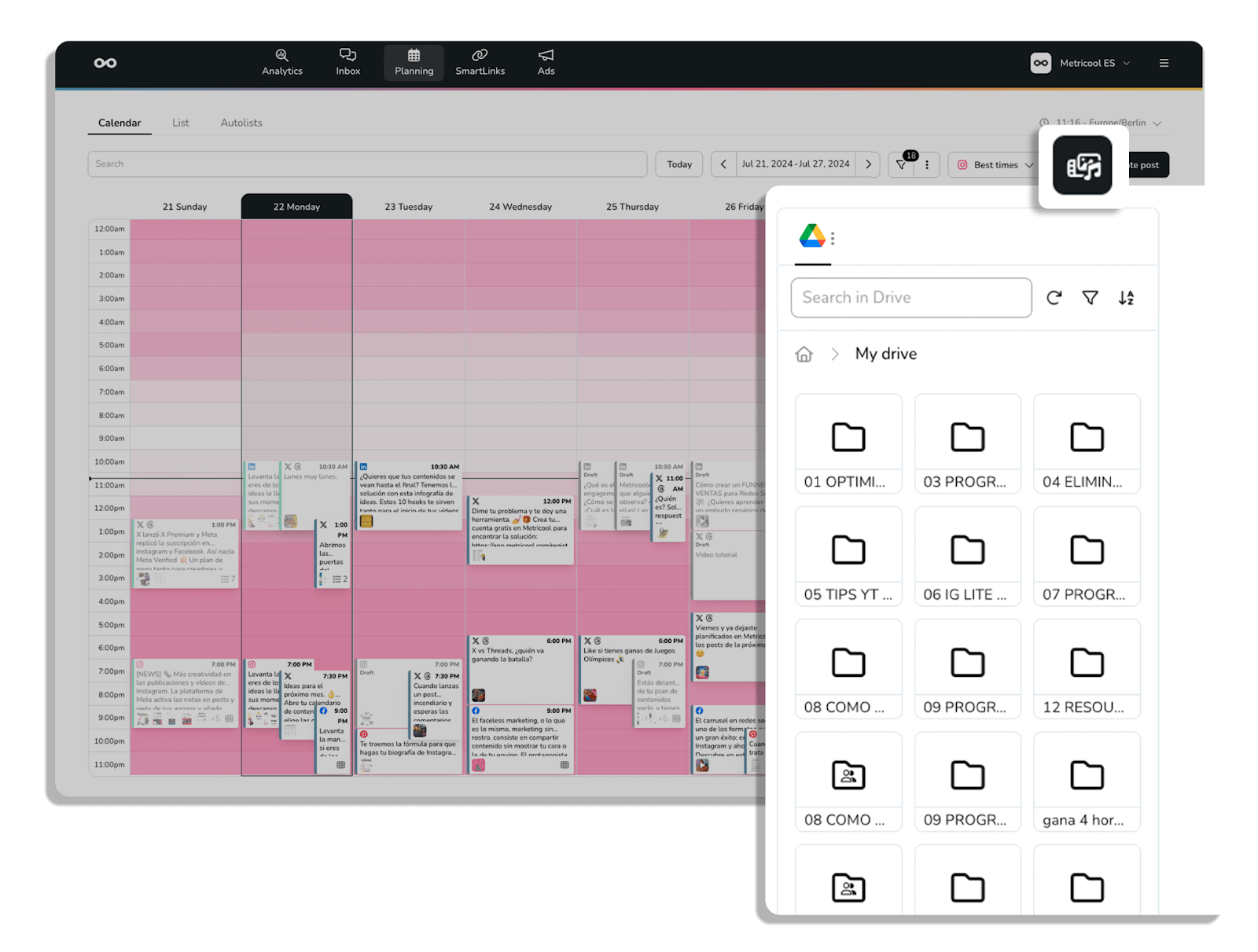
- Connect your Drive. In the Planner, click the multimedia icon in the top-right corner. You will be prompted to connect your Google Drive account.
- Pull in your files and schedule. Once you are connected, grab files straight from your Drive folders and schedule them like any other post, with no downloading and re-uploading between tools. A dedicated folder for your social assets keeps everything easy to find.
Send, Approve, and Reject in Bulk
Approvals can quietly become the slowest part of the whole process. Bulk actions keep them from piling up. In the Planner, the Lists tab shows all your upcoming content and where each post stands, whether it is published, waiting on approval, saved as a draft, or rejected.
From there, it depends on your role. If you are sending work for sign-off, select several posts at once, click Bulk actions next to Create new post, and choose Send to review, and the reviewer gets everything in one notification. If you are the reviewer, you approve or reject a whole batch in the same few clicks.
Why It Works Better in One Place
Bulk scheduling does the most for you when it sits next to everything else in your day:
- One Calendar: Every network’s scheduled posts in a single clear view.
- Direct Publishing: Posts go straight to Instagram, Facebook, TikTok, X, LinkedIn, and more, with no reminders to post later.
- Best Times to Post: Metricool reads your audience’s activity and points you to the moments your posts are most likely to be seen.
- Analytics in the Same Place: See how each post did in the same dashboard, then carry what you learn into your next batch.
Once a batch is scheduled, the time you would have spent posting goes back into the work that grows your brand.
Get Your Social Media Under Control
Organize your posts, your team, and your reports in one workspace.
