

21 Social Media Myths in 2026 That Are Slowing Your Growth
 Gretchen Oestreicher
18 February 2026
Gretchen Oestreicher
18 February 2026 
Social media is full of advice, tips, and “rules” that sound simple at first. Post more, go viral, be everywhere at once. Following all of it can leave you exhausted and unsure what actually works for your audience. The truth is, many common beliefs about social media are outdated or misleading.
In this article, we break down 21 myths that can hold you back and show practical, real-world ways to focus your energy, reach the right people, and measure results with confidence.
Myth 1: You Need to Be on Every Platform
Reality: Most brands perform better when they focus on fewer platforms and show up consistently.
Trying to be everywhere spreads your attention thin. Posting rushed content on multiple networks rarely pays off. Instead, pick 2–4 platforms where your audience actually spends time, post consistently, and measure engagement. Focusing energy this way improves content quality and makes tracking results manageable.
Use cross-platform analytics to compare which networks drive clicks, engagement, and real outcomes. Adjust focus based on actual performance rather than assumption.
Myth 2: More Posts Always Mean Better Results
Reality: Posting more does not automatically lead to better performance.
In 2026, platforms pay close attention to how people interact with your content. If posts consistently receive low engagement, increasing volume can quietly reduce reach over time. The algorithm reads that pattern as disinterest.
Brands seeing steady growth usually focus on:
- Clear content themes
- Strong hooks
- Consistent pacing
Track engagement metrics like saves, shares, and link clicks. And then use this data to decide the right frequency for your brand.
Myth 3: Follower Count Equals Success
Reality: Follower growth alone does not show impact.
A growing follower number can feel encouraging. It does not tell you whether content is influencing behavior, building trust, or supporting business goals.
In many cases, smaller accounts with engaged audiences see stronger outcomes than large accounts with passive followers.
It’s important to track metrics like:
- Engagement rate
- Saves and shares
- Website clicks
- Leads or conversions
Tools like Metricool make it easier to move beyond surface metrics and explain results in a way stakeholders understand. Reports become conversations about progress and not just numbers.
Myth 4: Social Media Is Only for Young Audiences
Reality: Social media reaches people across age groups and buying stages.
Your audience is likely broader and more thoughtful than you think. While Gen Z shapes trends on some platforms, founders, decision-makers, and buyers across demographics actively use social media to research and evaluate brands.
A common journey today looks like this:
- Discovery on short-form platforms
- Research on YouTube or LinkedIn
- Conversion later through a website or direct message
Review audience insights for each platform. Look at who engages, clicks, and saves. Then tailor messaging based on actual behavior rather than age stereotypes.
Myth 5: Going Viral Should Be the Goal
Reality: Sustainable growth usually comes from consistency, not viral spikes.
Viral posts can bring attention. They also tend to attract people outside your target audience and fade quickly. Long-term results usually come from content people recognize and return to.
Examples include:
- Weekly tips
- Ongoing series
- Educational formats
- Community Q&A’s
Metricool’s post-level analytics help you spot which themes and formats perform consistently, so you can build content systems that support steady growth instead of chasing one-off wins.
Myth 6: Social Media Does Not Drive Sales
Reality: Social media can influence the full funnel when structured clearly.
Sales rarely happen from a single post. People usually discover a brand, spend time learning, and decide later. Social content plays a role at every stage when there is a structure behind it.
Educational posts help people understand a problem. Stories and examples build trust. Clear calls to action show what to do next.
Tactics that support this include:
- Lead magnets
- DM conversations
- Link-in-bio pages
- Retargeting campaigns
Tracking clicks and conversions helps teams understand which platforms and content types contribute to leads and sales. Features like SmartLink inside Metricool make this process easier by connecting posts to real outcomes.
Myth 7: You Should Only Talk About Your Product
Reality: Audiences respond better to a mix of value, connection, and promotion.
Feeds filled only with product posts tend to feel repetitive and “salesy”. People follow accounts that help them think, solve problems, or feel understood. Promotion still has a place, but it works best when surrounded by helpful content.
Many brands use a simple balance:
- Educational or helpful content
- Behind-the-scenes or story-based posts
- Community questions
- Occasional promotional messages
This balance keeps audiences engaged and makes promotional posts feel more natural. Mapping content ahead of time helps teams see when promotion starts to crowd everything else. A visual content calendar makes it easier to adjust before engagement dips.
Myth 8: Social Media Is Too Informal for Serious Business
Reality: Professional content performs well when it feels human and clear.
In 2026, credibility comes from clarity. Audiences respond to expertise that is shared in accessible language. Process breakdowns, real examples, and thoughtful explanations build trust across industries.
Platforms like LinkedIn and YouTube work especially well for brands with longer buying cycles or complex offers. These spaces give room to explain, teach, and show experience without feeling stiff.
Serious brands can still show up on social media by:
- Sharing real workflows and lessons learned
- Explaining decisions instead of just outcomes
- Using clear visuals and simple language
- Staying consistent with tone across platforms
Review how similar brands communicate helps teams find gaps and opportunities. Competitor analysis gives context without copying anyone’s voice.
Myth 9: Short-Form Content Has Replaced Long-Form
Reality: Short-form and long-form content work best together.
Short-form content grabs attention and drives discovery, while long-form content builds depth, trust, and conversions. Both formats complement each other and are most effective when used in a coordinated way.
How to integrate short and long-form content:
- Create short hooks for social feeds. Use quick videos, Reels, or Shorts to attract attention.
- Provide longer follow-ups. Blog posts, live streams, or in-depth videos can educate and guide your audience.
- Track movement between formats. See how users move from discovery to deeper engagement or conversion.
Metricool’s analytics help you monitor how audiences interact with both short and long-form content, giving you a clearer view of which formats drive results and how they support different stages of the journey.
Myth 10: Organic and Paid Social Should Be Managed Separately
Reality: Organic and paid efforts inform each other.
Top-performing organic posts often make strong ad creatives. Paid campaigns reveal which messages resonate fastest.
When teams review both together, they gain clearer insights into what to scale and what to refine. Metricool allows you to analyze organic content and ads in one place, so you can better connect performance across the funnel.
Myth 11: If a Format Worked Once, It Will Always Work
Reality: Audience preferences and platform priorities change regularly.
A carousel series might perform well for three months and then quietly lose momentum. A video style that once drove comments can start feeling repetitive. This can happen when audiences get too used to certain patterns, algorithms change, or when trends influence audience expectations.
Even your strongest formats can plateau over time. Small adjustments often make a difference, such as:
- Testing new hooks
- Updating visuals
- Changing calls to action
Historical performance data makes these decisions easier. Instead of guessing, you can see patterns over time and spot when engagement begins to slow. Inside Metricool, post history helps you identify when a format needs a refresh rather than repeating it automatically.
Myth 12: Once a Post Flops, It Is a Lost Cause
Reality: Timing and packaging affect performance more than many people realize.
Every social media manager has experienced this. A post you believed in barely moved. A quick filler post performed better than expected.
Some posts underperform simply because they were shared at the wrong time or needed a clearer hook. Revisiting strong ideas can extend their lifespan.
Options include:
- Reposting at a better time
- Adjusting the caption
- Repurposing into another format
Best times to post data and performance history help you decide which content is worth revisiting and when to try again. That structure removes the emotional guesswork.
Myth 13: Comment Sections Do Not Matter
Reality: Comments and conversations are a sign of audience engagement and brand relevance.
Comments show interest. Questions reveal buying signals. Feedback highlights content ideas. Ignoring this space leaves insight on the table.
Platforms also reward interaction. Two-way engagement increases visibility and keeps your brand present in feeds.
Practical steps include:
- Review comments daily or weekly to spot questions and trends
- Respond promptly with helpful answers
- Encourage discussion with clear prompts
Managing multiple accounts can feel overwhelming. Inbox management tools bring comments and DMs into one place, making it easier to stay responsive without constant platform switching.
Myth 14: Social Media Is Free
Reality: While opening an account costs nothing, building a meaningful presence requires time, effort, and resources.
Content creation, community management, ads, and reporting all have real costs. The value comes when those efforts are structured and aligned with business objectives.
To make this manageable:
- Schedule content in advance to save time
- Track what actually drives results
- Allocate budget for paid campaigns where organic reach is limited
Seeing the return on your time and budget matters. Reporting and analytics help connect content efforts to real outcomes, whether that’s engagement, leads, or sales.
Myth 15: Reporting Has to Be Manual and Complicated
Reality: Social media reporting can be simple, structured, and actionable.
Manual spreadsheets take hours and often slow down decision-making. Automation and centralized dashboards free up time for strategy and content improvement.
A practical approach:
- Connect all your accounts to one dashboard
- Automate report generation for stakeholders
- Focus on key insights that guide next steps
Metricool generates customizable reports in minutes and can deliver them automatically to your team or clients, helping you focus on improving results instead of compiling data.
Myth 16: More Hashtags Means More Reach
Reality: Relevance matters more than volume when it comes to hashtags.
Hashtags still help with discovery, but piling on dozens rarely improves performance. In many cases, it creates confusion for both algorithms and humans scrolling past your post. Fewer, highly targeted tags that match your audience’s interests perform better.
Tips for using hashtags effectively:
- Research which tags your audience searches for
- Include a small, focused set per post
- Track performance and adjust regularly
Metricool’s hashtag tools show trending and related hashtags, helping you choose ones that actually improve discoverability.
Myth 17: You Should Only Post During Business Hours
Reality: Your audience is probably active outside the standard 9 to 5 schedule.
Many people scroll before work, after dinner, or during weekends. Depending on your audience and platform, those moments can outperform traditional business hours.
Posting only during office hours limits reach, especially for creators and brands with global or flexible audiences.
Steps to find your best posting windows:
- Review audience activity data
- Test different posting times
- Adjust schedule based on performance
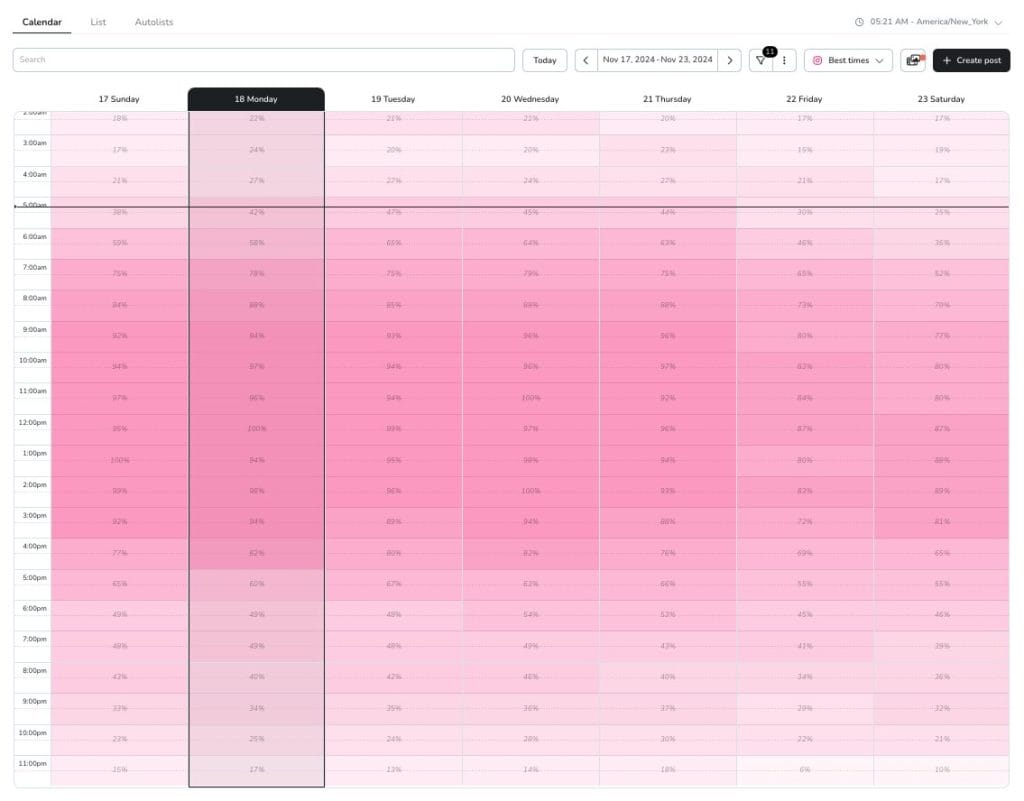
Metricool’s content calendar shows you a heatmap of the best times to post across different platforms, helping you schedule and publish content at the times that make the most impact.
Myth 18: AI and Automation Can Run Your Social Media Alone
Reality: AI and automation are helpful tools, but human strategy and oversight remain essential.
AI can speed up ideation, draft posts, or suggest formats, and automation can handle scheduling and reporting. However, engagement, storytelling, tone, and strategic decisions require human judgment. Audiences respond to authenticity, not fully automated content.
Ways to use AI and automation effectively:
- Let AI suggest ideas or variations. Use it as a co-pilot for content inspiration.
- Review and edit for tone and brand voice. Make sure everything aligns with your audience.
- Queue repetitive posts with scheduling tools. Save time without compromising quality.
- Monitor engagement and jump into conversations. Real interactions build trust.
- Use analytics to inform future content. Adjust based on what speaks to your audience.
Metricool’s AI Social Media Assistant and scheduling features help you create, repurpose, and publish content while keeping your social media human and authentic.
Myth 19: Dark Social Cannot Be Influenced
Reality: Private sharing can be guided with content designed to be shared.
Dark social includes DMs, private groups, and messaging apps. You cannot see or track everything that happens there, but you can encourage it.
People share content privately when it feels useful, clear, or easy to explain to someone else.
Tips to influence dark social:
- Create posts that solve problems or answer questions
- Encourage saving, sharing, and tagging friends
- Track proxy signals like shares, clicks, and saves
Tracks saves, shares, and click behavior for insight into how content spreads beyond public feeds.
Myth 20: Social Media Strategy Is One Size Fits All
Reality: Strategies need to be tailored to your audience, industry, and resources.
Copying another brand rarely works. What succeeds for one business may fail for another due to differences in audience, goals, and content capabilities.
Personalized strategies perform better because they reflect real behavior, not assumptions.
Steps to personalize your strategy:
- Review your own historical data
- Benchmark competitors in your industry
- Adjust content themes, posting times, and formats based on insights
Metricool provides unified analytics, competitor comparisons, and historical reports to help you create a strategy that works for your brand specifically.
Myth 21: All Social Media Management Tools Are the Same
Reality: Tools differ in depth, clarity, and the way they connect strategy to execution.
Some tools focus only on scheduling. Others support planning, analytics, engagement, and reporting in one place. The difference shows up in daily workflows.
The right platform reduces friction. It helps teams see what is happening and decide what to do next.
The right tool should help you:
- Plan content visually
- Schedule across multiple channels
- Monitor engagement in one inbox
- Review performance clearly
- Generate reports without hours of formatting
When planning, analytics, inbox management, and reporting sit inside one platform, your workflow feels lighter. You spend less time compiling data and more time improving content. With Metricool you have fewer tabs, fewer spreadsheets, and fewer last minute scrambles before client meetings.
Take Control of Your Social Media Results
Stop guessing and start posting with confidence. Track, plan, and grow your brand smarter.
