

How to Achieve Work Life Balance as a Social Media Professional (When Your Job Lives on Your Phone)
 Gretchen Oestreicher
30 March 2026
Gretchen Oestreicher
30 March 2026 
If you work in social media, your job doesn’t stay on your laptop. It lives in your phone, in your notifications, in your camera roll, in saved posts. The apps you open to relax are often the same ones you use for work. That overlap is part of the job now, but it comes with a cost.
It can leave you feeling like you’re always “on,” even when the workday is technically over. Metricool’s latest Well-Being in Social Media report shows this: social media professionals are feeling the tension.You want to do your best work, but it often comes at the expense of your energy, focus, creativity, and sleep.
The good news is you don’t need to disconnect completely to feel balanced. With the right structures and habits, you can stay effective in your role while creating space for your life outside of it. Let’s explore what balance looks like in social media today and how you can start building it in a way that works for you.
What Work-Life Balance Means in 2026 for Social Media Managers
Work-life balance looks different in social media than it does in most other jobs.
It’s not a clean split between “work time” and “personal time.” The platforms you manage are always active, your audience is always there, and your ideas don’t always show up between 9 and 5.
So instead of aiming for perfect separation, it helps to understand what balance actually looks like in this kind of role and what’s realistically within your control.
The “Always On” Reality
Social media roles have expanded a lot. Most people aren’t just posting content anymore.
They’re planning strategy, writing captions, editing video, designing graphics, replying to comments, checking analytics, reporting results, spotting trends, and handling last-minute changes. Often all in the same day.
And for many, this isn’t spread across a team. It’s handled by one person or a very small group.
Then you add in how the work itself is structured. Remote setups, global audiences, and platforms that never pause on the devices you use every day make it harder to draw a clear line between work and everything else.
It’s not unusual to check a notification in the evening and end up back in “work mode” without really meaning to.
More than half of professionals say that being constantly online and needing new ideas all the time are major sources of pressure. That mental load builds up, even if you’re not actively working every minute.
A More Realistic Definition of Balance
In this environment, work-life balance doesn’t mean logging off at 5 PM and never thinking about work again. That’s just not how this job works.
A more realistic version of balance looks like this:
- You know when you’re “on” and when you’re “off”
- You can step away or turn off notifications without feeling anxious
- You’re not constantly working overtime to keep up
- You still have energy for your life outside of work
Right now, that’s not the reality for most people.
About 73% of social media professionals work overtime at least sometimes, and only around one-third say they have enough energy left after work to do other things.
In 2026, balance is about managing your time and attention in a way that supports both performance and well-being.
What Work-Life Balance Actually Looks Like
It’s one thing to talk about balance, and another to picture what it actually looks like in your day-to-day.
For most social media managers, the opportunity lies in shaping a workflow that feels structured, flexible, and sustainable.
So instead of aiming for a “perfect” routine, it helps to look at what a better setup could realistically feel like, and how far that is from what many people are experiencing right now.
A Balanced Workday and Workweek
A balanced day in social media shouldn’t feel rushed or reactive most of the time.
Content is planned ahead instead of being pulled together at the last minute. Notifications aren’t checked every few minutes. Evenings aren’t spent replying to comments or checking performance.
A balanced week has structure:
- Time set aside for planning
- Content created in batches instead of daily stress
- Clear working hours and clear offline time
- Space to think, create, and focus without constant interruptions
It’s important to remember, however, that social media rarely works this way 100% of the time. Urgent matters and last-minute tasks do come up. But having this kind of structure makes things feel more predictable and less overwhelming, and gives you more time for when emergencies do arise.
The Reality Most People Are Living
For many social media professionals, that structure just isn’t there.
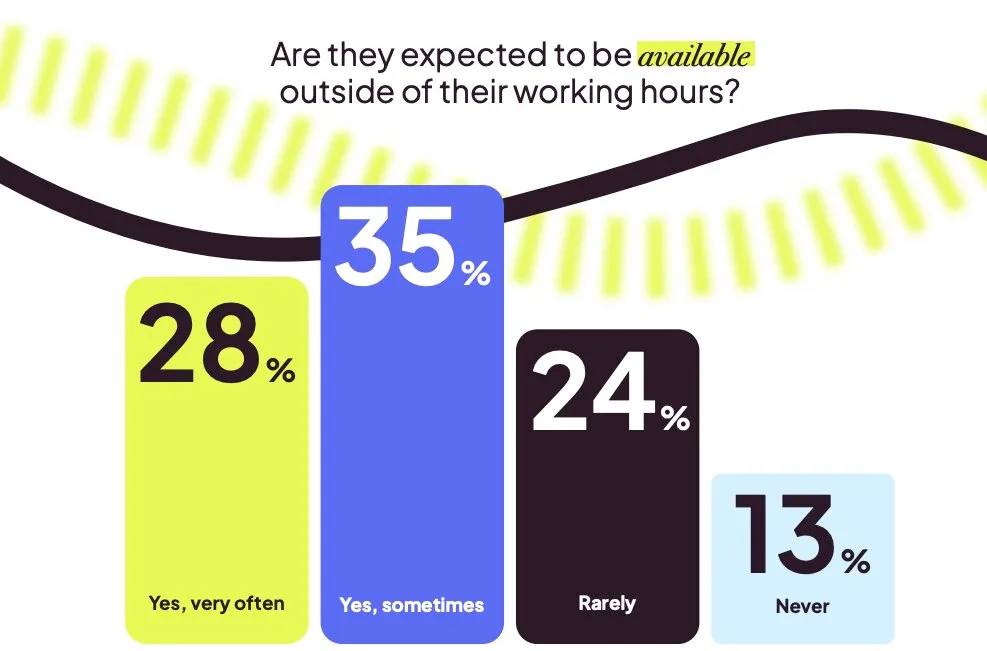
- 63% are expected to be available outside working hours
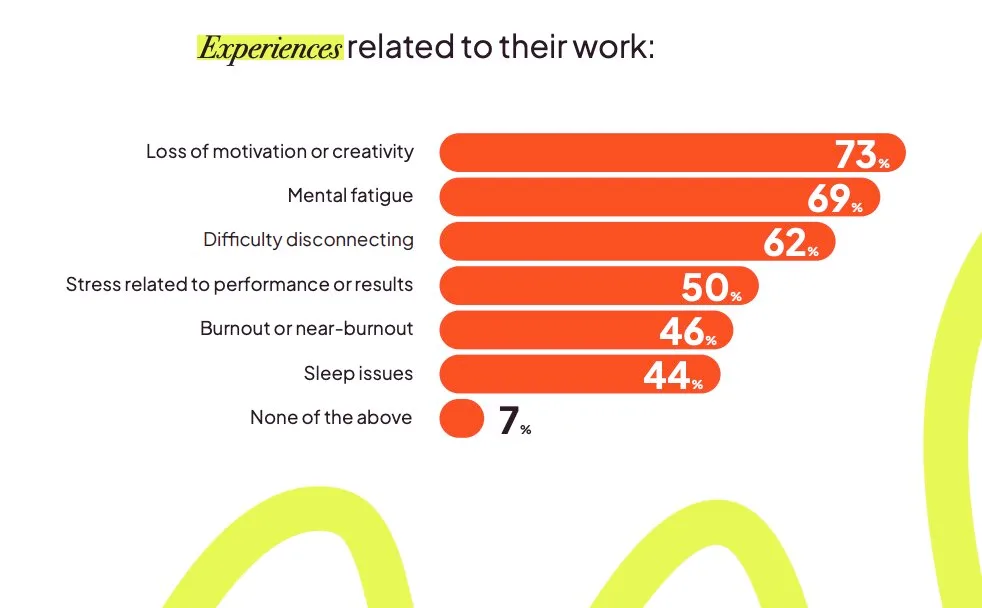
- 62% say they have trouble disconnecting
- 44% deal with sleep issues from overthinking work
- Around one-third feel emotionally exhausted
On top of that:
- 75% feel they’re expected to do too much at once
- Over half feel pressure from being constantly online and chasing performance
When you put all of that together, it becomes clear why balance feels out of reach.
Most people know how to plan their time, and most already are. The challenge is that the workload keeps shifting, expectations keep growing, and there’s always something else that feels urgent. And this is why it isn’t really a time management problem.
It’s a combination of workload, expectations, and the way social media work is structured and until those pieces start to shift, balance will always feel a bit harder to hold onto.
Why Work-Life Balance Matters in Social Media
When you’re in the middle of deadlines, comments, and content calendars, it’s easy to treat work-life balance as something you’ll figure out later.
But balance shouldn’t be put on the backburner. It directly affects how you feel, how you work, and how long you can realistically stay in the role.
Let’s look at why it matters, and why it can feel so difficult to get right.
It Affects Your Health
The numbers are clear. When it comes to social media management, professionals report:
- 69% mental fatigue
- 62% difficulty disconnecting
- 44% sleep issues
- 46% burnout or near-burnout
When your mind stays active, creating intentional moments of rest helps you recharge fully. Stepping away allows you to return with clearer focus, better mood, and stronger performance over time.
It Impacts Your Creativity
Social media thrives on ideas, and ideas grow best with space.
If your day is filled with reacting, checking, and adjusting, there’s very little space left to think creatively.
That shows up in the data too. 73% of social media professionals say they’ve experienced a drop in motivation or creativity.
When everything feels urgent, creativity can start to feel forced. You end up posting just to keep up, instead of creating something you actually feel good about.
Rest and distance aren’t distractions from creative work. They’re part of how good ideas happen in the first place.
It Shapes Your Career Long Term
Almost 46% of professionals have considered leaving social media work because of stress or burnout.
That doesn’t come from a lack of interest or passion. It comes from working in a way that isn’t sustainable.
Without balance built into your workflow, it becomes difficult to stay in the role long enough to grow, develop skills, and feel fulfilled. Maintaining boundaries, structuring your time, and building routines that support your energy aren’t just nice to have. They’re necessary if you want to continue in social media without burning out.
Why It’s So Hard to Find Balance When Working in Social Media
If balance feels out of reach, there are real reasons behind it.
For most people, it’s not poor time management. It’s how the work is structured and what’s expected day to day.
The “Always On” Culture
Social media never sleeps, and that expectation carries over to the people managing it.
- 63% are expected to be available after hours
- Only about 21% feel they can fully disconnect often
- A large group say they rarely or never disconnect at all
The problem isn’t motivation. It’s the tools themselves. Notifications, messages, and trends are constantly within reach. That means even a quick check for curiosity or research can pull your brain back into “work mode,” often without you realizing it. Over time, this constant partial attention builds stress, reduces focus, and makes it harder to mentally separate work from life.
Too Many Roles, Not Enough People
A lot of social media professionals are doing this alone.
- 59% say they’re a one-person team
- 75% feel they’re expected to do too many things at once
Strategy, content creation, design, analytics, and community management all add up quickly. This workload doesn’t fit neatly into a standard workday, which makes it hard to feel like you’ve “finished” work. When you’re wearing multiple hats alone, balance isn’t just a nice-to-have, it’s essential for your health and creativity.
Constant Changes and Urgency
Plans change quickly in social media.
- 73% work overtime regularly
- Over 78% deal with urgent or last-minute issues
The common drivers of overtime include last-minute changes, live events, campaign launches, and crisis management. Even with strong planning, priorities can shift in minutes, making it feel like you’re always catching up. This constant urgency contributes to stress, fatigue, and difficulty maintaining boundaries.
Performance Pressure
Metrics are always visible, and they matter.
- Around 50% feel stressed about performance
- Over half feel pressure to go viral or hit high numbers consistently
- 44% say algorithm changes add to that pressure
When performance is constantly measurable and visible, it’s difficult to step back. The pressure to produce results at all times can make it feel like there’s no natural stopping point, keeping energy focused on work long after the official day ends.
Emotional Load
Managing comments and messages isn’t just a task. It’s emotional work.
Most people say negative feedback affects them. For about 22%, it can impact their mood for the rest of the day.
That emotional weight builds over time. When left unaddressed, it can reduce motivation, creativity, and overall satisfaction with work. Recognizing that engagement has an emotional cost is the first step toward creating systems that protect your energy.
Blurred Lines and Limited Support
Social media is both your workspace and your personal space.
Even when companies introduce well-being initiatives, many professionals say they don’t feel much difference.
There’s also a recognition gap. Only about 10% feel their work is very well understood, while over 42% feel it’s not really understood or not at all.
Without recognition and support, it is harder to set boundaries or push back on unrealistic expectations. When others don’t see the full scope of your work, saying no or asking for help can feel impossible. That lack of structural support makes balance feel distant, even when you try to implement strategies on your own.
How to Build a More Balanced Way of Working
You don’t need to do less in order to achieve work-life balance as a social media professional.
Plan Content Ahead of Time
When you plan content ahead, your day becomes less about reacting and more about executing. Knowing what’s going out and when removes a lot of last-minute stress and makes your schedule feel much more manageable.
Batching posts, designing graphics in blocks, and writing captions ahead of time can help you focus on the creative work without feeling rushed. Instead of scrambling every morning, you can use your time to think strategically, test new ideas, or just breathe between tasks.
Set Clear Boundaries Around Availability
If you don’t define your hours, the platforms and your audience will. Setting clear availability helps you reclaim control over your time.
Communicate when you’ll respond to messages or comments, and stick to it when possible. Many social media professionals already turn off notifications outside working hours, which is a simple but powerful way to mark the end of the workday. These boundaries signal to both your brain and your audience that you are not “always on.”
Build Repeatable Systems
Not every post or task needs to be reinvented daily. Creating repeatable workflows and formats saves mental energy and keeps your work consistent.
Content pillars, recurring templates, and weekly routines let you focus less on figuring out what to do and more on doing it well. Many social media managers report feeling in the middle ground between chaos and control. Introducing small, repeatable systems is a way to tip toward predictability without overcomplicating things.
Reduce Scope Where You Can
When you’re handling strategy, design, analytics, and community management on your own, something has to give. Reducing scope doesn’t mean slacking off; it’s making the workload realistic.
This could look like having a conversation about priorities with your manager or clients, outsourcing certain tasks, or adjusting expectations for what you can handle in a week. Even small changes can free up time and energy, making your work feel less like a constant scramble.
Separate Work Time From Scroll Time
It’s easy to mix personal scrolling with work tasks, especially when trends, research, and inspiration live in the same apps. But blending work and leisure keeps your brain in “work mode” longer than necessary.
Try setting specific times for checking trends, researching competitors, or catching up on industry news. Then close the apps and switch to personal time. That separation helps your mind rest and keeps you from feeling like work never ends.
Rethink What Success Looks Like
Not every post needs to go viral or break records. Measuring success through consistent engagement, saves, meaningful comments, and steady follower growth gives you a more realistic and less stressful way to track progress.
Shifting your focus away from constant high-pressure targets allows you to celebrate steady wins and reduces the mental load of feeling like you’re failing every time performance dips.
Make Time for Life Outside Work
Work-life balance isn’t about squeezing life around work. It’s about making room for things that recharge you. Social media professionals who feel healthier and more motivated often do more than just manage tasks efficiently. They make sure to actively make space for life outside work.
This looks like:
- Physical activity
- Time with family and friends
- Leisure activities like reading or going to the cinema
- Managing screen time and notifications outside of working hours
Practical Ways to Make Your Day Easier
A few small shifts can make a big difference:
- Turn off notifications after work hours when you can
- Stick to a realistic posting schedule instead of trying to post every day
- Batch similar tasks instead of switching between them all day
- Leave buffer time for last-minute changes
- Block out focused time for strategy and creative work
- Create a simple end-of-day routine to fully log off
- Check analytics at set times instead of constantly refreshing
How Metricool Helps You Create That Structure
Having a plan is one thing. Being able to stick to it is another.
That’s where a tool like Metricool can actually make a difference. It helps turn all the moving pieces of social media into a system that works for you instead of against you.
Plan and Schedule Everything in One Place
A visual content calendar lets you see your posts across all platforms in one view. That means no more scrambling each morning wondering what to post. You can map out content for the week or month ahead, plan campaigns, and build in buffer time for unexpected changes.
Having everything scheduled in advance also reduces stress during busy periods like product launches or campaigns. Instead of feeling reactive, you can approach your week with a sense of control and confidence.
Spend Less Time Jumping Between Platforms
Switching between apps all day fragments your focus and makes your workload feel heavier than it is. With Metricool, you can manage multiple accounts from one dashboard.
Everything is in one place, from posting to analytics to engagement. That means less context-switching, fewer distractions, and more time to focus on the work that actually matters.
Handle Messages in Focused Blocks
Engagement can take over your day if you let it. Instead of checking comments and messages constantly across different apps, a unified inbox lets you handle everything in focused blocks of time.
Set aside dedicated windows to respond to your audience, then close the inbox and move on. That small shift gives your brain a break from constant notifications and helps you focus on bigger priorities.
Check Performance Without Obsessing Over It
Analytics shouldn’t be overwhelming. When your performance data is organized in one place, you can review it when it makes sense for your schedule.
Metricool also allows you to automate reports, saving time and taking the pressure off constant tracking. You can focus on improving your content instead of endlessly refreshing metrics, which helps you make decisions from a place of clarity rather than stress.
Let Tools Give You Time Back
Many professionals already use automation and tools, but they don’t always reduce stress. Metricool is designed to help you take control of your day rather than add another layer of complexity.
By centralizing planning, posting, engagement, and analytics, it gives you structure and frees up mental space. That way, you spend less time managing apps and more time focusing on content, strategy, or just taking a breather.
Built for Different Setups
Whether you’re a freelancer juggling multiple clients, part of a small agency, or managing social media in-house, the daily challenges are similar.
Metricool adapts to your workflow, helping you create routines that actually stick. You can organize your week, handle engagement in blocks, and track performance without feeling like work is running you. It’s not a fix-all, but it gives you the support you need to hold onto balance in a role that never really stops.
Work Life Balance Doesn’t Mean Doing Less
Social media professionals are skilled, creative, and flexible. The challenge comes from how work is structured, the boundaries in place, and the support available.
Work-life balance is about deciding when you’re working, how you manage your time, and when it’s okay to step away. It creates a rhythm that lets you give your best to your work while keeping your energy and creativity intact.
Social media never stops. Trends keep moving, notifications keep coming, and audiences stay active. That is part of the job. At the same time, your health, focus, and well-being also matter. You can manage your work without being always on.
Finding balance means reclaiming control over your time, building routines that match your workflow, and giving yourself permission to log off fully. Social media will keep running, and you can keep producing strong, consistent content without sacrificing your life outside work.
