

The Time-saving Social Media Management Workflow: Your 2026 Template
 Kalum
06 March 2026
Kalum
06 March 2026 
Social media success in 2026 is half popularity contest, half strategic quest for efficiency. The complexity of managing multiple platforms, varying content formats, and the integration of artificial intelligence means that a disorganized approach is no longer sustainable. Whether you are a solo entrepreneur or part of a large agency team, your ability to scale depends entirely on a structured social media management workflow.
Without a clear social media workflow process, hours are wasted on indecision, last-minute scrambles for content, and reactive engagement. This guide provides the template for building a social media marketing workflow that protects your time while maximizing the impact of your brand’s digital presence.
Why Every Professional Needs a Standard Social Media Workflow
For our 2026 Social Media Well-Being Study, we surveyed over 1000 creators, social media managers, and entrepreneurs to identify the friction points that are holding them back. One of the questions we asked was which specific tasks people handle mostly negatively. These are the areas where your social media workflow is likely breaking down.
| Task | % |
| Content creation | 91.91% |
| Strategy and planning | 91.69% |
| Analytics and reporting | 78.53% |
| Copywriting | 76.91% |
| Video editing | 73.25% |
| Graphic design | 72.06% |
When over 91% of professionals find content creation and strategy to be a negative part of their role, it is a sign that the “administrative” part is crushing the “creative” part of the job. A good social media content workflow seeks to flip this ratio.
A well-defined social media manager workflow offers three primary benefits:
- Consistency without Burnout: Our survey found that over 75% of social media professionals feel they are expected to do too many different things at once. Batching tasks and planning ahead takes some of this stress and can help you feel less overwhelmed.
- Improved Content Quality: When you aren’t rushing, you have the space to refine your hooks, check your facts, and ensure your visuals are on brand.
- Measurable Scalability: A repeatable process makes it easier to bring on new team members or take on more clients without a drop in performance.
Phase 1: The Discovery and Strategy Phase
A successful social media workflow does not start in a design tool; it starts with a strategy. In 2026, the platforms are too crowded for “aimless” content.
Define Your Objectives
Start by aligning your social media goals with your overarching business objectives. Are you looking for brand awareness, lead generation, or community building? Your social media workflow template should include a section for these goals to ensure every piece of content serves a purpose.
Research Your Audience and Competitors
Understand where your audience spends their time. In 2026, this might mean prioritizing LinkedIn for professional services or TikTok for consumer goods. Your social media content workflow must be tailored to the specific behaviors of these users.
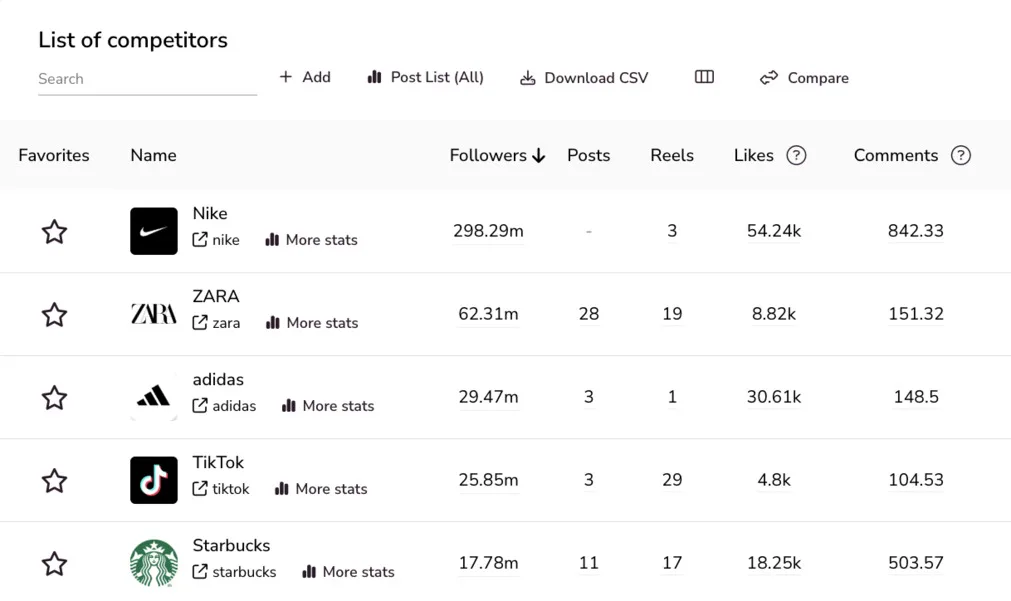
You also need to research your competitors, not to copy them, but to better understand your market. Metricool allows you to analyze your competitors’ content performance on each platform, so you can accurately benchmark yourself against the field. As Sun Tzu once said, “Know your enemy”.
Phase 2: The Social Media Content Workflow (Planning & Creation)
This is the engine room of your social media presence. The planning and creation phase is often where most time is lost, which means it’s also where the most time can be saved through better organization.
Use a Content Calendar
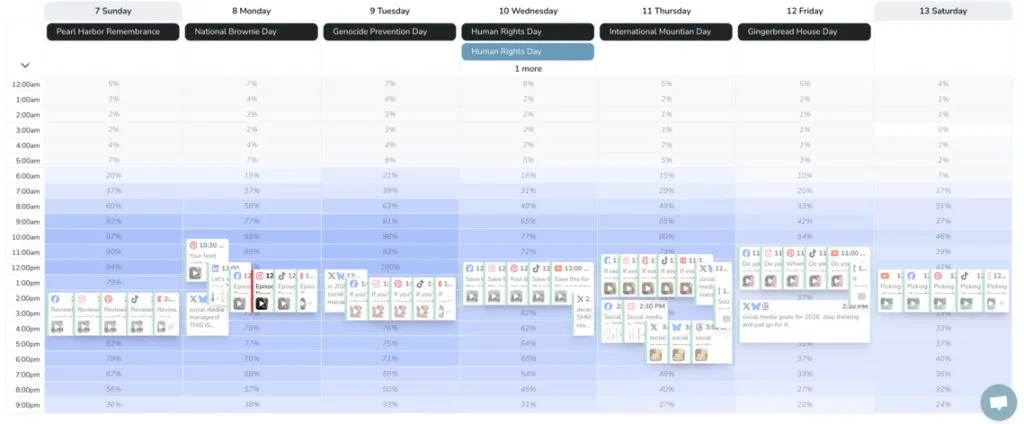
The centerpiece of any social media manager workflow is the content calendar. While some social media managers are still planning content on a shared doc or spreadsheet, pros use a dedicated calendar within a management tool. This gives a true birds-eye view of a week or month of content for all platforms.
- Theme Days: Assigning themes to specific days (e.g., Educational Tuesdays, Behind the Scenes Fridays) reduces the “blank page” problem.
- Key Dates: Incorporate industry events, holidays, and product launches well in advance (Metricool’s calendar includes important dates and holidays for your market).
Batch Your Content
The single most effective social media management workflow tip is batching. Context switching (moving from writing to filming to editing) is a productivity killer.
- Writing Sessions: Set aside a block of time to write all your captions for the next two weeks.
- Filming Days: Gather all your props and equipment and film several Reels or videos in one go.
- Design Blocks: Use your templates to create all the graphics for your carousel posts in a single sitting.
Integrate AI… Wisely
In 2026, AI is a partner in the social media content workflow. Use it to brainstorm headlines, summarize long-form articles into social posts, or generate initial drafts of captions. However, the “human touch” remains your brand’s unique value. Always review and edit AI-generated content to ensure it matches your voice and provides genuine value.
Phase 3: The Social Media Management Workflow (Scheduling & Distribution)
Once the content is created, it needs to be placed where people can see it. This is where automation becomes your best friend.
Choose the Right Tool
A centralized tool like Metricool is essential for a professional social media marketing workflow. It allows you to:
- Cross-Platform Posting: Adapt a single piece of content for different platforms (e.g., turning a LinkedIn post into an Instagram caption) and schedule them all from one dashboard.
- Optimal Timing: Use data to determine when your specific audience is most active and schedule your posts to go live at those exact moments.
- Grid Preview: For platforms like Instagram, seeing how your posts will look together is a vital part of the social media workflow process.
Establish Approval Processes
If you are working in an agency or a large team, your social media workflow template must include an approval step. This prevents errors and ensures brand consistency.
- Internal Review: A second pair of eyes to check for typos and tone.
- Client Approval: A clear system for clients to provide feedback or sign off on posts before they go live.
Phase 4: Monitoring & Engagement Processes
Posting the content is only half the battle. Social media is an exchange, and engagement is the currency of the 2026 algorithm.
Community Management: More Than a Buzzword
Your social media manager workflow should include daily “engagement windows.” Instead of checking notifications all day, set aside 20 minutes in the morning and 20 minutes in the afternoon to:
- Reply to Comments: Acknowledge your community and answer their questions.
- Respond to DMs: This is where many conversions happen.
- Proactive Engagement: Spend time commenting on the posts of industry leaders and potential collaborators to increase your visibility.
Don’t have time? That’s probably because you skipped Phase 3. Start scheduling that content, and use the free time to engage with your followers and build relationships.
Make a Crisis Monitoring Plan
Part of a professional social media workflow process is having a plan for when things go wrong. Monitor your mentions and brand name to address any negative feedback or technical issues immediately.
Phase 5: Analysis and Reporting
The final stage of the social media marketing workflow is looking back to see what worked. This data informs your next cycle of creation.
Track Key Metrics
Move beyond vanity metrics like likes. In 2026, look at:
- Conversion Rate: Did the post lead to a website visit or a newsletter sign-up?
- Saves and Shares: These indicate that the content provided high value.
- Audience Growth Rate: Is your community expanding over time?
Create Monthly Reports
Create a standard reporting format as part of your social media workflow template. This keeps stakeholders informed and helps you stay accountable to your goals. Use this data to adjust your strategy for the coming month. With Metricool, you can create custom reports and set them to be automatically sent to you monthly.
Your 2026 Social Media Workflow Template
To help you get started, here is a simplified social media workflow template that you can adapt for your specific needs.
| Phase | Tasks | Frequency |
| Strategy | Goal setting, audience research, platform selection. | Monthly / Quarterly |
| Planning | Brainstorming, updating the content calendar. | Bi-weekly |
| Creation | Writing, filming, designing, editing. | Weekly (Batched) |
| Approval | Internal review, client sign off. | Weekly |
| Scheduling | Uploading to management tool, setting times. | Weekly |
| Engagement | Replying to comments, DMs, proactive outreach. | Daily |
| Analysis | Reviewing metrics, creating reports. | Monthly |
Tips for Refining Your Social Media Manager Workflow
Even with a template, a workflow is something that should be refined over time. Here are a few ways to keep yours efficient:
1. Document Everything
Create a “Standard Operating Procedure” (SOP) for your social media workflow. This should include your brand voice guidelines, color palettes, and the specific steps for uploading content. This makes onboarding new team members much faster.
2. Use Templates for Everything
Don’t reinvent the wheel every time you create a post. Have a library of templates for:
- Instagram Stories
- Reel covers
- LinkedIn carousel backgrounds
- Reporting slides
3. Audit Your Process Regularly
Every three months, take a hard look at your social media management workflow. Ask yourself:
- Which step takes the most time?
- Can this step be automated or simplified?
- Is there a bottleneck in the approval process?
4. Stay Flexible
While a social media workflow provides structure, it should not be rigid. Leave room for “reactive” content. If a major news story or a viral trend happens that is relevant to your brand, you should be able to pivot quickly. A solid workflow gives you the time to be reactive because your evergreen content is already handled.
How Metricool Solves the Workflow Crisis
The reason 75.40% of people feel they do too many things is that they are using too many different platforms to do them. Metricool is designed to be the single control station for your social media manager workflow.
By bringing your strategy, content creation, scheduling, and analytics into one dashboard, we help you eliminate the negative friction that 91% of you feel toward planning and creation.
Metricool allows you to schedule your content across all platforms simultaneously, manage your DMs in a unified inbox, and generate professional reports in seconds. It is the infrastructure that allows you to start working truly strategically.
The Path to Productivity
Mastering your social media workflow is a journey, not a destination. By implementing a clear social media workflow process, you transition from being a reactive poster to a proactive strategist. You save time, reduce stress, and most importantly, you create a better experience for your audience.
In 2026, the brands that win are not the ones that post the most, but the ones that post the most effectively. A structured social media management workflow is the foundation for that success.
