

The Complete Guide to Creating a Customer Journey Map
 Emerson Tyler
18 June 2024
Emerson Tyler
18 June 2024 
Understanding the customer journey is crucial for businesses aiming to deliver exceptional experiences and achieve long-term success. With that said, people don’t usually discover a brand and buy right away. Most customers move between social media, emails, reviews, websites, and ads before making a decision. With so many touchpoints involved, it can be tough for businesses to understand what’s driving conversions and where customers lose interest.
That’s why creating a customer journey map is crucial. It helps you visualize the customer experience from the first click to becoming a loyal customer while improving their lifecycle marketing strategy along the way. In this guide, we’ll cover what a customer journey map is, how to build one, and the best ways to improve customer interactions.
What Is a Customer Journey Map?
Understanding how customers interact with your brand can make a huge difference in your marketing strategy. From the first time someone sees your content to the moment they become a repeat customer, every interaction shapes their decision-making process. By mapping out the full journey, you can create smoother customer experiences.
A customer journey map can help teams identify:
- Customer motivations
- Common pain points
- Drop-off points in the buying process
- High-performing touchpoints
- Opportunities to improve engagement
Customer Journey vs Customer Experience
Customer journey and the customer experience are related, but they mean different things. The customer journey is the series of steps people take when interacting with your brand, like finding your business, visiting your website, opening emails, making a purchase, or contacting support.
Customer experience is how those interactions feel. A customer may complete the journey successfully, but still leave frustrated if the process was confusing or difficult. Simply put, the customer journey is the actions customers take, while customer experience is how those actions make them feel.
Why Customer Journey Mapping Matters for Lifecycle Marketing
Customer journey mapping is an important part of lifecycle marketing because it helps you understand customer intent at every stage of the relationship. When brands know what customers need, they can create more personalized marketing strategies, including:
- Targeted email campaigns
- More relevant social media content
- Better customer retention strategies
- Personalized recommendations
- Improved customer support
Instead of sending the same message to everyone, businesses can deliver content that feels more timely and relevant. This leads to stronger customer relationships, better engagement, and increased loyalty over time.
The Main Stages of the Customer Journey
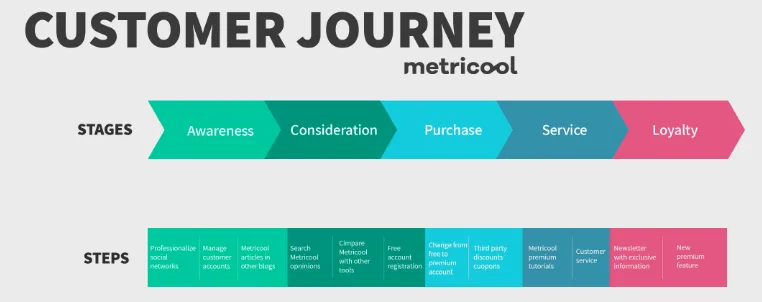
Everyone moves through different stages before becoming a loyal customer. Some people discover your brand and buy quickly, while others take more time to research, compare options, and interact with your content across multiple channels. Understanding these stages helps businesses create more relevant marketing, improve customer experiences, and build stronger long-term relationships.
Awareness
The awareness stage is when customers first discover your brand or realize they have a problem they need to solve. At this point, customers are gathering information and exploring possible solutions.
Common awareness touchpoints include:
- Social media posts
- Search engines
- Online ads
- Influencers
- Recommendations and referrals
Consideration
During the consideration stage, customers begin comparing options and researching different brands. They want to learn more before making a decision.
This stage often includes:
- Reading reviews
- Watching product demo
- Comparing pricing
- Visting websites
- Signing up for emails
Purchase
The purchase stage is when the customer decides to convert. This is one of the most important parts of the customer journey because even small frustrations can lead to abandoned carts or lost sales.
In this stage, businesses should focus on:
- Simple checkout processes
- Clear pricing
- Fast-loading pages
- Easy navigation
- Helpful customer support
Experience and Service
The customer journey does not end after a purchase. The experience customers have after buying plays a major role in customer satisfaction and retention. Positive post-purchase experiences can encourage repeat business and build trust over time.
This stage includes:
- Onboarding
- Customer support
- Product setup
- Follow-up emails
- Troubleshooting help
Loyalty and Advocacy
Loyal customers are more likely to purchase again and recommend your brand to others. This stage focuses on building relationships that last beyond a single transaction.
Strong customer loyalty can lead to:
- Repeat purchases
- Positive reviews
- Word-of-mouth marketing
- Brand advocacy
- Community engagement
How Lifecycle Marketing Supports Every Stage
Lifecycle marketing helps businesses stay connected with customers throughout the entire journey, rather than focusing only on conversions. By understanding customer behavior at each stage, brands can deliver more relevant and personalized experiences over time.
Some common lifecycle marketing strategies include:
- Email automation
- Retargeting campaigns
- Social media scheduling
- Analytics and performance tracking
- Personalized content and recommendations
These strategies help businesses nurture leads, improve retention, and turn customers into long-term advocates.
Common Customer Journey Touchpoints
Customer journey touchpoints are every interaction a person has with your brand, both online and offline. These moments shape how customers discover you, learn about your products, and decide whether to buy or stay loyal. While some touchpoints are obvious, others happen quietly in the background but still have a big impact on the overall customer experience.
Digital Touchpoints
- Website
- Blog content
- Email marketing
- Social media
- Paid ads
- Live chat
Offline Touchpoints
- Events
- Retail experiences
- Customer service calls
- Print materials
The Most Overlooked Touchpoints
- Post-purchase emails
- Help center content
- Response times
- Social DMs
- Mobile experience
Customer Journey Map Example
How to Create a Customer Journey Map
Creating a customer journey map is a powerful tool for businesses to understand and improve the experiences they provide to their customers.
By mapping the interactions and touchpoints customers have with your brand, you can identify areas for improvement and develop targeted strategies to enhance the overall customer experience.
Here’s a step-by-step guide to help you create a customer journey map that drives meaningful change.
1. Define your goals & decide on map type
Before you begin creating your customer journey map, define your goals and decide on the type of map that best fits your objectives. Consider what you hope to accomplish through the map. Which customers are you targeting? Which types of experiences do you want your maps to highlight?
There are several types of customer journey maps. You need to choose the type of map that best fits your goals:
- Current State: Focuses on the customer’s current experience with the brand.
- Future State: Outlines the desired customer experience and the changes needed to achieve it.
- Day-in-the-Life: Examines the customer’s entire day, including interactions with the brand and other activities.
- Empathy Map: Focuses on understanding the customer’s thoughts, feelings, and behaviors.
- Service Blueprint: Combines the customer journey with the internal processes and resources needed to deliver the service.
2. Create buyer personas
Your customer journey map should be tailored to the needs of your target audience. For this, create detailed profiles of your target customers. Conduct market research to gather data on your target audience, including demographics, psychographics, and market trends.
Consider the following for your target audience:
- Demographics: Age, gender, occupation, income, education level, and other relevant demographic information.
- Goals and Objectives: What are their goals and objectives? What do they hope to achieve?
- Pain Points: What are their pain points? What challenges do they face?
- Behaviors: What behaviors do they exhibit? How do they interact with your brand?
- Values and Motivations: What values and motivations drive their decisions?
- Personality Traits: What personality traits do they possess? Are they introverted or extroverted?
Group similar customers together based on their characteristics, needs, and behaviors. And use your buyer personas to tailor your customer journey map to their needs and pain points. Ensure the map is relevant to your target audience by incorporating their goals, pain points, and behaviors.
3. Gather & analyze customer data
To understand the customer journey, collect both internal and external data on customer experiences.
This includes quantitative and qualitative information from various sources:
- Surveys, interviews, testimonials, reviews, and feedback from customer relations teams: Identify pain points that lead to fall-offs during the buying journey.
- Customer feedback: Ask about their experiences, such as how they found your company or what they would like to see improved. Collect feedback through social media, email, and customer support.
- Call center recordings, support logs, and other data: Understand how customers interact with your business.
Analyze the data to identify patterns and trends in customer behavior, preferences, and pain points. This will help you better understand the customer journey and identify areas for improvement.
4. Build a customer journey map
Once you have identified the touchpoints, pain points, and stages, it’s time to create a visual representation of the customer journey. This will help you understand how customers interact with your brand at each stage and identify areas for improvement.
To create the map, follow these steps:
- Start with the Awareness Stage: Begin by mapping the touchpoints and stages from the Awareness Stage to the Post-Purchase Stage.
- Add Touchpoints and Stages: Add each touchpoint and stage to the map, ensuring that they are accurately represented and easy to understand.
- Highlight Pain Points: Highlight the pain points and areas of frustration that customers experience during their journey.
- Add Customer Feelings: Include customer feelings and emotions, such as frustration, confusion, or disappointment, to better understand their experiences.
5. Analyze, make changes & find solutions
Once you have created the map, analyze it to identify areas for improvement and potential solutions.
Ask yourself questions like:
- What are the most common pain points and areas of frustration?
- Where do customers tend to drop off or become frustrated?
- What are the most common complaints or criticisms customers have about your brand?
- What are the most significant opportunities for improvement?
Based on your analysis, identify areas for improvement and potential solutions. Some potential areas for improvement include:
- Streamlining Processes: Simplify or automate processes to reduce wait times and improve efficiency.
- Enhancing Communication: Improve communication by providing clear and consistent information to customers.
- Addressing Technical Issues: Fix technical issues so your website and apps are user-friendly and reliable.
- Providing Personalized Experiences: Tailor your offerings and communication to individual customers’ needs and preferences.
Prioritize the areas for improvement based on their impact on the customer experience and their potential to drive business growth. Focus on the most critical issues first and work your way down the list.
Pain Points That Hurt Conversions
As you probably know, not every customer journey is smooth. Small issues can quickly turn into major drop-offs, especially when people are already deciding between multiple options. These friction points often show up in messaging, user experience, or support, and they can quietly cost businesses conversions without them realizing it.
Common pain points include:
- Confusing messaging: When customers can’t quickly understand what you offer, they leave.
- Slow websites or broken pages: Nobody sticks around waiting for a page to load.
- Poor customer support: Slow or unhelpful responses can push customers toward competitors.
- Too many steps to purchase: We’ve all left a site because checkout felt like homework.
- Generic marketing that feels irrelevant: If it doesn’t feel personal, people tune it out fast.
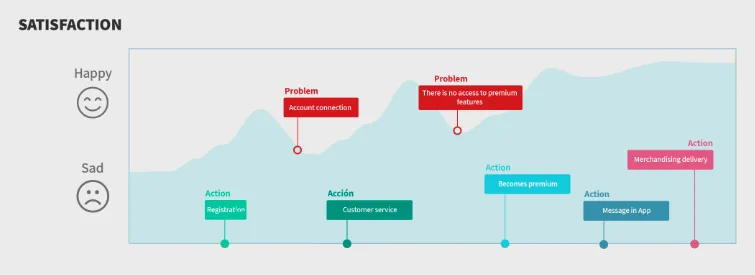
Fixing these issues is often less about big changes and more about removing small moments of friction that interrupt the customer journey.
How Customer Journey Maps Improve Marketing Results
A customer journey map isn’t just a planning tool. It directly improves how your marketing performs. When you understand what customers are doing at each stage, it becomes much easier to meet them with the right message at the right time rather than relying on guesswork. That’s where things start to click across your entire lifecycle marketing strategy.
Here’s what better journey mapping leads to:
- Better personalization: Messaging feels more relevant because it‘s based on real behavior, not assumptions
- Stronger retention: You can spot where customers drop off and fix it before you lose them
- Smart content strategy: Content is created to match each stage of the journey, not just to fill a calendar
- Higher conversion rates: Fewer friction points mean more people actually complete the purchase
- Better customer relationships: Consistent, helpful communication builds trust over time
- Improved ROI: Marketing spend goes further when you focus on what actually drives action
All of this ties back to lifecycle marketing. When you understand the full journey, you stop treating customers like one-time clicks and start marketing to them as long-term relationships.
Customer Journey Analytics Tools
Creating and analyzing customer journey maps can be a complex and time-consuming process. Fortunately, there are several tools available to help streamline this process and provide valuable insights into customer behavior and preferences.
Here are some popular tools that can aid in creating and optimizing customer journey maps:
- Metricool: Provides data on website traffic and social media users, helping you understand the source of traffic and engagement metrics for your brand. This tool is useful for tracking and analyzing online campaigns and their impact on customer behavior.
- Crazy Eggs: Offers website heat maps to analyze user behavior, visualizing how users interact with your website and highlighting high-engagement areas and potential areas for improvement.
- Convert Flow: Helps capture more leads through landings and websites by optimizing the conversion process through user behavior analysis and identifying pain points.
- Wickedreports: A comprehensive tool for creating and optimizing customer journey maps. It analyzes the touchpoints of your online campaigns to help you optimize them for better results.
FAQs
What are the five stages of the customer journey?
The five stages of the customer journey are Awareness, Consideration, Purchase, Experience, and Loyalty/Advocacy. These stages represent how a customer moves from first discovering a brand to becoming a repeat buyer and supporter.
How does a customer journey map help lifecycle marketing?
A customer journey map improves lifecycle marketing by showing how customers behave at each stage. This helps businesses deliver more personalized messaging, targeted emails, relevant content, and better retention strategies based on where someone is in the journey.
How often should you update a customer journey map?
A customer journey map should be updated regularly, typically every 3 to 6 months. It should also be updated whenever there are major changes in customer behavior, marketing strategy, or product offerings. Continuous updates keep the insights accurate and actionable.
What’s the difference between a sales funnel and a customer journey?
A sales funnel is a linear model focused on moving leads towards a purchase, while a customer journey is nonlinear and includes the full experience before and after buying. The funnel ends at conversion, but the journey continues into retention and loyalty.
Can small businesses benefit from customer journey mapping?
Yes, small businesses benefit significantly from customer journey mapping. It helps them understand customer behavior, reduce wasted marketing spend, improve conversions, and create more personalized experiences without needing large budgets or complex systems.
Turn Customer Insights Into Smarter Marketing
Most marketing teams don’t need more content; they need clearer insight into what’s actually working. When you can see how people move across your channels, it gets easier to adjust campaigns, fix weak points, and focus on what drives results.
Metricool brings your social media analytics, scheduling, campaign tracking, audience insights, and performance reporting into one place. It helps you connect content to real behavior so you can make decisions based on data. Try Metricool and tap into a smarter social strategy today.
