

“Likes” Are Dying on LinkedIn While Invisible Interactions Gain Momentum
 Anniston Ward
28 July 2026
Anniston Ward
28 July 2026 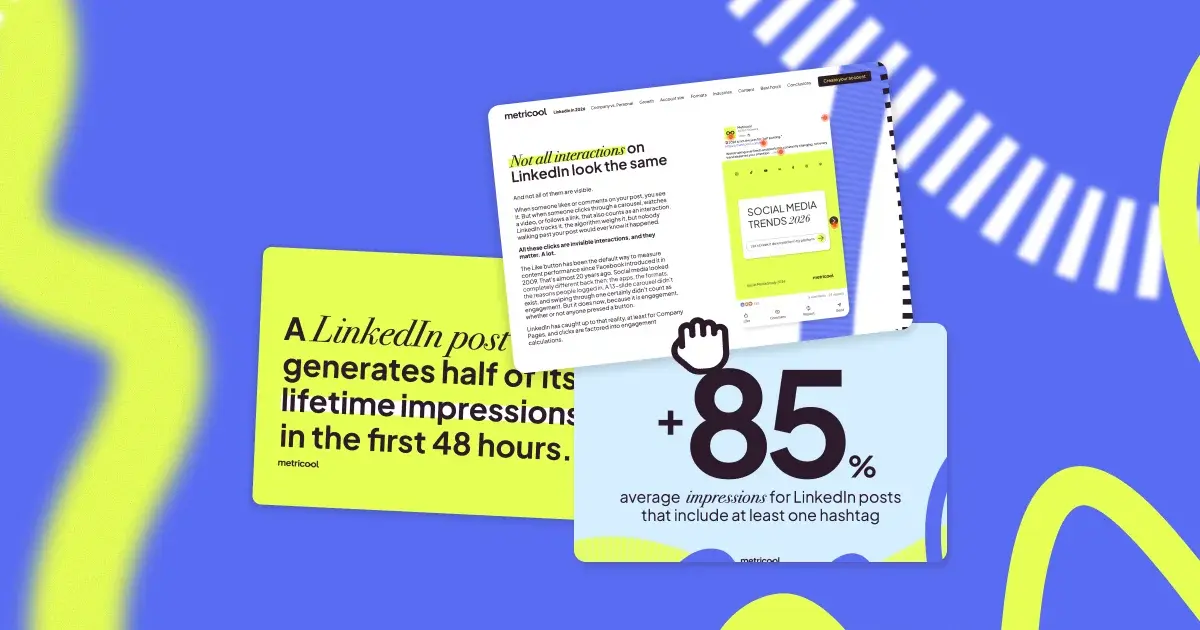
Millions of professionals are changing how they engage on LinkedIn. While we are clicking, watching, swiping, voting, and reading, we’re not always liking, commenting, or sharing in the same way we would on other platforms like Instagram or X.
Public metrics everyone watches are declining, yet overall engagement is growing. At first glance, LinkedIn may seem quieter, but in reality, professional audiences pay closer attention.
Every metric tells a different story depending on the user’s goal, whether awareness, trust, traffic, hiring, sales, or community. The real question is no longer, “How many people liked this?” It is, “What kind of connection did this create?”
For years, likes, comments, and shares became shorthand for impact. Entire content strategies, career brands, and sometimes personal confidence have been built around those numbers.
But visible engagement was never the full picture. It was simply part of the picture available to everyone else.
Recent LinkedIn performance data shows that likes are down 13%, comments are down 17%, and shares are down 10%. On the surface, that sounds like a platform generating less traffic. But overall engagement is up nearly 14%. In other words, people are not necessarily disengaged; they are just engaging differently.
The “like” was always a limited, ambiguous signal. It could mean agreement, politeness, habit, support, or nothing more than a quick tap while scrolling between meetings. Comments and shares can be more meaningful, but also require a risk of exposure.
On a professional platform, where reputation is always part of the environment, public interaction carries weight. People are often careful about what they endorse, debate, or amplify under their real name and job title.
Invisible interactions tell a different story. Clicks, link taps, carousel swipes, profile visits, video views, and poll responses reveal a quieter kind of attention. They show curiosity before commitment. They show that someone paused, explored, compared, or learned, even if they did not announce it.
That behavior is not unique to LinkedIn. It mirrors how people use the internet more broadly. We read articles we never share. We research products before telling anyone we are interested. We follow creators for months before commenting. We consume, evaluate, and form opinions privately long before we participate publicly.
Carousels are a strong example. They invite people to move through an idea step by step, often generating deeper consumption than a simple text post. Polls are another. Though they make up less than 1% of posts, they can drive the deepest impressions on company pages because they offer a low-friction way to participate. A person may not want to write a comment, but they will answer a question. This is engagement with a lower social cost.
This matters because many professionals underestimate their own reach. A post with few comments may still shape opinions or resonance. A carousel with modest likes may still be educating a niche audience. A link with low visibility may still be sending the right people to the right place.
The most interesting shift may be the divide between personal and company voices. Personal profiles drive 63% higher engagement than company pages, which says more than “people trust people, not brands.”
Audiences increasingly want context and lived experience. They want the human interpretation behind the announcement. This is part of the same force behind the creator economy, employee advocacy, and the growing premium on individual voice at work.
I see this constantly as a social media professional. A polished brand post can be useful, but a personal post that explains what a trend means, why a decision was made, or what someone learned in the process sits differently. It feels less like distribution and more like conversation.
Even when people do not visibly respond, they remember the person who helped them understand something. That is the strategic lesson, but it is also a human one.
Professionals have been asked to build personal brands in an environment where public validation feels like proof of relevance. If the visible response is low, it is easy to assume the idea was weak, the audience was uninterested, or the effort was wasted.
But the decline of the like should be freeing, not discouraging. The next era of LinkedIn will reward people who understand the difference between being visibly applauded and being genuinely useful. The goal is not simply to post more carousels, chase polls, or optimize every sentence for reaction.
The goal is to measure presence with more nuance and to keep making an impact, even if it looks quieter than it really is.
