

Does Scheduling Social Media Posts Affect Engagement? Busting the Myth About 3rd Party Social Media Tools
 Gretchen Oestreicher
15 July 2026
Gretchen Oestreicher
15 July 2026 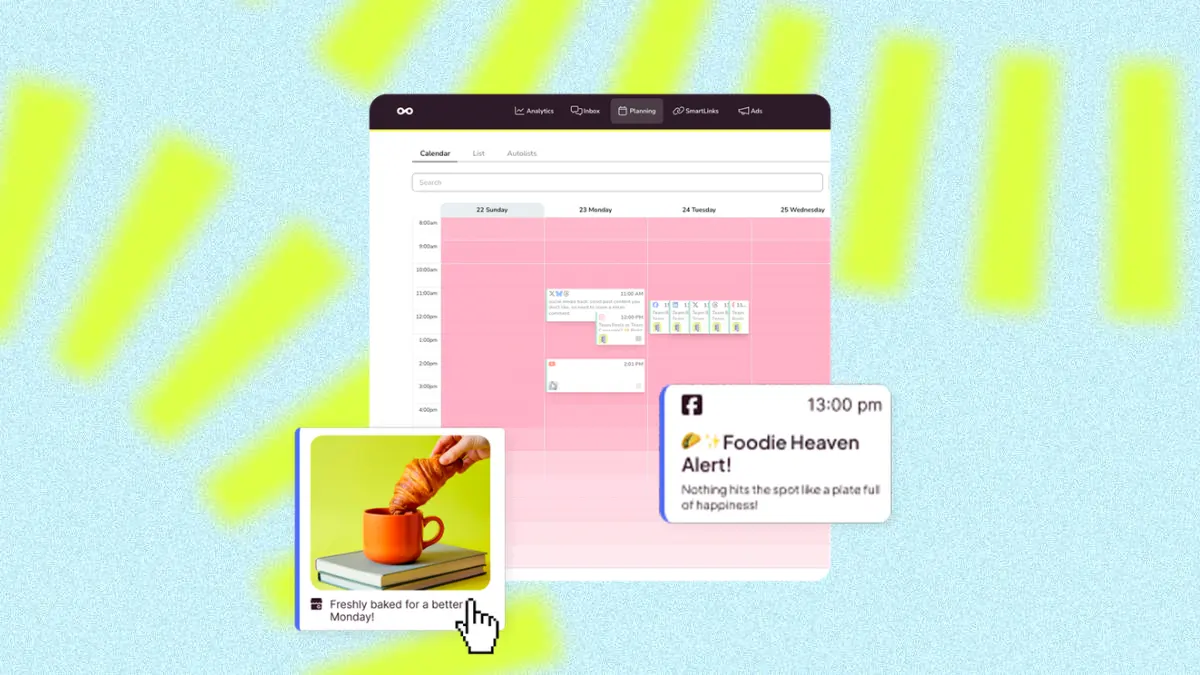
You line up a week of content across Instagram, TikTok, LinkedIn, and the rest, the posts go out on schedule, and one of them comes in below what you expected. That’s usually when the suspicion creeps in: maybe the platform can tell you published from an outside tool.
It’s the kind of social media urban legend that gets repeated when a post underperforms and someone goes looking for a reason. The way the content was shared becomes the easy suspect.
But a scheduled post doing worse than one published by hand doesn’t mean the tool caused it.
So, does scheduling social media posts affect engagement? In this guide we clear up whether scheduling content with Metricool affects your reach, why this myth still hangs around on every platform, and which factors you should check to improve how your posts perform.
Does Scheduling Social Media Posts Affect Engagement?
No, scheduling a post with a third-party social media tool like Metricool doesn’t affect your engagement or reach, on any platform.
Still, this is one of those myths that never fully goes away. After spending hours preparing and planning content, it’s natural to look for an explanation when a post doesn’t perform the way you hoped, and the fact that you scheduled it becomes the quickest answer.
The myth shows up everywhere: Instagram, Facebook, TikTok, LinkedIn, X, YouTube, Pinterest, and Threads. The more it gets repeated, the more people take it as fact. So let’s look at what the platforms themselves actually do.
What the Platforms Say About Scheduled Content
Most major platforms let approved tools publish through their official APIs. Metricool is an official partner of Google, Pinterest, Meta, LinkedIn, and X, and it also connects with TikTok, YouTube, Bluesky, and Twitch through their APIs. Either way, your posts go out through sanctioned integrations, not a workaround the platform is trying to block.
Instagram has been the most explicit about it. Adam Mosseri, the head of Instagram, answered the question head on: scheduling content does not affect your reach, positively or negatively. You can watch him say it in this video.
Since Facebook and Threads are also part of Meta, it’s reasonable to expect they treat scheduled content the same way, even though there isn’t a separate statement for each one.
For the other networks, there’s less of an explicit public statement about scheduling and reach specifically. What we do know is that publishing runs through official integrations, and none of them have said that scheduling changes how your content is distributed.
LinkedIn is where you’ll hear the most worry that scheduling hurts reach, usually as anecdotes rather than anything official. But when you look at what actually drives performance on LinkedIn, a few everyday factors explain those dips better than the tool:
- Timing: A LinkedIn post earns about half of its lifetime impressions in the first 48 hours, and close to 40% of interactions on a personal profile happen on day one. Publish in a weak slot and you lose the window where the post has the most momentum.
- Set-and-Forget Posting: Conversation carries a lot of weight here. Posts with a question get 77% more comments, and a clear call to comment pushes that even higher, by around 80%. Schedule a post and never come back to reply, and you miss the interactions that signal interest.
- Account Type: Personal profiles pull far more interaction than company pages, with roughly 238% more comments per post. A quiet company-page post says more about the account type than about how it was published.
A scheduled post that underperforms on LinkedIn is usually running into one of these, not a penalty for using a tool.
Beyond that, the tool you publish from is only one part of the process, and it doesn’t replace a solid content strategy. Quality, format, audience, timing, and the interactions a post generates all matter more.
This makes sense when you think about how an algorithm decides what to show and to whom. Platforms prioritize signals like the relationship between the person posting and the person viewing (how often they interact), how recent the post is, the interest it earns in its first few minutes, and the format. None of those signals change because a post was scheduled instead of published by hand.
What Limitations Can Third-Party Tools Have?
Scheduling from a third-party social media tool doesn’t mean the platform will cut your reach. The publishing experience, though, isn’t always identical to posting inside each native app.
Third-party tools like Metricool depend on the features each platform opens up through its API. When a platform keeps a feature to its own app, no outside tool can offer it. A few native extras fall into that group, and they vary by platform:
- Instagram: Interactive Story add-ons like polls, links, and GIFs, tagging private accounts, and carousels beyond 10 images.
- Facebook: Tagging users or products, adding a poll, or adding ‘feelings’ to a post.
- Threads: Polls and animated GIFs.
- X: Mixed media in a single post and custom thumbnails.
- LinkedIn: Articles, event posts, and author name customization.
- TikTok: Overlay text, filters, and voiceovers, plus custom cover images on personal accounts.
- YouTube: Community posts and custom thumbnails for Shorts.
- Pinterest: Rich Pins and Story Pins.
- Bluesky: Polls and quote posts.
None of these are reach penalties. When a post needs one, you can prepare it in Metricool and use notification publishing to finish the last step from the app.
Two other things can affect publishing. When a platform launches a new feature, it can take a while before it’s available for scheduling, since the tool has to wait for API access. And as with any connection between platforms, an occasional hiccup can delay or block a specific post. Both touch the publishing process, but neither proves the platform reduces reach because you used an outside tool.
So before you schedule, check whether the content needs a feature that’s only available inside the app. If it does, notification publishing lets you set it up ahead of time and add the final piece there.
A Real Test: 202 Videos Published with Metricool
Beyond Instagram’s official answer, professionals in the field like Resuelta Estudio have wanted to test what happens when they schedule their videos with Metricool.
In their experiment, they analyzed the results of 202 TikTok videos published with Metricool, and here are the numbers they got:
- 43% passed 50,000 views.
- A third reached more than 100,000 views.
- 18 videos hit over a million views.
They shared how they reviewed the data and the conclusion they reached.
The results show that publishing with Metricool doesn’t hold your performance back. In fact, their conclusion points to three factors that all come down to the content itself:
- Choosing a topic your audience cares about.
- Building a structure that holds attention.
- Looking after the quality of the post.
When a post doesn’t get the results you expected, check whether the idea connects with your audience, whether the opening grabs attention, and whether the content holds interest all the way through.
What Affects Reach on Social Media?
If scheduling with a third-party tool like Metricool isn’t behind a drop in reach, then which factors are?
Every platform uses its own algorithms to decide what content it shows, to whom, and for how long. To do that, it analyzes signals like retention, interactions, content relevance, and how the audience responds. The factors below influence exactly those signals, no matter where you post.
1. The Content Isn’t Adapted to Each Platform
Scheduling a post across several platforms saves time, but it doesn’t mean you should share the same piece everywhere.
A video that works on TikTok might need a different pace, length, or text for Instagram Reels or YouTube Shorts. A post written for LinkedIn will probably need changes before it goes out on Facebook, X, or Threads.
Before you schedule content, review:
- The format.
- The length of the text.
- The tone.
- The image sizes for social media.
- The video length.
- The call to action.
- The copy, keywords, or hashtags.
You can start from the same idea, but each post should fit naturally into the platform where it appears.
2. The Format Doesn’t Fit the Idea of the Post
Not every idea works the same as a video, image, carousel, text, or story. The format shapes how the message comes across, how long the audience stays, and what kind of interaction it generates. Each platform also favors different ways of consuming content.
Instagram is a good example that format is more than a creative decision. According to Metricool’s Instagram Study, Reels get the highest average reach, while carousels lead on views and earn nine times more saves than single image posts. The same logic applies elsewhere: a carousel on LinkedIn, a Short on YouTube, or a text post on X each behaves differently.
This doesn’t mean there’s one winning format for everything. What matters is choosing it based on the goal, the platform, and the way your audience consumes content.
If the format doesn’t help people understand, consume, or share the message, the post can perform worse, no matter how it went out, by hand or from a scheduling tool.
3. The Start of the Video Doesn’t Stop the Scroll
In short videos, on TikTok, Reels, or Shorts alike, the first few seconds decide everything.
If the viewer doesn’t understand what they’re about to find, they’ll probably keep scrolling. And if a lot of people drop off at the start, the video has less chance of keeping its distribution.
Before you schedule it, check the hook:
- Is the main idea clear from the start?
- Is the on-screen text easy to read?
- Is there a concrete question or promise?
- Have you cut an intro that runs too long?
- Does the opening shot spark interest?
Scheduling a video helps you get it ready ahead of time, but holding attention comes down to its quality.
4. The Timing Doesn’t Work in Your Favor
There’s no universal hour that works for every account.
The best time to post can vary by platform, country, industry, and audience habits.
You can use the best times to post on social media as a reference and check the recommended slots for Instagram, Facebook, YouTube, and TikTok in the Metricool planner. LinkedIn is included from the Starter plan, and X as a paid add-on.
These recommendations don’t guarantee more reach, but they help you pick your posting time with more judgment and then compare which slots work best for your account.
5. You Publish the Content and Forget the Conversation
Scheduling means you don’t have to rely on an alarm or interrupt your downtime because it’s time to post. But the strategy doesn’t end when the post shows up in the feed.
The data shows that when you invite people to take part, the audience talks more. According to Metricool’s studies, posts that include a question get 37% more comments on Instagram and 77% more on LinkedIn. Adding a clear call to comment pushes that even higher on LinkedIn, by around 80%.
This doesn’t mean every comment turns into more reach. Still, interactions help platforms read the interest a post sparks and, above all, let you build a closer relationship with your community.
That’s why, after publishing, it’s worth:
- Replying to comments.
- Answering common questions and doubts.
- Reviewing how the audience reacts.
- Joining the conversation.
6. You Keep the Posting Frequency but the Quality Drops
A calendar full of content feels reassuring. You see the whole week scheduled and feel like part of the work is already under control.
The problem shows up when keeping that pace forces you to post anything: ideas you’ve already repeated, content prepared in a rush, or posts that fill a slot without adding much.
Scheduling helps you stay consistent, but it shouldn’t make you post without thinking. Posting more doesn’t always mean more reach, interactions, or results. If quality drops and the audience loses interest, the content can have less chance of continuing to spread.
Frequency should fit the time and resources you have. Before adding another post to the calendar, ask yourself:
- Does it bring a new or useful idea?
- Does it answer a real need my audience has?
- Does it inform, entertain, or spark conversation?
- Does it make sense to post now?
You don’t need to post every day to prove your account is still active. It’s better to find a pace you can keep up over time than to fill the calendar with content that goes unnoticed.
A scheduling tool like Metricool should help you work with more order and control, not push you to post for the sake of posting.
What You Gain by Scheduling and Planning Your Content
Scheduling doesn’t work against your reach, and it also gives you back a good chunk of time and headspace. When you plan ahead with a tool like Metricool instead of publishing piece by piece, the day-to-day management of social media gets a lot calmer.
- Post at the Best Times Without Being There: Line your posts up for the slots when your audience is most active, even if that’s a Sunday night or the middle of a busy workday. The post goes out on time while you’re doing something else.
- Plan Weeks or Months in Advance: Instead of scrambling for something to publish each morning, you can map out a full month, spot the gaps, and see how your content fits together before anything goes live.
- Publish Across Platforms at Once: Prepare a piece once and send it to Instagram, Facebook, TikTok, LinkedIn, X, Pinterest, Threads, and YouTube from the same place, adjusting each version for the platform as you go.
- See Everything in One Calendar: A single view of the week or month shows you what’s scheduled where, so you can catch a clash, balance your formats, and keep a steady rhythm without juggling separate apps.
- Batch Your Work and Protect Your Focus: Writing, designing, and scheduling in one sitting means fewer interruptions later. You do the deep work once instead of stopping to post throughout the day.
- Keep Posting Consistently: A planned calendar helps you show up regularly, even during busy weeks, holidays, or time off, so your accounts don’t go quiet when life gets in the way.
- Work as a Team: If you manage content with others or handle client accounts, you can prepare posts, review them, and approve them before they go out, all in the same workspace. The approval workflow is available on the Advanced plan and up.
- Get Your Time Back for Strategy: The hours you save on manual publishing go back into the work that shapes results: studying your analytics, testing formats, and coming up with better ideas.
Is It Worth Scheduling Content on Social Media?
So, does scheduling affect your engagement? No. The way a post is published isn’t what decides how far it travels. What carries a post is the content itself: the idea, the format, the timing, and the conversation you build around it.
Scheduling with a tool like Metricool doesn’t get in the way of any of that. It clears the manual work off your plate so you have room to focus on the parts that actually shape your results. And with your analytics for every platform in one dashboard, you can see what’s working and keep improving based on real data instead of guesswork.
