



How Often Should Businesses Post on Social Media?
 sophie
13 November 2026
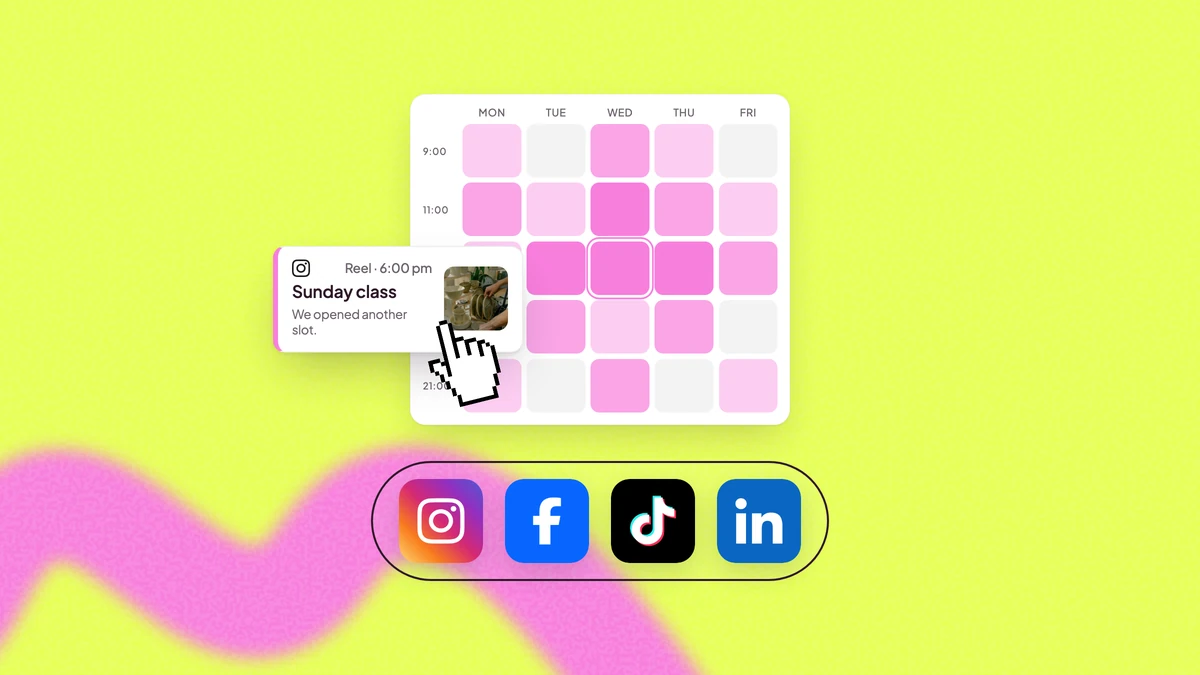
Posting frequency is a constant hot topic for social media marketers. “How often should I post?”, “Should I be posting every day?”, “ Should I post at the same time every day?”, are all questions you may find yourself asking when posting on social media for business. As always, the answer varies, depending on your business needs and the social network in question. But we know “it depends” is not the answer you’re here for, which is why we’ve analyzed over 39 million posts in our 2026 Social Media Study, to understand how post frequency has fluctuated over the past year and help you figure out how often to post. So let’s get into it.
The Stats: How Often to Post for Business?
Every platform works differently: different formats, audiences, and algorithms, so there’s no single number for how often to post that works everywhere. The goal is a posting rhythm you can actually keep up: frequent enough to stay visible, without burning out your team or your followers. Here’s what that looks like, platform by platform.
How Often Should Businesses Post on Instagram?
Instagram rewards two things at once: showing up consistently, and showing up with content that’s actually good. For how often to post on Instagram for business, most people land on the same answer: frequent, but sustainable.
- Feed Posts (Photos, Carousels, Reels): Aim for 3 to 5 posts a week on your main feed. That’s enough to stay visible without wearing your followers out, and it leaves room to mix formats. Quality still wins, and the 2026 data makes the case for it directly: businesses posted both feed posts (+21% weekly frequency) and Reels (+35%) more often last year, but reach fell on both (-31% for feed posts, -35% for Reels), and so did interactions (-44% and -37%). More posts didn’t buy more attention; if anything, it bought less per post. Carousels held up best among individual formats, pulling the highest reach, impressions, and interactions of any Instagram format we tracked, even though they were posted the least often of the three.
- Instagram Stories: Stories are built for frequent, casual content, think one a day at minimum, with plenty of successful accounts posting three or more. Story frequency barely moved in the 2026 data, dipping just 3% (from 8.65 to 8.39 posts a week), which still comfortably clears that one-a-day bar. Impressions, forward taps, and back taps each slipped about 6% alongside it, a mild dip, not a decline worth worrying about.
Ultimately, your ideal frequency on Instagram is whatever you can keep up without the quality slipping. Start small: three feed posts and a few Stories a week, then adjust based on how your audience responds.
How Often Should Businesses Post on Facebook?
Facebook remains a major player for businesses that want to build a community. The platform’s algorithm favors content that encourages conversation and interaction. The question of how often a business should post to Facebook has shifted over the years.
- For Business Pages: Once or twice a day works well for most, enough to stay active without flooding anyone’s feed. Quality carries more weight than volume here too: one or two posts that pull in real comments will outperform a dozen low-effort ones.
- For Groups: You can go much higher. Daily posts, questions, polls, and live videos are what keep a private group genuinely active.
Facebook audiences want a mix of informational and entertaining content, so rotate between photos, links, video, and questions to keep your page from feeling one-note. Photos in particular are worth leaning into: in our 2026 data, businesses posted them only 7% more often last year, but saw reach jump 79%, impressions jump 86%, and interactions jump 90%. Across every format combined, the pattern holds: weekly posting rose just 4%, while reach (+51%), impressions (+57%), and interactions (+56%) all grew far faster than the extra volume alone would explain. The one number that barely moved was engagement rate itself (+3%), which suggests the gains came mostly from reaching more people, not from any sudden shift in how engaged your existing audience already was.
How Often Should Businesses Post on X (Twitter)?
X moves fast, and so does its feed; posts can get buried within minutes, so staying visible here means staying active.
For business accounts, how often to post on X usually means 3 to 5 times a day at minimum, with some brands posting more than a dozen times. Beyond your own posts, X also rewards actually being part of the conversation: replying, reposting, weighing in on what’s trending.
In our 2026 data, X accounts posted 8% more often on average, now over 17 times a week, while impressions dipped slightly (-5%). But interactions rose 12%, and engagement rate rose 19%; the posts that did get seen connected better than they used to, even with modestly lower reach per post.
How Often to Post on LinkedIn?
LinkedIn rewards content that offers real insight, built up over time, from people whose names you start to recognize.
If you’re posting from a personal account, 2 to 5 times a week is enough to build a recognizable voice in your industry. Company Pages can post once or twice a day and still stay top of mind with clients, candidates, and partners.
In the 2026 data, Company Pages actually posted a bit less often (-5% weekly frequency), and impressions (-23%) and raw interactions (-14%) dipped along with it. But engagement rate rose 11%. Fewer, more considered posts are outperforming on a per-post basis, which lines up with LinkedIn’s own preference for posts that spark real conversation over frequent, low-effort updates. Format matters here too: Carousel and multi-image posts get by far the highest engagement (46.23 and 27.98) against roughly 4 to 7 for text, article, and video posts, even though they’re used far less often than a plain text update.
How Often Should Businesses Post on TikTok?
TikTok runs on constant short-form video, and succeeding here means posting often and naturally, not like an ad.
For steady growth, 3 to 5 posts a week is a solid floor, which is enough for the algorithm to learn what you do.
So how often should you post on TikTok to go viral? There’s no trick for it, but volume does raise your odds. Accounts with consistent viral hits are usually posting once a day or more, simply because more videos means more shots at one taking off.
That said, our 2026 data is a useful reality check against “just post more.” TikTok weekly frequency rose almost 22% last year, but reach fell 19%, views fell 17%, interactions fell 32%, and engagement rate dropped 16% right alongside it. More posts didn’t buy more attention; on a per-post basis, performance went the other way. The algorithm still rewards consistency, but this is the clearest evidence in the whole study that consistency without quality just dilutes your results. Test a few different frequencies, watch what your own analytics tell you, and settle into whatever rhythm your audience actually responds to, rather than chasing volume for its own sake.
How Often Should You Post on YouTube?
YouTube asks for a different kind of commitment than TikTok: fewer uploads, more depth in each one.
For your main channel, once a week is the number most successful creators settle on. It’s enough time to actually research, shoot, and edit something worth watching, without running your team into the ground. Some channels post more, but weekly is the pace most people can sustain long-term.
So how often should you post YouTube Shorts?
A lot more often than your main channel; aim for 3 to 5 a week to test ideas, send traffic back to your long-form videos, and stay visible between uploads.
Our 2026 data shows YouTube accounts across main videos and Shorts combined, publishing just under 21 times a week on average, with views up 76% year over year. Interactions (+11%) and comments (+38%) both grew too, though overall engagement rate dipped 37%, which tracks with views growing faster than the response to each one. The takeaway isn’t to chase 20-plus uploads on your main channel; a steady mix of long-form and Shorts is paying off in reach.
Your main goal on YouTube should always be to create valuable, high-quality content that your audience wants to watch. A consistent weekly schedule shows your audience that they can rely on you for new content, which builds a loyal following over time.
How Often Should You Post on Pinterest?
When it comes to Pinterest, the rules are different. Unlike other platforms that prioritize real-time content, Pinterest is a visual search engine where content has a long lifespan. A pin you publish today can continue to get views and saves for months or even years. That changes the posting-frequency question. Pinterest recommends roughly once a week as a baseline, emphasizing relevance over volume. Our own 2026 data backs that up more than you might expect: businesses posted nearly 30% more often last year, from 7.46 to 9.68 pins a week, but impressions actually fell 59%, and interactions fell 48% over that same stretch. The one number that did improve was engagement rate, up about 26%. Read together, that’s a real signal. More pins alone isn’t buying more reach on Pinterest, but the ones that do connect are connecting better, which makes relevance and keyword-smart descriptions worth more of your attention than sheer volume.
The best approach is a schedule you can actually keep up, built around pins that are genuinely worth finding. Scheduling pins in bulk, rather than pinning manually every day, makes that a lot easier to sustain.
Posting Frequency Benchmarks by Industry
Frequency also depends on what you’re selling. Metricool’s 2026 Social Media & Ecommerce Report looked at publishing volume across major consumer categories to see what a realistic posting cadence looks like by industry on Instagram, Facebook, YouTube, and TikTok.
Average Weekly Posting Frequency by Industry (2026)
| Industry | YouTube | TikTok | ||
| Beauty & Personal Care | 5.2 | 3.9 | 3.2 | 4.4 |
| Fashion & Apparel | 4.7 | 4.7 | 1.4 | 5.5 |
| Pet Products | 4.2 | 4.0 | 2.4 | 2.6 |
| Food & Beverage / CPG | 4.1 | 2.6 | 2.1 | 2.7 |
| Outdoor / Fitness Gear | 3.5 | 2.6 | 1.1 | 2.1 |
| Consumer Tech & Gadgets | 3.3 | 2.4 | 5.7 | 1.9 |
| Home Decor & Furniture | 3.4 | 2.8 | 1.4 | 1.7 |
Total Monthly Posts by Industry (2026)
| Industry | YouTube | TikTok | ||
| Beauty & Personal Care | 231 | 122 | 57 | 194 |
| Fashion & Apparel | 248 | 209 | 32 | 196 |
| Pet Products | 168 | 160 | 54 | 92 |
| Food & Beverage / CPG | 180 | 80 | 38 | 121 |
| Outdoor / Fitness Gear | 140 | 92 | 29 | 84 |
| Consumer Tech & Gadgets | 147 | 74 | 126 | 68 |
| Home Decor & Furniture | 150 | 86 | 18 | 38 |
A few patterns stand out once you break the numbers down by industry:
- Visual categories post the most, and the most often: Fashion & Apparel and Beauty & Personal Care lead the pack. Fashion brands post 5.5 times a week on TikTok (196 posts a month) and 4.7 times a week on Instagram (248 a month). Beauty brands aren’t far behind: 5.2 weekly Instagram posts (231 monthly) and 4.4 on TikTok (194 monthly). In visual-heavy categories like these, staying visible in a fast-moving feed takes real volume.
- Consumer Tech leans into long-form video instead: Tech brands post 5.7 times a week on YouTube (126 a month), more than any other category in the study but only 1.9 times a week on TikTok (68 a month). Reviews, unboxings, and tutorials take more time to produce, so tech brands put that effort into YouTube, where that depth gets found in search.
- Some categories split evenly across Meta: Pet Products post almost identically on Instagram (4.2/week, 168 monthly) and Facebook (4.0/week, 160 monthly). Fashion & Apparel does the same with 4.7 times a week on both platforms.
- Slower-consideration purchases post less, and that’s by design: Home Decor & Furniture and Outdoor/Fitness Gear post the least on TikTok (1.7 and 2.1 times a week). When people take longer to decide on a purchase, brands lean on fewer, better-considered posts instead of daily volume.
Use these numbers as a starting point, not a rulebook. Match your own schedule to what your team can actually produce.
Find a Consistent Frequency with Metricool
Keeping all of these schedules straight, across every platform, is a lot to manage on your own, even for someone who’s genuinely organized. That’s exactly the kind of thing a tool like Metricool is built for.
Instead of juggling separate schedules for every platform, you can plan everything from one calendar. Our Best Times to Post feature looks at when your specific audience is actually active and tells you the hours worth posting in so you’re consistent at the right moments.
Plan ahead, schedule it once, and let Metricool handle the timing. Create a free account to put your posting schedule on autopilot.