

Humor in Social Media Marketing: How to Be Funny as a Brand and Stay Credible
 Gretchen Oestreicher
12 October 2026
Gretchen Oestreicher
12 October 2026 
Humor in social media marketing gets people to stop scrolling, react, and pass a post along, all without being asked. Brands like Duolingo, Wendy’s, Liquid Death, and Ryanair have used it to feel like people instead of logos, and their followers treat them that way.
Most brands still steer clear of it. That leaves open space for any business willing to try, global names and the roofing company down the street alike.
Humor belongs to every brand, whatever its size or industry, and the ones that commit to it get remembered.
Why Humor Works in Social Media Marketing
People remember what made them laugh. A laugh fires up the brain’s reward system and releases dopamine, which ties a good feeling to whatever caused it. That’s why you can quote a sitcom from 20 years ago but not last quarter’s product launch.
Audiences also say they want it. Nine in ten people prefer brands that are funny, and 72% would pick a brand that uses humor over a competitor that doesn’t. Yet 95% of business leaders say they’re afraid to use humor with customers (Oracle, 2022). Brands willing to be funny have that whole gap to themselves.
Funny Posts Travel Further
Social platforms reward content that gets comments, shares, and tags, and humor drives all three. When someone sends your post to a friend with “this is so you,” your reach grows without a cent of ad spend. The algorithm reads that activity as a signal to show the post to more people.
Humor Proves There’s a Person Behind the Account
Feeds are full of AI-generated posts that sound polished and interchangeable, and audiences have noticed. Merriam-Webster made “slop” its 2025 word of the year and Macquarie picked “AI slop,” both pointing at the same flood of low-effort content. Safe posts get lost in it, because nobody shares something that didn’t move them.
AI can draft a caption, but it can’t observe your industry’s quirks, laugh at your team’s inside jokes, or know when a moment is funny. A well-timed joke shows followers that a real person with real taste runs the account. That builds trust faster than another carefully neutral post.
Relatable Brands Build Loyalty
People follow creators because those creators make them laugh, and they come back for more. Brands can earn the same habit. A shared laugh turns a transaction into a relationship, and followers who feel that connection are the ones who defend you in the comments and pick you at checkout.
The Four Humor Styles and How Brands Use Them
Psychologists group humor into four styles, and each one carries a different level of risk for a brand. Most brands settle into one or two. Knowing all four helps you spot which suits your voice and which to leave alone.
| Style | What it sounds like | Brand example | Risk |
|---|---|---|---|
| Affiliative | Shared jokes about experiences your audience knows well | Duolingo’s owl guilt-tripping users about their streaks | Low |
| Self-enhancing | Finding the funny side of your own situation | Liquid Death selling canned water like a heavy metal band | Low |
| Self-deprecating | Jokes at your own expense | Ryanair’s TikTok and Beyond Meat’s mock smear campaign against itself | Medium |
| Aggressive | Teasing, sarcasm, and roasts aimed at others | Wendy’s roasting rivals on X | High |
Affiliative Humor
This is banter between friends, applied to your audience’s world. Duolingo built its voice on a feeling every user knows: the guilt of a broken streak. Its owl mascot nags, sulks, and pops up in unhinged TikToks, and anyone who’s ignored a lesson reminder gets the joke right away. No product pitch is needed, because the shared experience does the work.
Self-Enhancing Humor
Here the brand finds humor in its own circumstances without tearing itself down. Liquid Death sells canned water, one of the least exciting products on any shelf, and markets it with skulls, heavy metal energy, and the slogan “Murder Your Thirst.” The brand turned a boring category into the joke, and that joke became the whole identity.
Self-Deprecating Humor
Making yourself the punchline disarms people. Ryanair’s TikTok gives its planes a talking face and roasts budget travel, cramped legroom, and its own reputation before customers can.
Beyond Meat took the idea further in 2026 with “Don’t Believe the Cropaganda,” a mock attack campaign against its own products. It exaggerates the myths about plant-based meat until they sound absurd, then asks people to read the label and decide for themselves.
The limit is your product. Joking about your quirks is charming, while joking about something that genuinely hurts customers comes across as careless.
Aggressive Humor
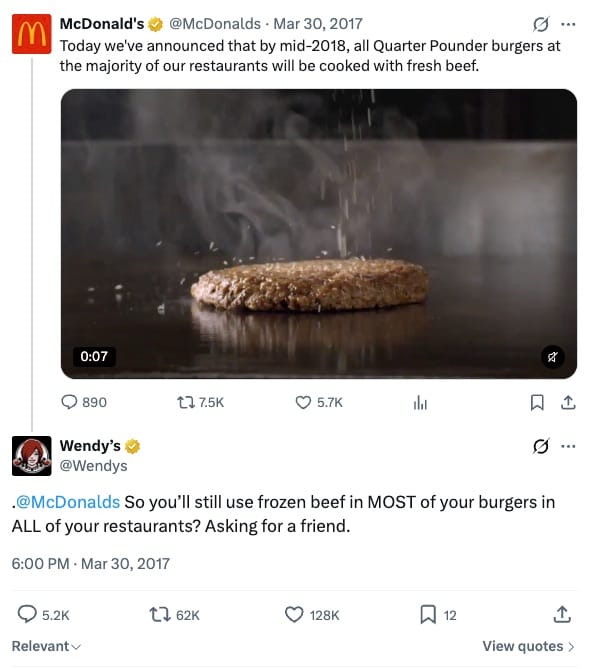
Roasts and put-downs get big reactions, and they’re the hardest style to pull off. Wendy’s made it famous on X by roasting rival burger chains, and its yearly National Roast Day invites followers to ask for a roast of their own. It works because sass is part of who the brand is and the targets are rivals or people who opted in. If it isn’t already part of your strategy, start somewhere safer.
How to Answer the Usual Objections to Brand Humor
Pitch a funny post internally and someone will push back. These are the four objections you’ll hear most, and how to respond when a manager or CEO raises them.
“We Need to Be Taken Seriously”
Funny and credible can live in the same brand. Merriam-Webster is the authority on what words mean, and its social accounts crack dry jokes about trending lookups, misused words, and grammar debates. The humor shows off its expertise, so followers trust it more for being fun.
Posting humor also signals confidence. A leader who can laugh at their industry shows they know it well enough to find the funny parts.
“It’s Too Risky”
Some risk comes with standing out, but you control the size of it. Start small with a witty reply, a caption, or a meme that fits your niche, then build from what your audience responds to. The bigger danger is blending in. With more content published every day and no extra hours to consume it, a safe post rarely gets seen at all.
“What If a Joke Falls Flat?”
Plenty of serious posts flop, and nobody questions the strategy afterward. Humor gets held to a higher bar because a miss feels more personal. A joke that falls flat costs you one post, while a forgettable brand loses attention on every post it publishes. And a post that underperforms on reach may still have made a few of the right people laugh, which builds a stronger connection than a high-reach post nobody remembers.
“We’re Not a Funny Brand”
You don’t need comedy in your DNA. Liquid Death built its entire identity around jokes, which works for canned water but isn’t the only route. Most brands plug humor in instead: a single recurring format, a playful tone in replies, or a quick reaction to a moment.
Nutter Butter showed how far a plug-in approach can go. The decades-old cookie brand had no reputation for comedy until 2024, when it started posting surreal, unsettling TikToks that had people asking whether the account had been hacked. A snack most people hadn’t thought about in years had everyone talking.
Humor Works for Small and Local Businesses Too
Some of the funniest accounts on social belong to businesses with no marketing department. Local businesses have a built-in advantage: their audience is their community, and the people behind the counter are the brand.
Tradespeople Turning Job Sites Into Dance Floors
A whole genre has grown around local HVAC technicians, roofers, and construction crews performing viral TikTok dances in hard hats and high-vis vests, usually to the sparkliest pop anthems they can find. The contrast between a rugged job site and a tightly choreographed dance is the joke. It also shows a crew that gets along and doesn’t take itself too seriously, which is exactly who you want working in your home.
Dan the Funeral Man Makes End-of-Life Planning Approachable
Few topics are harder to joke about than death, which is why Dan Madden’s accounts stand out. The owner of Stark Memorial Funeral Home and Cremation Services in Salem, Ohio, posts as Dan the Funeral Man, pairing trending lip syncs and dances with plain explanations of how funerals and cremation work.
His “FashUrn Week” had him strutting a runway with urns from his selection room to trending audio, and viewers started asking to buy them. The humor stays kind to grieving families and makes it easier to talk about end-of-life plans, a conversation most people put off until they have no choice.
Where to Start as a Small Business
You don’t need a studio or a budget for funny marketing. Your customers already know you, so show them more of the real thing. Film the strange requests, the regulars, and the behind-the-scenes chaos of a normal day. A bakery, dental practice, or auto shop can build a local following with a phone, a trending sound, and a willingness to look a little silly.
A Four-Step Framework for Being Funny as a Brand
A simple four-step process works for brand accounts of any size, and you don’t need to be a comedian to follow it.
1. Tell the Truth
The most relatable humor starts with something real. Look at the world your audience lives in: the people, their habits, the things that annoy them, the rituals nobody questions. The reaction you’re after is “that’s so me” or “that’s so us,” because that’s what makes people tag a friend.
Truth is what powers the tradespeople dance trend and Duolingo’s streak jokes. Everyone recognizes the gruff contractor and the guilty learner. A project management tool could do the same with the meeting that should have been an email, and an accounting firm with the client who hands over a shoebox of receipts in April.
Your truths depend on who you are and who you serve. A nurse, a SaaS sales rep, and a dentist all see different absurdities in a normal day. Write about the world you and your audience know.
2. Build in Surprise
Laughter comes from the unexpected. If the audience can see where a joke is going, their brain gets there first and the laugh never happens. Think of it as a pattern interrupt: something that breaks from what people are used to seeing in their feed, or from what they expect your brand to say.
3. Choose Your Creative Device
This is the vehicle for your jokes, and it’s where your brand gets to set the rules. Options include:
- Recurring Characters: Give the account a face, like Duolingo’s owl or Ryanair’s talking plane.
- Parodies: Borrow the shape of an ad, a genre, or a pop-culture moment, the way Beyond Meat mimicked an attack campaign.
- Formats Built on a Skill: Use something your team already does well, like a crew that can really dance or a staff member who writes jingles.
- Reactions to the Calendar: Post around awareness days, sports events, and news moments your audience already cares about.
Pick a device that ties back to your industry, so the humor reinforces what you do.
4. Commit to It
A one-off funny post can look random, while a series gives people a reason to follow. When a viewer finds a Reel labeled “Part 1,” they hit follow so they don’t miss Part 2. Duolingo stretched a single joke for weeks in 2025 when it announced its owl had died, and fans, creators, and other brands joined in before Duo returned.
Series also take pressure off your team. You’re writing new scripts for a proven format instead of inventing a new concept every week, and your audience will often tell you what they want to see next. Brands can now do on social what used to require a TV commission: build their own shows.
Watch the Webinar: Comedy as a Social Media Strategy
For a comedian’s take on writing jokes for brand accounts, catch Metricool’s webinar on comedy as a social media strategy. A stand-up comic and video creator shares how he turned LinkedIn into his comedy stage, walks through the humor styles brands can borrow, and answers audience questions about getting leadership on board.
How to Match Your Humor to Each Platform
A joke that kills on TikTok can feel out of place on LinkedIn. Adapt the tone, format, and pace to each network instead of cross-posting the same content everywhere, and focus on the platforms where your audience spends its time.
| Platform | What tends to work | Watch out for |
|---|---|---|
| Observational humor about work, office life, and industry clichés | Jokes that punch at colleagues or clients | |
| TikTok | Trend-native skits, absurd characters, and self-aware brand personas | Copying a trend weeks after it peaked |
| Reels series, memes, and playful carousels | Humor that relies on audio without captions | |
| X | Real-time banter, witty replies, and reactions to live events | Replying to trending hashtags you haven’t researched |
| Relatable, broad humor that works for a wide age range | References too niche for a general audience |
LinkedIn Is the Least Crowded Stage
Few people post comedy on LinkedIn, so a funny post gets noticed right away where most sound formal. On TikTok and Instagram, a funny brand competes with millions of creators. On LinkedIn it barely competes at all. The platform is where decision-makers spend time, so B2B brands have the most to gain, and most B2B feeds are still announcements and thought leadership.
Local Humor Needs Local Knowledge
Humor changes across borders even when the language stays the same. British audiences favor dry wit, understatement, and self-deprecation, while US audiences tend to respond to bigger, broader jokes. A nod to a British panel show will sail past most US viewers, and American-style hype can feel try-hard to a UK crowd. If you post to several markets, write for each one or let local teams adapt the jokes.
Timing Makes or Breaks the Joke
Trend-based humor has a short shelf life. A reaction to a viral moment usually needs to go out within hours, or a couple of days at most. If your team can’t move that fast, build around evergreen formats like classic meme templates, GIF replies, and recurring series, and schedule those in advance. Also check the news before a planned funny post goes live: a harmless joke can read as tone-deaf on the wrong day.
Where Brand Humor Goes Wrong
Most brand humor disasters happen by accident, when a team moves fast and skips a check. These are the traps that catch teams most often.
- Punching Down: Stand-up comedians use this term for jokes aimed at people with less power, and it can get performers banned from entire circuits. Stereotypes, jokes about marginalized groups, and culturally insensitive slang have no place in brand content. If you have to ask whether a joke crosses that line, scrap it.
- Joking at a Customer’s Expense: A sarcastic reply to a genuine complaint (or compliment) reads as rude, however clever it seemed. Roast competitors if that’s your style, but treat customers with care.
- Hijacking Hashtags You Haven’t Researched: DiGiorno jumped into #WhyIStayed with a pizza joke, not realizing the hashtag was a space for domestic violence survivors to share their stories. Entenmann’s made a similar mistake with #notguilty, trending after a high-profile murder verdict. Check what a trend is about before joining it.
- Bad Timing: A joke about illness during a health crisis or a playful post during a tragedy makes a brand look tone-deaf. Pause scheduled funny posts when the news turns serious.
- Borrowing Other People’s Jokes: Reposting creators’ tweets or memes without credit has gotten brands into trouble. Draw inspiration widely, but make your take original, and credit the source when you share.
- Going Too Niche: Arby’s once confused most of its followers with a run of anime and gaming references that only a small group understood. Niche humor should still make sense to the majority of your audience.
- Letting the Joke Drift Off-Brand: Followers chose your account for a reason. Content with no link to your industry, product, or audience wastes their time and erodes trust.
- Stretching the Truth for a Laugh: Exaggerating results or product claims can cross into false advertising. A bit of showmanship is fine as long as the facts stay accurate.
- Recycling Stale Jokes: A running theme builds anticipation, but repeating the same punchline wears thin. Keep the format and refresh the material.
How to Measure Whether Your Humor Is Working
Comedians read the room, and brands need to do the same with data. Treat humor in marketing like any other tactic and set a goal before you start, so you know whether a funny post is building awareness, growing followers, or sending traffic to your site.
These metrics show whether your audience is laughing along:
- Shares and Saves: These are the clearest sign someone found a post worth passing on.
- Comments and Their Sentiment: Replies that start conversations or tag friends tell you the most.
- Engagement Rate: Compare it between your humorous and standard posts.
- Follower Growth: Watch it in the days after each episode of a series.
- Profile Visits and Link Clicks: These show whether attention turns into interest.
- Brand Mentions: Count the ones that appear without a post prompting them.
Compare Funny Posts Against the Rest
A single viral joke tells you little. Track humorous posts as their own group and compare their performance with your informational and promotional content over a few months. Reviewing post-level analytics across every network in one place makes the pattern easy to see, and exporting the report lets you share the results with the people who approved the experiment.
Test Before You Scale
If a concept feels risky, try it on a smaller audience first. Test two captions for the same post, run a joke in Stories before turning it into a Reel, or share it with a handful of colleagues from different backgrounds. What’s harmless to one person can read as insensitive to another.
Watch the Competition
Competitor analysis shows how rival accounts perform and what kind of content earns them engagement. If nobody in your industry uses humor, that’s a sign of open territory. If a competitor already owns a certain style, find a different angle.
Plan the Series and Keep Humor Consistent
Recurring formats need a schedule. Map out episodes ahead of time, check the best times to post for each network, and send posts for approval before they go live, so a second pair of eyes checks tone every time. When replies start coming in, keeping comments and messages from every network in one place lets you keep the banter going in real time.
A Pre-Publish Checklist for Funny Posts
The best social media humor looks spontaneous and is usually anything but. Stand-up comedians test the same few minutes at open mics for months before it looks effortless on stage. Run each funny post through these questions before it goes out:
- Is the joke rooted in something true about our audience’s world?
- Does it fit our brand voice and the humor style we’ve chosen?
- Would it surprise people, or can they see the punchline coming?
- Is anyone the target who shouldn’t be, such as a customer or a vulnerable group?
- Have we checked every hashtag, trend, and reference we’re using?
- Is the news cycle calm enough for a joke today?
- Does it suit this platform, or does it need adapting?
- Have at least two people with different perspectives reviewed it?
- Are any product claims still accurate?
- Do we know which metric will tell us whether it worked?
Any Brand Can Learn to Be Funny
Being funny as a brand comes down to a process: start with something true about your audience, add a turn they don’t see coming, pick a format your team can repeat, and stick with it past the first few tries. It’s a set of steps any brand can work through, no comedy background required.
Staying safe has a cost of its own. In a feed with more content than anyone can scroll through, the posts that play it safe are the ones that disappear. So pick one humor style, commit to one format on one platform, and give it a few months. Metricool helps you run that experiment start to finish: schedule the series across your networks, keep approvals on so the tone stays consistent, and track how your funny posts perform next to the rest. From there, you build on the formats your audience rewards.
