


How to Use LinkedIn for Personal Branding (With Examples)
 Kalum
24 November 2026
No one forms an emotional connection with a corporate logo. People connect with other real people who share honest insights, practical lessons, and clear points of view. Learning how to use LinkedIn for personal branding turns your profile from a static digital resume into a consistent driver of inbound leads, speaking invitations, partnerships, and career opportunities.
Unlike platforms built around fleeting entertainment, LinkedIn rewards depth, professional generosity, and clear expertise. When you commit to personal branding on social media, every post you publish builds familiarity before you ever get on a discovery call or send a proposal.
Whether you run an agency, grow a consulting business, build a creator brand, or lead marketing inside a company, knowing how to build your personal brand on LinkedIn gives you an owned distribution channel that compounds over time. Here’s how to optimize your profile from top to bottom, a sustainable LinkedIn content strategy for personal branding, LinkedIn content ideas for personal branding, real LinkedIn personal branding examples, and how to manage the whole workflow with Metricool.
Why LinkedIn Personal Branding Outperforms Company Pages
Many businesses pour hours into polishing their company page while ignoring the personal profiles of their founders, leaders, and team members. On LinkedIn, individual profiles consistently reach more people and spark higher engagement than brand accounts. The data backs this up: in our 2026 LinkedIn Study, we found that personal profiles achieved 63% higher engagement than company pages.LinkedIn users log on to learn from peers, follow industry practitioners, and build real relationships. When someone shares a candid lesson from a recent campaign or breaks down a workflow they built, readers stop scrolling and reply. When a company page posts the same announcement, readers often treat it like an ad and scroll past.
Personal Profile vs. Company Page on LinkedIn
| Factor | Personal Profile | Company Page |
| Organic Feed Reach | High; LinkedIn prioritizes human-to-human posts | Limited; often requires paid promotion for wide reach |
| Audience Trust | Built directly through personal voice, face, and stories | Perceived as official corporate messaging |
| Networking Tools | Direct connection requests, personal DMs, and peer comments | Followers only; cannot initiate personal connection requests |
| Content Flexibility | Can blend tactical advice, personal stories, and candid opinions | Restricted to brand updates, hiring, and formal announcements |
| Lead Conversion | Warm inbound DMs from people who already trust your thinking | Cold website clicks from landing page traffic |
Mastering LinkedIn personal branding doesn’t mean abandoning your company page. Your personal profile acts as the discovery magnet, introducing new people to your thinking and pointing interested readers toward your business, newsletter, or services.
How to Build Personal Brand on LinkedIn: 6-Step Profile Optimization
Before publishing your first post, make sure your profile actually converts visitors into followers and leads. Every time someone reads one of your posts or comments, curious readers click your name to see who you are. A clear, well-structured profile answers three questions within five seconds: who you help, what problems you solve, and what action they should take next.
Step 1: Define Your Positioning and Core Topics
Trying to talk about ten unrelated subjects confuses visitors and weakens your authority. Effective LinkedIn personal branding starts with clear positioning. Choose two or three core themes where your hands-on experience overlaps with what your ideal audience cares about:
- Your core expertise: paid social advertising, B2B content production, ecommerce retention, or agency operations.
- Your perspective and values: transparent pricing, bootstrapped growth, human-first marketing, or sustainable work habits.
- Your target audience: SaaS founders, solo creators, local business owners, or in-house marketing managers.
Step 2: Upgrade Your Headshot and Profile Banner
Visual first impressions set the tone for credibility.
- Profile photo: a crisp, well-lit headshot where your face fills roughly 60% of the frame. A natural smile and clean background outperform a stiff corporate studio portrait or a cropped group photo.
- Banner image: treat the top banner as a clean billboard. Include a concise one-line value proposition explaining what you do, plus subtle proof, client logos, a podcast title, or a pointer to your newsletter or website.
Step 3: Write an Outcome-Focused Headline
Your headline follows you everywhere on LinkedIn: search results, connection requests, post headers, and every comment you leave on someone else’s post. Avoid a generic job title like “Marketing Manager at XYZ Corp“
Use a simple, high-clarity formula: [Role / Expertise] + [Who You Help and the Outcome You Drive] + [Credibility Proof or Personal Note]
- Example 1: “Paid Media Strategist | Helping Ecommerce Brands Scale Profitably with Meta and TikTok Ads | Speaker and Newsletter Writer“
- Example 2: “Founder at Studio North | Building Human-First Content Systems for B2B Teams | Sharing Weekly Lessons on LinkedIn Growth“
Step 4: Turn Your About Section into a Readable Story
Most LinkedIn summaries read like dry third-person biographies stuffed with buzzwords. Write yours in the first person, “I” and “my”, using short paragraphs and bullet points so a mobile reader can scan it:
- The opening hook: the core problem your audience faces, or a bold observation from your career.
- Your background and approach: how you solve that problem, and what shaped your perspective.
- Proof and milestones: concrete results, projects built, or clients helped, without bragging.
- A clear next step: a direct call to action, inviting readers to send a DM, subscribe to your newsletter, or book a call.
Step 5: Curate Your Featured Section as a Conversion Hub
The Featured section sits near the top of your profile and acts as a visual portfolio. Pin three high-value assets here: your best-performing educational post or case study breakdown, a direct link to your lead magnet, newsletter signup, or upcoming event, and a booking link or service overview page for prospective clients.
Step 6: Configure Your Custom Action Button and Handle
Customize your LinkedIn URL (linkedin.com/in/yourname) so it looks clean on resumes, email signatures, and speaker bios. Then set up your custom profile action button (“Visit my website,” “Book an appointment,” “Subscribe to newsletter“) so an interested visitor can act with a single click.
Building a LinkedIn Content Strategy for Personal Branding
A polished profile sets the stage. Consistent publishing is what actually drives discovery. A strong LinkedIn content strategy for personal branding balances authority-building insight with real storytelling, so followers respect your expertise and enjoy your personality.
The Three-Pillar Content Framework
Rotate across three content pillars every week to keep your feed balanced:
- Tactical expertise: step-by-step frameworks, tutorials, campaign teardowns, and practical checklists that solve a specific problem immediately.
- Candid stories and lessons learned: behind-the-scenes reflections, honest mistakes, career turning points, and personal observations that show the human behind the expertise.
- Industry commentary and community prompts: thoughtful takes on recent platform updates, respectful debate around common industry habits, and questions that invite peers to share their own experience.
Embracing Authenticity Over Perfection
Many professionals hesitate to post because they worry about sounding awkward, self-promotional, or “cringe.” In reality, overly polished corporate posts blend into the background, while candid, self-aware storytelling grabs attention and sparks real conversation.
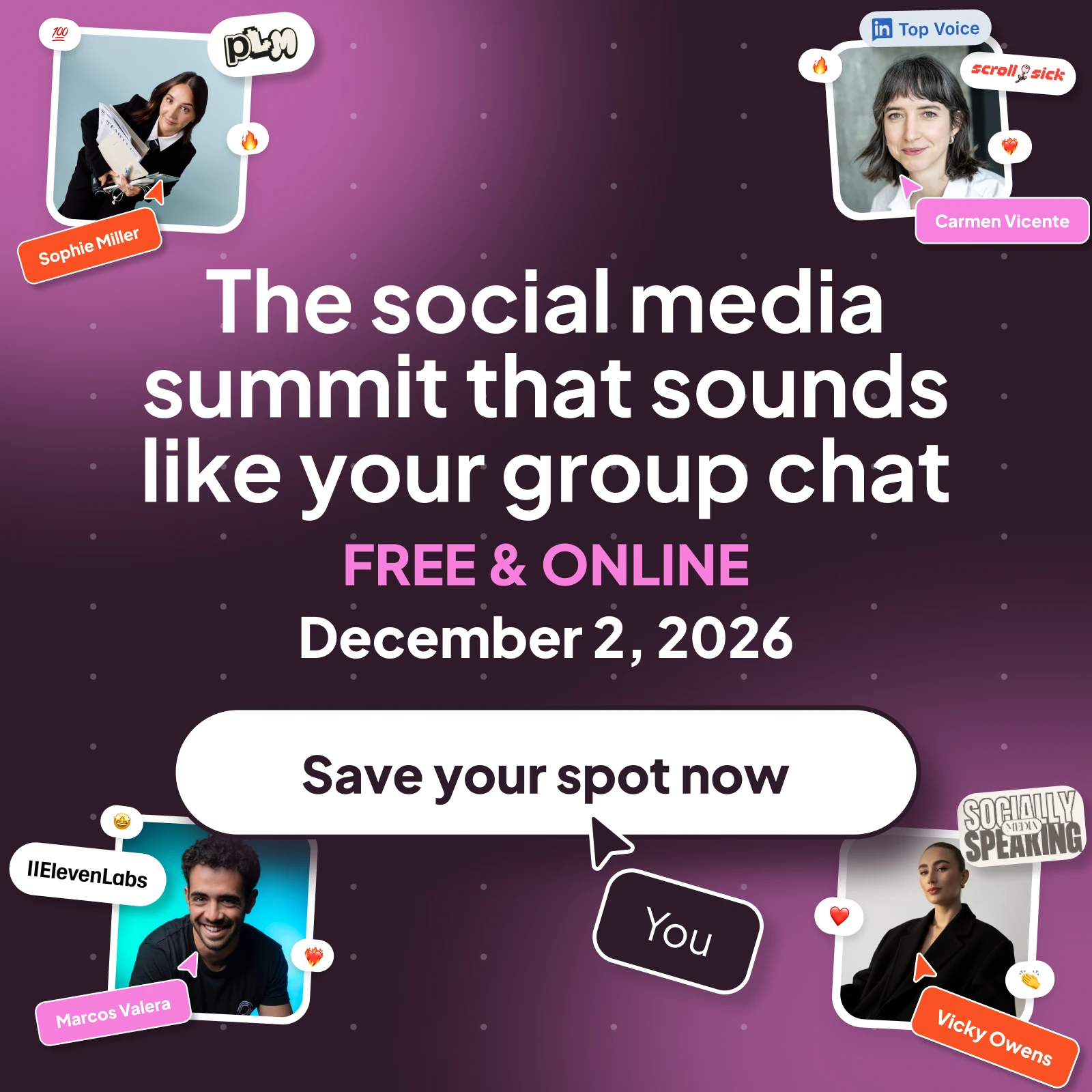
If you want to learn how to drop the fear of looking cringe and turn bold, authentic storytelling into real growth on LinkedIn, Carmen Vicente’s session, “Cringe Is More Fun: The Power of LinkedIn Personal Branding,” at Unfiltered, Metricool’s free online Social Media Summit on December 2, 2026, is built for exactly that. As the founder of Scroll Sick Enterprises, Carmen breaks down how leaning into an unfiltered personality helps you stand out from templated corporate noise and build an audience that actually remembers you. Reserve your free spot at Unfiltered to bring more personality and confidence to your own LinkedIn presence.
Choosing the Right LinkedIn Post Formats
Mixing visual and text formats keeps your audience engaged across different consumption habits on desktop and mobile.
| LinkedIn Format | Ideal Length / Specs | Best Strategic Purpose |
| Structured Text Posts | 120 to 250 words, short 1 to 2 line paragraphs | Quick stories, sharp opinions, conversational prompts |
| Document PDF Carousels | 6 to 10 slides (1080 x 1350 px vertical PDF) | Step-by-step guides, checklists, visual frameworks |
| Text + Authentic Photo | 150 to 300 words with a candid, non-stock photo | Humanizing your brand with behind-the-scenes moments or event takeaways |
| Native Short-Form Video | 45 to 90 seconds, burned-in captions | Demonstrating workflows, face-to-camera advice, building vocal trust |
| LinkedIn Polls | 3 to 4 clear voting options plus a follow-up question | Fast engagement and quick audience research |
Setting a Sustainable Publishing Cadence
Consistency beats sporadic bursts. Aim for 3 to 5 posts a week on weekdays, when professional engagement is highest. Batching your ideas on Friday afternoon or Monday morning means you’re never staring at a blank screen right before hitting publish.
15 LinkedIn Content Ideas for Personal Branding
Running out of topics is one of the biggest obstacles to building a personal brand on LinkedIn. Keep this list of LinkedIn content ideas for personal branding handy whenever you plan your weekly calendar.
Practical Advice
- The Step-by-Step How-To Guide: Break down a repeatable process you use in your daily work into five clear, numbered steps.
Hook: “Here’s the exact 5-step onboarding checklist we use for every new agency client so kickoff calls take 30 minutes instead of 3 hours.“
- The “Before and After” Teardown: Show a weak headline, landing page, ad creative, or cold email next to your rewritten version, and explain the three specific changes that improved performance.
- Curated Tool Stack or Resource List: Share the five tools, templates, or books that save you hours every week, and explain how you actually use each one rather than just listing names.
- Mistake-Prevention Checklist: Highlight common errors beginners make in your field, with a quick fix for each one.
Hook: “4 LinkedIn profile mistakes that quietly cost consultants inbound leads, and how to fix each one in under 10 minutes.”
- Data Breakdown and Plain-Language Takeaway: Take a compelling statistic from a recent industry report, such as Metricool’s Social Media & Ecommerce Report, and explain what the numbers actually mean for everyday practitioners.
Candid Stories, Failures, and Behind-the-Scenes
- An Honest Lesson from a Failed Experiment: Share a campaign, product launch, or business decision that didn’t go as planned, and what you learned.
- “What Changed My Mind About…”: Explain a belief you held two years ago that real experience has since changed. Intellectual honesty builds real respect.
- Behind-the-Scenes Work in Progress: Post a candid photo of your notebook, whiteboard, or messy desk, and explain a project you’re currently building.
- A Career Turning Point Story: Tell the story of a pivotal moment, piece of mentor advice, or difficult decision that shaped your current path.
- A Day-in-the-Life Reality Check: Contrast the glamorous perception of your job title with what your actual Tuesday afternoon looks like. Relatable honesty reliably sparks warm comments.
Industry Opinions, Case Studies, and Community Prompts
- A Respectful Unpopular Opinion: Challenge an outdated rule or overused tactic in your industry with clear reasoning, then invite peers to agree or push back in the comments.
- A Mini Client or Project Case Study: Walk through a specific win using a clean structure: starting problem, action taken, measurable result, key takeaway.
- Answer a Frequent Client Question: Turn a question someone asked you on a sales call or in your DMs into a public post, so dozens of other readers benefit from the answer.
- Industry Trend Analysis: Explain how a new platform feature, algorithm shift, or buyer behavior change actually affects your audience right now.
- A Crowdsourced Peer Prompt: Ask one specific, low-friction question that invites your network to share a favorite tip, book, or workflow habit. Posts that include a question receive 77% more comments.
Hook: “What’s one boundary you set around your workday this year that immediately improved your focus?“
LinkedIn Personal Branding Examples (And Why They Work)
Studying strong LinkedIn personal branding examples shows there’s no single personality type required to succeed. Different professionals build thriving audiences by leaning into their own natural communication strengths.
- The Transparent Agency Founder
- Profile: headline clearly states the niche served and the outcome delivered; Featured section links directly to case studies and a booking calendar.
- Content: weekly breakdowns of real client experiments, with exact numbers, revenue milestones, and operational lessons from scaling a team.
Why it works: prospects see proof of competence every single week, turning cold outreach into warm inbound inquiries from buyers who already trust the founder’s judgment.
- The Tactical Marketing Educator
- Profile: clean banner promoting a weekly newsletter; About section highlights years of hands-on testing across social networks.
- Content: crisp PDF carousels and annotated screenshots showing exact workflows, hook formulas, and analytics benchmarks.
Why it works: readers bookmark and share these posts with their own teams constantly, driving organic reach and steady newsletter signups.
- The Unfiltered, Self-Aware Creator
- Profile: conversational headline with a touch of humor; candid, expressive headshot that stands out from a stiff corporate portrait.
- Content: relatable observations about work culture, honest reflections on imposter syndrome, and bold, unscripted video without worrying about looking polished.
Why it works: embracing real imperfection and humor cuts through a feed full of polished sameness and builds a genuinely loyal community.
- The Niche Technical Specialist
- Profile: positioned as the go-to problem solver for one very specific challenge: GA4 tracking, paid search attribution, or B2B video production.
- Content: complex technical questions answered in plain, jargon-free language through short screen-recorded videos and step-by-step troubleshooting posts.
Why it works: a narrow focus makes them the first person peers tag whenever that exact problem comes up in a comment thread anywhere on LinkedIn.
Daily Engagement Habits That Multiply Your Reach
Publishing great posts is only half of how to use LinkedIn for personal branding. What you do in the 15 minutes before and after posting decides how far your content actually travels.
- Warm up your feed before posting: Spend 10 minutes leaving thoughtful, multi-sentence comments on posts from peers, industry leaders, and target clients right before you publish. It puts your name and headline in front of active users and tends to invite reciprocal engagement.
- Reply fast during the first hour: When people comment on your new post, reply with a follow-up question rather than a one-word acknowledgment. Active comment threads signal to LinkedIn’s algorithm that your post deserves wider distribution.
- Move meaningful conversations to DMs, naturally: When someone leaves thoughtful comments across several of your posts, send a brief, no-pitch message thanking them for their perspective. Real curiosity builds lasting professional relationships without ever feeling spammy.
How to Manage LinkedIn Personal Branding with Metricool
Consistency gets a lot easier once your LinkedIn content strategy lives in a dedicated workspace instead of being reinvented every morning. Metricool supports the whole workflow, from planning through performance tracking.
- Schedule posts and PDF carousels in advance: Connect your LinkedIn personal profile to Metricool’s Content Planner to draft text posts, attach images, upload multi-slide PDF carousels, and schedule native videos for your audience’s peak active hours.
- Track what resonates in Analytics: Open Metricool Analytics to monitor follower growth, impressions, engagement rate, clicks, and post-by-post performance. Comparing your top posts every month shows exactly which topics and formats earn the most saves, comments, and profile visits, so you can refine your content pillars with real data instead of a guess.
- Keep conversations organized: Use Metricool’s Unified Inbox alongside your publishing calendar to stay on top of replies and keep your audience engaged, without losing track of an important thread.