

The Real Benefits of Social Media for Businesses: Reach, Relationships, and Results
 Gretchen Oestreicher
23 February 2026
Gretchen Oestreicher
23 February 2026 
Social media can feel like one more thing on an already full plate. But for most businesses today, it’s where people first discover you, check if you’re credible, compare options, and decide whether to reach out.
Posting randomly when you have a spare moment usually leads to frustration. A strategy changes that. It gives you direction, helps you use your time wisely, and makes your content support real business goals.
Let’s walk through why social media matters for your businesses, and how to build a strategy that feels manageable.
Why Businesses Need Social Media Today
Think of social media as a digital storefront that’s always open. For many people, it’s the first place they interact with your business, often before they visit your website or reach out directly.
When it’s done with intention, social media supports awareness, trust, leads, and sales. It can also do this with smaller budgets and more precise targeting than many traditional channels.
Here’s what social media actually does for businesses today.
Reach And Visibility, Even On Small Budgets
Platforms like Facebook, Instagram, TikTok, and LinkedIn make it possible to connect with people far beyond your immediate area. You do not need a massive following or expensive campaigns to be seen. A single well-timed post, video, or carousel can attract new viewers and potential customers every day.
This visibility is especially valuable for businesses with limited marketing resources. Every post can help introduce your business to people who may never have found it otherwise, expanding your reach without adding overhead.
Brand Awareness And Trust
Before deciding to purchase, many people check social media. Profiles that are empty or inactive for months can raise doubts about a business’s credibility.
Consistent, thoughtful content demonstrates that your business is active, responsive, and paying attention. Key ways social media builds trust include:
- Posting regularly, even a few times each week
- Maintaining a clear visual style and consistent tone
- Responding to comments and direct messages
- Showing the people behind the business, and not just the product
You don’t need to be on every platform. What matters is showing up consistently where your audience already is.
Real Relationships, Not One-Way Posting
Social media is more of a conversation and less of a billboard. Comments, replies, polls, and direct messages create opportunities for meaningful interaction. Over time, these interactions help build familiarity and loyalty.
Consistent engagement helps both potential and existing customers feel seen and heard, strengthening relationships and encouraging repeat business. By responding thoughtfully, you create a sense of support that builds confidence and encourages people to return.
Traffic, Leads, And Sales
Social media supports every stage of the customer journey. Every post can direct audiences to:
- Product or service pages
- Booking or appointment links
- Email sign-up forms
- Free resources or downloadable content
When content is published consistently, social media becomes a steady source of warm traffic rather than a series of unpredictable spikes. This consistency helps create predictable, measurable opportunities for leads and sales.
Customer Support And Feedback In One Place
Many customers now treat social platforms as a first point of contact for questions and concerns. They post feedback, ask for clarification, or share frustrations.
Handled thoughtfully, this interaction is an advantage rather than a challenge. Responding openly shows transparency and builds trust. It also allows you to spot patterns in customer needs and improve your offerings based on direct feedback.
Audience And Market Insights You Can Use
Every platform offers analytics, but the real value comes from identifying patterns over time. Social media gives insight into:
- Who engages with your content most frequently
- Which topics and formats get saved or shared
- When your audience is most active
- What content leads to clicks, inquiries, or messages
Tools like Metricool can make it even easier by showing you all your social media analytics on a single dashboard. These insights allow you to refine your content, messaging, and offers with confidence, helping you focus on what actually resonates with your audience.
A Clear Advantage Over Inconsistent Competitors
Many businesses post sporadically or disappear for weeks at a time. A steady, intentional presence makes your brand easier to find, remember, and choose. Consistency alone often provides a significant edge in crowded markets, helping your business stay top of mind for potential customers.
How To Create A Social Media Strategy As A Business Owner
A social media strategy is a working plan. It helps you decide who you want to reach, what you will share, where you will show up, and how you will measure progress.
Without a plan, content feels reactive. With one, your posts support real business growth.
Here’s a step-by-step way to build a strategy that feels clear and manageable.
1. Clarify Your Goals
Start with the outcome.
Ask yourself: what should social media contribute to my business this quarter?
Common goals include:
- Increasing brand awareness
- Generating leads
- Driving sales
- Building a loyal community
- Reducing customer support pressure
The important step is linking each social goal to a business result.
For example:
- Increase reach on Instagram to support an upcoming launch
- Generate a specific number of qualified leads per month from LinkedIn
- Reduce repetitive support emails by answering common questions through posts and Stories
When your goals are clear, your content has direction. You stop posting for the sake of staying active and start posting with purpose.
2. Define Your Audience And Positioning
You can’t speak to everyone. Trying to usually leads to generic content that blends in.
Get specific about who you want to reach. Think about:
- The questions they ask before buying
- The frustrations they face
- The results they are hoping for
- The tone they respond to
Then define how your business fits into their world. What do you want to be known for? Clear advice? Premium service? Practical solutions?
At the same time, settle on a consistent voice and visual style. Familiarity builds recognition. When someone sees your content, they should know it’s yours without checking the handle.
3. Choose The Right Platforms
There’s no need to be on every platform. You need to be where your audience already spends time.
In general:
- Visual consumer brands often perform well on Instagram and TikTok
- Service-based and B2B businesses often gain traction on LinkedIn
- Educational content can adapt across several networks
Start with one to three platforms you can realistically manage. Consistency on fewer platforms is more effective than scattered activity everywhere.
As your systems improve, you can expand.
4. Build Content Pillars And Formats
Content pillars are the main themes your business consistently shares. They provide focus and prevent repetition while keeping your messaging balanced.
Within each pillar, create content buckets. These are specific angles or topics that support that theme. For example, a “Education” pillar might include how-to tips, quick explanations, or common mistakes to avoid.
Once your pillars and buckets are defined, decide which formats work best on each platform:
- Short-form video
- Carousels
- Static posts
- Stories
- Live sessions
- User-generated content
- Long-form videos
This combination of pillars, buckets, and formats makes planning faster. You can rotate through your themes and formats without guessing what to post each day.
5. Plan A Realistic Posting Schedule
More content doesn’t always mean better performance. Consistency is what builds momentum.
A manageable schedule might look like:
- Instagram: three to five feed posts per week, plus regular Stories
- LinkedIn: three to seven posts per week
- TikTok: several short videos per week
The exact numbers depend on your capacity and audience expectations.
Using a content calendar helps you plan launches, campaigns, and recurring themes ahead of time. This reduces last-minute stress and keeps your messaging aligned with your business priorities.
6. Set Metrics That Match Your Goals
It’s easy to focus on vanity metrics like follower count, but that only tells a small piece of the story. Your strategy can help you track what truly matters to your business.
Match your metrics to your intent:
- For awareness, monitor reach and impressions
- For engagement and interest, track saves, comments, and direct messages
- For action, focus on clicks, leads, and conversions
Review your performance weekly or monthly. Look for patterns over time rather than reacting to one strong or weak post. Trends tell a clearer story than isolated spikes.
7. Combine Organic And Paid Thoughtfully
Organic content builds trust and credibility. Paid campaigns help you reach more of the right people faster.
A practical way to combine both:
- Use organic posts to test messaging and content ideas
- Promote posts that already resonate with your audience
- Run targeted ads around launches, promotions, or lead generation
When you view organic and paid results together, you can see what your audience naturally responds to and where paid support makes sense.
Tips To Strengthen Your Business’s Social Media Over Time
Once your foundation is in place, growth usually comes from small, consistent improvements. You don’t need a full reset. You need steady refinements that build momentum over time.
- Lead with value before promotion: Share insights, tips, or answers that genuinely help your audience before asking for anything in return. When people regularly learn something useful from you, they are far more likely to pay attention when you talk about your services or products.
- Make your first line clear and compelling: The opening line determines whether someone keeps reading or scrolls past. Be direct about what the post is about and why it matters so your audience immediately understands the benefit of staying.
- Repurpose longer content into smaller pieces: One blog post, podcast episode, or long video can become multiple posts across platforms. This saves time, reinforces your message, and helps you stay consistent without constantly creating from scratch.
- Respond to comments and messages consistently: Engagement builds visibility and trust. When you reply thoughtfully and on time, you show that your business is active and attentive, which encourages more people to interact in the future.
- Invite interaction through questions and polls: Give your audience simple ways to participate. Asking for opinions, experiences, or preferences increases engagement and gives you insight into what your community actually cares about.
- Share customer feedback: Testimonials and reviews help reduce hesitation for new buyers. Featuring real feedback regularly reminds your audience that others trust you and have had positive experiences.
- Test different formats and calls to action: Experiment with short videos, carousels, static posts, or text-based updates to see what resonates most. Small adjustments in how you invite people to act can significantly change results over time.
- Post when your audience is active: Use your analytics to identify peak activity times and aim to publish during those windows. Posting when your audience is already online increases the chances of early engagement, which can boost reach.
- Keep quality high, even with a steady schedule: Consistency matters, but rushed content can weaken your overall presence. Clear visuals, readable captions, and focused messaging help every post perform better and reflect your brand well.
- Keep profiles up to date and complete: Make sure business hours, offerings, contact information, and directions are current. Especially for local businesses, an accurate and active profile builds trust, reduces customer frustration, and ensures potential visitors or clients can easily reach you.
Why Metricool Fits into Your Social Media Work
Metricool is built for how businesses of all sizes actually run social media. Not just in theory. In real life, between client calls, orders, and everything else on your list.
It brings planning, publishing, analytics, and ads into one place so social media feels structured instead of scattered.
Here’s how each part supports day-to-day business work.
Scheduling And Calendar
A clear calendar changes how social media feels.
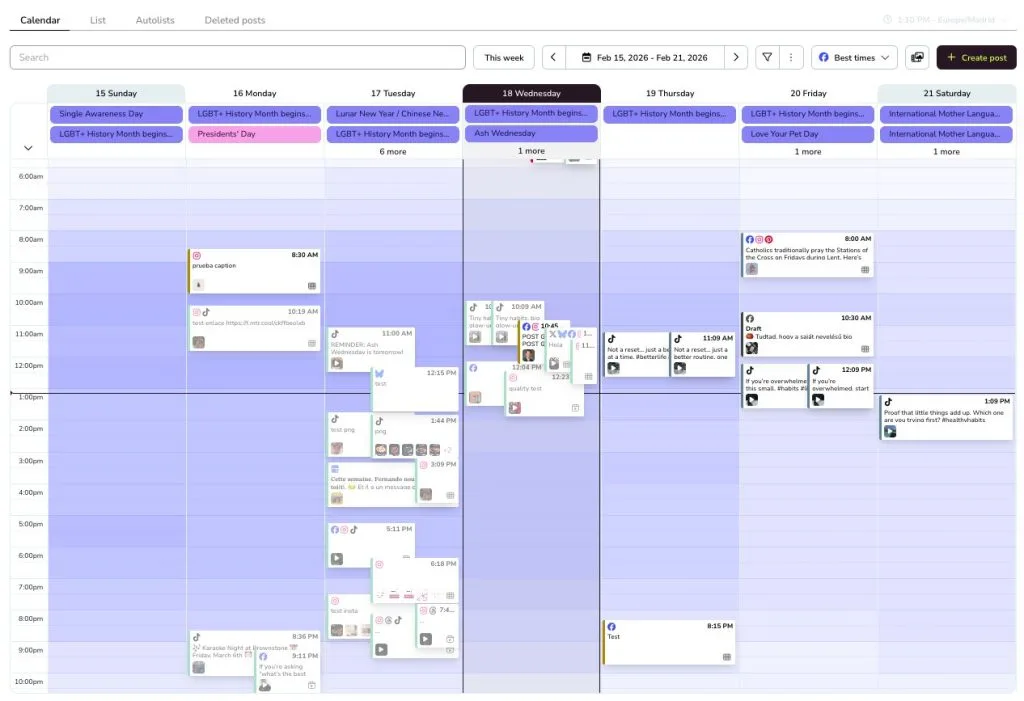
With Metricool, you can plan and schedule posts across platforms from one visual view. That means you can see what’s going out, when, and where without opening multiple tabs or apps.
You can also adapt the same idea for different networks, adjusting captions or formats without starting from scratch each time. This keeps your message consistent while respecting how each platform works.
For small teams or solo business owners, this reduces duplicated effort and makes it easier to keep campaigns aligned. You spend less time coordinating and more time focusing on the work that moves the business forward.
Bulk Scheduling With CSV
When you work in batches, social media becomes much easier to manage.
Bulk scheduling lets you upload a large number of posts at once using a CSV file. After uploading, you can review, edit, and fine-tune everything in the planner before anything goes live.
This is especially helpful when you want to:
- Prepare content ahead of busy periods
- Keep evergreen posts running consistently
- Manage multiple profiles without daily posting stress
For growing businesses, this means fewer interruptions during the week and more control over how content rolls out.
Analytics That Answer Real Questions
Analytics should help you make decisions, not overwhelm you with numbers.
Metricool shows growth, reach, engagement, and clicks across all your profiles in one dashboard. Instead of jumping between platforms, you can see what’s working at a glance.
You can also identify which formats and topics lead to meaningful actions like saves, shares, and conversions. That clarity helps you adjust content based on what your audience responds to, not assumptions.
Clean, easy-to-read reports make it simpler to review performance regularly or share updates with partners, stakeholders, or clients.
Paid Ad Campaigns In Context
For many businesses, organic and paid content work together. Seeing them separately makes planning harder.
Metricool lets you monitor Google, TikTok, and Meta ad performance alongside your organic results. This gives you a fuller picture of what your audience responds to across channels.
You can create Google and Meta ads directly from the platform and compare how the same creatives perform in paid and non-paid formats. Over time, patterns become clearer and you can make smarter budget decisions based on real performance, not trial and error.
AI Support Without Losing Control
Automation should save time, not take decisions away from you.
Metricool’s AI support helps you schedule posts within selected time ranges and adjust frequency across platforms. You stay in charge of what goes out and when.
Before anything is published, you can review and tweak plans. This keeps your content aligned with your brand voice while reducing manual work.
This balance makes it easier to stay consistent without feeling disconnected from the process.
Best Times To Post
Timing matters, but guessing gets tiring.
Metricool shows personalized heatmaps of the best times to post on each platform.
You can use this insight to set recurring posting times with confidence. Over time, this helps your content reach more people without posting more often.
For businesses with limited time, this kind of guidance removes uncertainty and helps every post work a little harder.
Turning Your Strategy into Real Business Growth
Social media is most effective when it is planned and intentional. A clear strategy gives your content purpose, helps you use your time efficiently, and supports the growth of your business.
For businesses, having the right tools makes a big difference. Metricool combines planning, scheduling, analytics, and ad management in one place, so you can see the full picture of your social media performance.
With Metricool, you can organize your content calendar, track what works, and make data-informed decisions without adding extra stress. A practical plan and a reliable platform make social media easier to manage, easier to measure, and more impactful for your business.
