

How to Post on Multiple Social Media Platforms At Once
 sophie
14 September 2026
sophie
14 September 2026 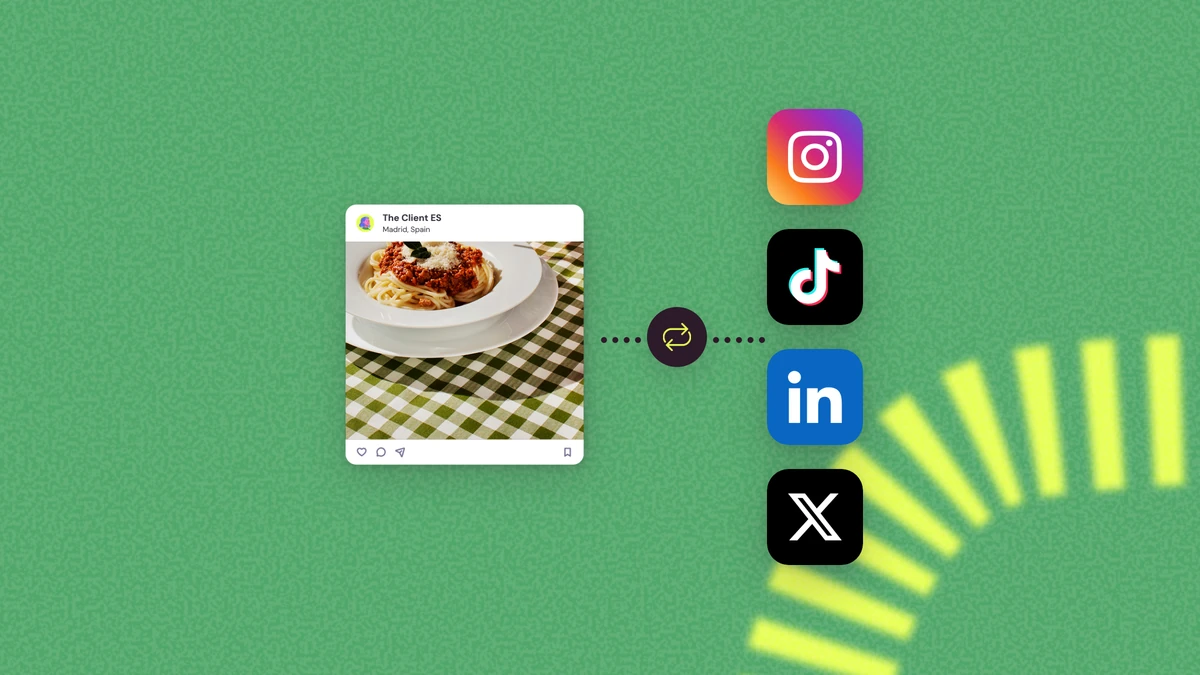
Cross-posting used to mean pasting the same caption onto every platform and hoping it worked everywhere. In 2026 it means taking one piece of content and shaping the file, the words, and the timing to fit each channel, all from one place. You can post to all your social media at once without the copy coming out wrong on half of them. Sometimes you do that in a dashboard, and sometimes you ask an AI assistant to handle it, but either way the days of five open tabs and manual re-uploads are behind you.
What Is Cross-Posting, Really
The word covers three different things that used to get treated as one:
- The File: The video, photos, or carousel. This is mostly the same everywhere, but the shape changes from one network to the next: a 9:16 export for TikTok and Reels, a 16:9 cut for YouTube, a square for the Facebook Feed.
- The Words: The copy around the file. It runs shorter on X and longer on LinkedIn, carries hashtags on Instagram, and opens with a strong hook on TikTok that doesn’t need to exist on YouTube.
- The Timing: When each audience is online. Your TikTok crowd scrolls at 9 PM and your LinkedIn crowd is on at 10 AM, so posting everything at once means hitting at least three networks at the wrong hour.
Old-school cross-posting handled all three the same way: copy, paste, publish. The 2026 version treats them separately, and the tools have caught up to that.
Three Ways to Publish to Multiple Platforms in 2026
Manual, One Platform at a Time: You upload to each app by hand, one after another. Most people still do this for their personal accounts, and it falls apart once you’re running more than a couple. The same things go wrong every time: a post you forgot, a caption that didn’t match, something that went up at the wrong hour because you got the timezone wrong. It’s fine for one or two channels and miserable by the time you hit four.
A Scheduler That Adjusts Each Post: Metricool’s Planner is what most social teams use. You write the post once, tweak it for each network in the same editor, preview how it’ll look on each one, and schedule it for each platform’s best time. It’s the dull, dependable option, which is what you want when you’re publishing on a schedule.
AI Assistants With a Connected Account: This is the newer mode. Metricool’s MCP server connects to AI assistants and automation tools, including Claude, ChatGPT, Cursor, Make, Zapier, and n8n. You ask Claude, “draft an Instagram caption, a LinkedIn post, and a TikTok script from this blog, and schedule them at each platform’s best time tomorrow,” and it does. Nothing publishes without your approval, but the drafting, formatting, and scheduling happen in chat. This is the mode teams are still figuring out, and it’s where you get the most time back.
You don’t have to pick one. Most teams use the scheduler and the AI assistant together, depending on the job.
Turning One Asset into Many Posts
Say you’ve filmed a five-minute product tutorial. Over the next week or two, it turns into:
- YouTube Long-Form: The full five-minute cut in 16:9, with chapters and a description.
- YouTube Shorts, Reels, and TikTok: The strongest 60-second segment, vertical, with the hook up front.
- LinkedIn: A carousel of screenshots from the tutorial, paired with a longer written breakdown for a different audience and a slower pace.
- Facebook Feed: A 4:5 vertical cut with a link back to the full YouTube version.
- X: A short GIF and a thread that breaks down the key steps.
- Threads and Bluesky: A teaser that links to wherever the discussion is more active, phrased for each crowd.
Metricool’s composer holds all of that in one draft. You upload the video once, adjust the cut and the copy per network, and see side-by-side previews before anything goes live. That’s one video turned into seven posts, all inside a single calendar entry.
Handling this in native apps means seven separate uploads and no single view of what’s going out when. A basic scheduler that posts the same thing everywhere is only a little better, since you lose the formats each platform is built around.
Where AI Assistants Change the Job
The Metricool MCP changes what you spend your time on. A few things that stop being manual work:
- Writing the Different Versions: You hand over a blog and ask for an Instagram caption, a LinkedIn post, an X thread, and a TikTok script. Claude reads the blog, writes each version in the right length and tone for that channel, and drops them into the Planner as drafts.
- Reshuffling by Performance: You ask it to move any post from last week that got under 2% engagement into next week’s queue and swap the caption. The assistant reads the analytics, picks the posts, drafts new copy, and stages the reschedule for your approval.
- Weekly Reporting Without the Spreadsheet: You ask for a summary of what worked and what didn’t across all your brands last week. It comes back in prose, based on real numbers, ready to paste into a client update.
You still make the calls on all of it. The copy-pasting and the manual data entry go away, and neither ever needed a person in the first place.
Setup happens once. In Claude, you add Metricool from the Connectors Directory, or through Settings > Connectors > Browse connectors. In ChatGPT, you add it from the Apps section in the sidebar. Either way, you log in, grant access, and it becomes a conversation from there.
How to Cross-Post With Claude and Metricool
Say you’ve published a long-form how-to on YouTube, a full ten-minute walkthrough. You want the highlights running as an Instagram Reel, a YouTube Short, and a TikTok, plus a written thread on Bluesky, X, and Threads. Here’s how to cross-post it with Claude connected to Metricool, and where the line sits between what you do and what Claude handles.
What You Handle First: The video editing. Claude works with words and scheduling, not video, so cutting the vertical clip out of your ten-minute recording is on you or your editor. Export one strong 30-to-60-second segment, vertical, and get it into Metricool as an attachment. Everything after that, Claude can pick up.
1. Give Claude the Source: Paste the video’s transcript or point it at the YouTube link, and say what you’re making.
“Here’s the transcript from my latest YouTube tutorial. I want to promote it as a Reel, a YouTube Short, and a TikTok, plus a thread for Bluesky, X, and Threads.”
2. Ask for the Short-Video Captions: The clip is the same across Reels, Shorts, and TikTok, but the words around it shouldn’t be. Ask for all three at once.
“Write three captions for the same clip: an Instagram Reel caption with a hook in the first line and a few hashtags, a YouTube Shorts title and description, and a TikTok caption. Keep the hook tight on all three since the clip is short.”
Claude writes each one in the shape its platform wants.
3. Ask for the Thread: The written platforms want the how-to spelled out, not a clip. One prompt covers all three.
“Now turn the main steps from the tutorial into a thread. Give me a version for X, one for Threads, and one for Bluesky. The first post has to stand on its own.”
4. Turn It Into a Carousel Too: A how-to breaks down well into a carousel, one step per slide, and it’s a good use of Claude. It can write the slide-by-slide copy straight from your transcript, which leaves you with the design instead of the wording.
“Break the tutorial into a carousel, one step per slide, with a title and one line of copy each.”
You still build the slides, but the words are done.
5. Schedule It All: Claude schedules directly into Metricool through the MCP, at the times you name or at each platform’s best time.
“Schedule the Reel, Short, and TikTok for tomorrow, and spread the threads across the next two days, all at each platform’s best time.”
Claude stages everything and sends back a clickable link to each post.
6. Review Before Anything Publishes: Click any link to open the post in Metricool’s Planner. Check the clip’s crop, tweak a caption, fix the formatting. Nothing goes live until you approve it, and this is also where you’d handle any attachment or formatting detail Claude couldn’t set exactly.
Once the clip is exported, the writing and scheduling take about ten minutes. The first run is slower while you work out how you like to ask, and after that it’s a routine you can run between meetings.
What Claude Can and Can’t Do Here
A few limits are worth knowing before you lean on this workflow:
- Claude Writes and Schedules: Drafting each version, dropping them into the Planner, and scheduling or rescheduling posts all happen in chat.
- You Handle the Video and the Design: Clipping the vertical cut and designing the carousel slides stay with you. Claude does the copy for both, not the visuals.
- The Link Back Is Claude-Only for Now: Scheduling through Claude returns a direct link to each post. The ChatGPT app runs an older version of the integration and doesn’t return that link yet, so on ChatGPT you’d open the Planner yourself for the final check.
- Your Plan Limits Still Apply: On a Free account, you can schedule up to 20 posts and see 30 days of analytics, and Claude Free lets you keep one connector active at a time. Paid plans lift those caps.
When Cross-Posting Is the Wrong Move
Not everything wants to be duplicated. Some cases are worth publishing to one platform and stopping:
- Format-Native Content: X threads, Instagram Stories, TikTok Duets, and LinkedIn polls don’t translate across networks. Reshaping a thread into a LinkedIn slide deck is the kind of thing that reads as “we didn’t have anything for LinkedIn.”
- Sensitive Announcements: Product recalls, layoffs, and apologies need framing that shifts per audience, and the timing often needs to stagger.
- Community-Specific References: Whatever’s catching on with Threads this week probably won’t mean much on LinkedIn.
- Hook Tests: When you’re testing hooks, you want each platform running its own version so you can see which one performs, rather than the same one everywhere.
A good cross-posting workflow makes it easy to opt out per channel. In the Planner, deselecting a network from a post takes one click. Through Claude, it’s a sentence: “skip LinkedIn on this one.”
What 2026 Cross-Posting on Social Media Looks Like
Most teams settle into a similar setup, and the cross-posting tools worth building it around share a few traits:
- One Hub for Everything: A single tool holding the calendar, media, and analytics, which for most teams is Metricool.
- Native Integrations: Direct connections to every relevant platform, so posts publish straight to each network instead of relying on push notifications.
- Editing Built In: Per-platform tweaks that live in the composer, so each post is shaped for its channel in one place.
- An AI Assistant With Account Access: A connection through MCP that handles the drafting and analysis parts of the job.
- Approval Flows: A review step for anyone whose content needs sign-off before it goes live.
Cross-posting in 2026 comes down to shaping one idea for each channel it goes out on, and doing it once instead of rebuilding it seven times over. The setup above is what makes that a normal Tuesday instead of a late-afternoon scramble.
One Draft, Every Platform
Shape a post once and adapt it per network in the same editor, then schedule each one for its best time.
