

Are YouTube Shorts Worth It in 2026?
 Kata
10 November 2026
The short answer is that it very much depends on your objectives, your type of business or the resources you have (video production isn’t so cheap, after all). But as a general rule, Shorts work like moving digital billboards that can put you in front of a lot of people who haven’t heard of you yet, so they’re definitely worth considering for your content mix. That said, according to Metricool’s 2026 Short Form Video Report, they might not get you as many views as TikTok or Instagram Reels. So, are YouTube Shorts really worth it in 2026? Let’s find out.
Do YouTube Shorts Help Your Channel?
To answer that question, let’s look at where your views actually come from. If you think most of a video’s views come from loyal subscribers, that’s not quite the case.
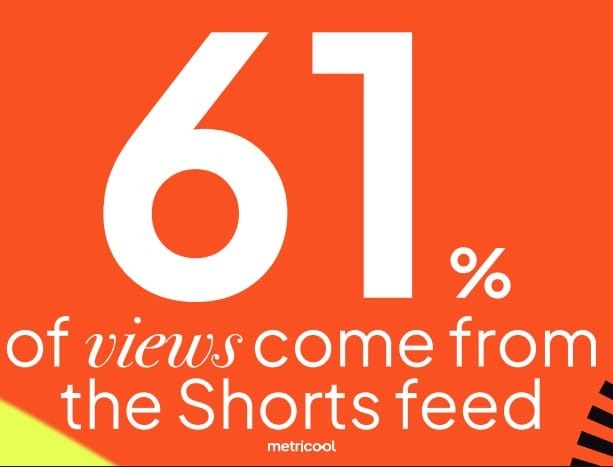
According to our 2026 YouTube Study, more than 61% of views come from the Shorts feed. That feed is an algorithmic recommendation system, so those views don’t come from people searching or from subscriptions. Subscribers account for another 11% of views, and only about 3% of viewers go directly to a channel to find content.
That makes YouTube work more like a social platform than people tend to assume. Yes, it’s a huge search engine, and people do find videos by searching for them. And yes, subscribers count too. But your best chance of reaching new people is the Shorts algorithm, which shows your videos to viewers who are likely to enjoy them. YouTube today works less like a library people browse and more like a feed that brings content to them. It’s the same mechanic that makes TikTok and Instagram feel social.
In other words, your reach depends less on how many people already follow you and more on how YouTube’s recommendation system responds to your content.
How Do Shorts Compare to TikTok and Reels?
Within YouTube, then, Shorts are your biggest source of new viewers, which makes them a strong tool for awareness campaigns. But YouTube isn’t the only place to post short videos. If you’re building your presence from scratch, it’s worth asking how Shorts compare with the other short-video platforms.
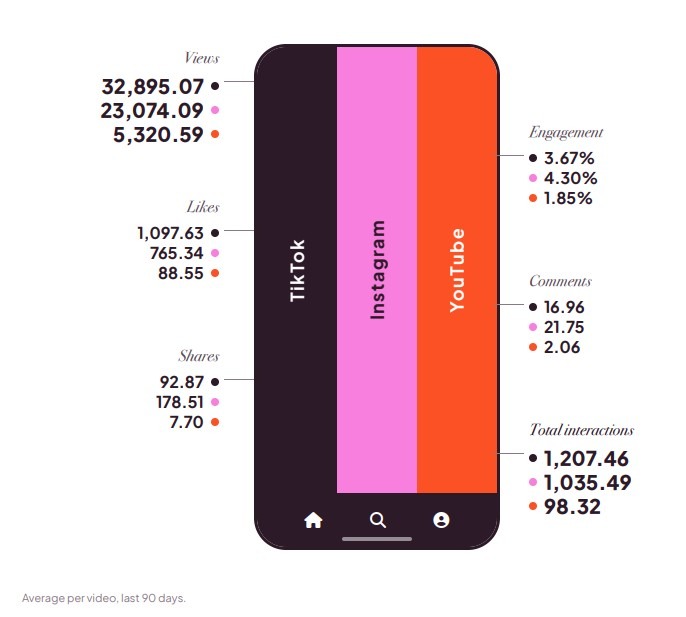
Our latest Short Form Video Report analyzed over 6 million videos from more than 375,000 accounts, and YouTube Shorts came third in every metric.
On average, a Short gets about 5,300 views, compared to around 23,000 for an Instagram Reel and nearly 33,000 for a TikTok video. Engagement tells a similar story: 1.85% on YouTube, 3.67% on TikTok and 4.30% on Instagram.
In the short-video Olympics, that puts YouTube Shorts on the podium, but only with a bronze.
But that’s just the average. For smaller accounts, Shorts perform almost as well as Reels. Tiny accounts (up to 2,000 followers) average around 1,290 views on Shorts, close to Instagram’s 1,480. Small accounts (2,000 to 10,000 followers) get about 5,500 views on Shorts and 6,600 on Reels.
Beyond that, the gap widens fast. Huge accounts (more than 1 million followers) average under 12,000 views on Shorts, while Reels and TikTok videos pass 400,000.
So if you’re just starting out, Shorts can hold their own. The bigger your audience grows, the further TikTok and Instagram pull ahead.
YouTube Shorts Strategy for 2026: What This Means for You
Put these findings together, and Shorts work best as a discovery tool. Here’s how to get the most out of them:
- Keep your expectations realistic: At every account size, TikTok and Reels still get more views and engagement than Shorts.
- If you’re a Tiny or Small account, Shorts are worth a try: This is where they come closest to Reels, so they can be a useful way to get discovered early.
- Judge Shorts by reach, not by interaction: Shorts get the lowest engagement of the three platforms, so likes and comments will undersell them. Track how many new viewers and subscribers they bring in instead.
- Use Shorts to lead people to your long-form videos: Shorts bring in new people, and longer videos are where they can get to know you.
- Repurpose your TikToks or Reels as Shorts: If you already make vertical videos for TikTok or Reels, publishing them as Shorts gets you more reach without much extra work.
- Compare yourself to accounts your size: Averages across all accounts can be misleading. A Tiny account getting 1,500 views per Short is already above average for its size group.
Want to see where your channel stands? Download our YouTube benchmark skill for Claude and compare your results with accounts like yours:
A Brand That Gets It Right: Artisaire
The exception that proves the rule is Artisaire (@artisaire), a brand that posts only Shorts on YouTube and still gets numbers far above the averages.
Artisaire makes wedding invitations and wax seals, and its Shorts show how they’re made, by hand and the traditional way. There’s something hypnotic about watching it happen, and the videos are oddly satisfying to watch.
The numbers back it up. With 25.1K subscribers, Artisaire averages 86K views per video, 6.5 times more than other Medium-sized YouTube accounts (10,000 to 100,000 subscribers). Its videos also average 1.1K interactions, 4.3 times higher than accounts of the same size.
Its average views are more than three times its subscriber count, a clear sign that the Shorts feed is bringing in viewers who don’t follow the channel yet.
So what is Artisaire doing right? Three lessons you can apply to your own Shorts:
- Keep it consistent: Use the same typography, colors and editing rhythm in every video, so viewers recognize your content instantly.
- Make the product the star: Show it in a way that sparks desire, just as Artisaire turns every wax seal into the main event.
- Design for the scroll: The first few seconds decide whether people stay or swipe away.
So, Are YouTube Shorts Worth It?
For most brands and creators, yes, as long as you know what to expect. Shorts won’t beat TikTok or Reels on views or engagement, but they’re YouTube’s main format to grow your reach.
Shorts are especially worth it if:
- You’re a beginner or a small account, because that’s where Shorts come closest to Reels.
- Your business mainly wants to be discovered by new audiences.
- You already make vertical videos for TikTok or Reels, so posting Shorts costs you very little extra time or money.
They may be less of a priority if your main goal is engagement, or if your video budget only covers one platform. In that case, TikTok and Instagram will get you more out of every video you make. Still, the best way to know for sure is to test Shorts with videos you already have and see how they perform for your own account.
How Metricool Can Help You With Shorts
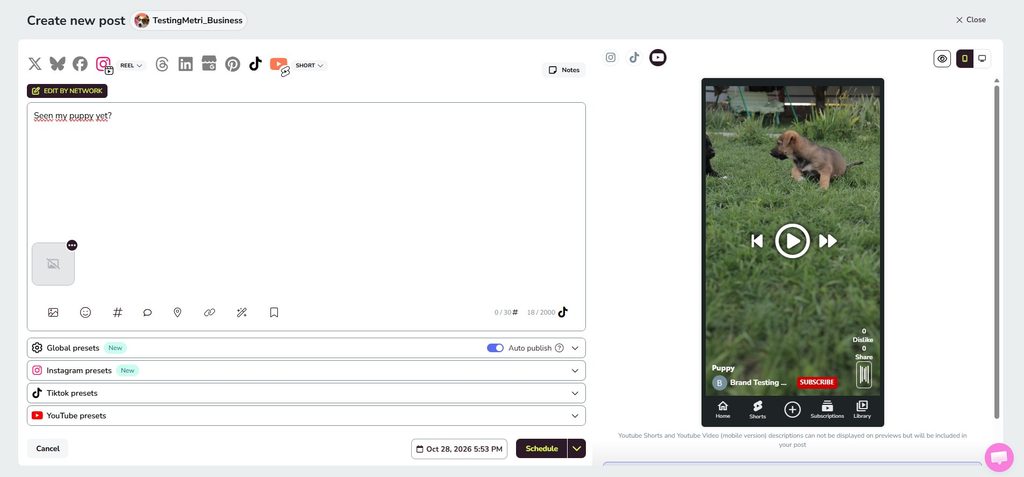
Metricool makes that test easy. You can schedule the same vertical video to Instagram, TikTok and YouTube from one place, all at once, so a single video reaches all three platforms without any extra production work.
Once your Shorts are live, Metricool’s analytics show how they perform next to your Reels and TikTok videos, using the same metrics we used in our report: views, interactions and engagement. That lets you see whether Shorts are bringing you new viewers, or whether your time is better spent somewhere else. You can also track competitors in your niche and compare your results with theirs, not with averages across all accounts.
For more insights on how to grow on YouTube, check out this video:
