

How to Build a Brand Presence on TikTok in 2026
 Gretchen Oestreicher
24 August 2026
Gretchen Oestreicher
24 August 2026 
Building a brand presence on TikTok in 2026 comes down to one thing: giving the algorithm and your audience a reason to keep choosing your content in a feed that’s more crowded than it’s ever been.
The feed is getting more crowded, and it shows. Across 2,314,756 TikTok posts from more than 92,000 accounts, the platform took in nearly 80% more content year over year, while average views per video dropped by about a third. More posts are chasing the same attention, so each one reaches fewer people.
That sounds like bad news for brands, but it plays out differently. TikTok is still the fastest place to grow an audience, and the accounts winning right now tend to share three things: a clear idea, a consistent format, and content built for how people use the app. Budget matters far less than any of them.
The rest comes down to a repeatable set of moves, each one backed by what the data shows works.
What Building a Brand Presence on TikTok Means
A brand presence on TikTok is the personality and point of view you show up with, expressed through the app’s formats, sounds, and trends. It has more to do with becoming a recognizable part of your audience’s feed than with where you place an ad.
That distinction shapes everything. Overtly promotional content struggles here. Entertaining, useful, and relatable content is what earns views, comments, and follows, which is why the strongest brands treat TikTok as a place to connect rather than a billboard.
Define Your Brand Identity First
Before you post anything, get clear on your brand identity: who you are, who you’re for, and the point of view you want people to recognize. On TikTok that identity lives in the details viewers see over and over, your voice, your recurring formats, the way you open a video, and the topics you keep coming back to.
Consistency is what turns those details into recognition. When your videos share a familiar tone and look, people start to know your account before they see the name, and that familiarity is what a brand presence is built on. Write down a short description of your brand in a sentence or two, then check new content against it so your identity stays steady as you grow.
Why TikTok Rewards Brands That Show Up
If audience growth is the goal, TikTok gives you better odds than any other platform.
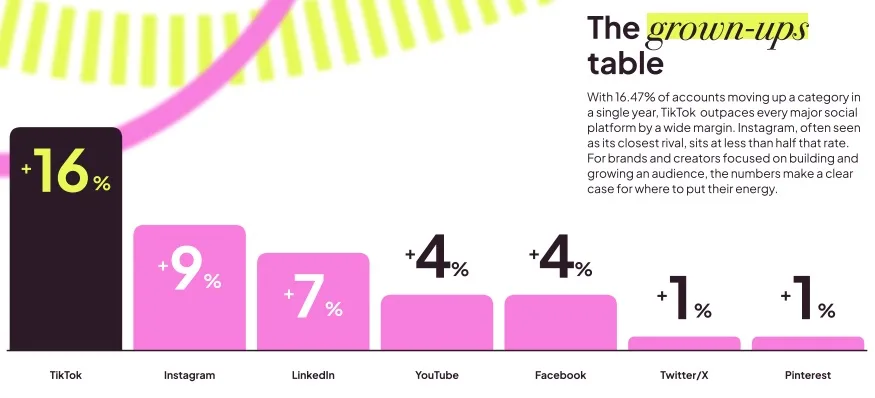
About one in six accounts (16.47%) grew enough to move up a follower tier between 2025 and 2026. That’s more than double Instagram’s rate of 8.87%, and it leaves LinkedIn (6.89%), YouTube (4.36%), and Facebook (3.86%) well behind. Smaller accounts have the most room to run: nearly 28% of Small accounts (2,000 to 10,000 followers) climbed a tier in a single year.
Discovery is the reason. The For You Page drives about 7 of every 10 views (72.70%), and it was the only traffic source that held steady year over year. People trust the feed and regularly watch content from accounts they’ve never heard of, which means a new brand can reach the right viewers without an existing following.
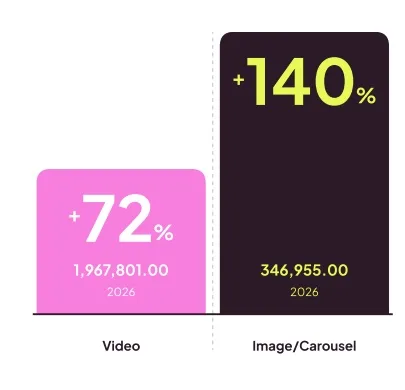
Video is the engine behind all of it. On TikTok, video pulls 5.6x more views and 7.8x more interactions than images or carousels, and for every static post there are roughly five videos. A brand that leans into short video is playing to the platform’s strengths.
How to Build a Brand on TikTok From Scratch
Starting with zero followers isn’t the disadvantage it feels like. Because the For You Page decides who sees a video based on the content itself, a brand new account can reach the right people on its first post, without anyone following it yet. That’s what makes TikTok kinder to new brands than platforms where reach depends on the size of your audience.
The work early on is to give the algorithm a clear, steady signal about who you are and who you’re for. A focused niche, a repeatable format, and consistent posting do more than one big launch push, especially while your account is small and every early view counts. Get those basics right and a new account can grow into a recognizable brand faster than most people expect.
Set Up a TikTok Business Account First
Before anything else, you need the right account type. A TikTok Business account is built for brands and organizations, while a Creator account suits individuals and influencers.
Switching takes a minute:
- Download the TikTok app and log into your account.
- Go to your profile, then open Settings and Privacy.
- Tap Account, then Switch to Business Account.
- Choose a business category and fill in your details.
A Business account gives you access to analytics, contact buttons, and the tools you’ll use to track everything that follows.
Learn the Platform Before You Post
You can’t build a presence on a platform you don’t understand, and TikTok doesn’t work like Facebook or Instagram.
Spend real time in the app first. Watch how trending sounds spread, how creators use duets and stitches, how comment sections take on a life of their own, and what makes you stop scrolling. This is how you pick up the platform’s language, and it’s the difference between content that feels native and content that feels borrowed from somewhere else.
Audiences can tell when a brand is posting content that doesn’t belong on TikTok. Getting familiar with the app gives you a voice your audience recognizes and trusts.
Know Who You’re Talking To
Everything downstream depends on knowing your target audience: their age, location, interests, the trends they join, and when they’re active. Once you’re posting, your account’s analytics turn that guesswork into real audience insights, including demographics you can check against who you thought you were reaching.
The most direct way to learn what works early is a competitive analysis. Study the accounts already reaching an audience like yours, and pay attention to which formats, hooks, and topics pull engagement for them. That gives you a starting point for your own content instead of guessing from scratch.
Don’t box yourself in with assumptions about who’s on TikTok either. The platform’s age range keeps widening, so keep an eye out for unexpected audiences that connect with what you make.
Set Goals You Can Track
A presence built without goals drifts. Decide early whether you’re after brand awareness, follower growth, engagement, website traffic, or sales, because that decision shapes what you create and how you measure it.
Keep goals measurable and realistic. A Business account gives you the analytics to track progress, and starting with achievable targets, then scaling as you find your footing, beats setting a number you can’t hit and losing momentum early.
Build Content Pillars You Can Repeat
Content pillars are the three to five recurring themes your account keeps coming back to. They give you a framework so you’re not starting from a blank page every time, and they keep your feed consistent with your brand and your audience’s interests.
For most brands, a healthy mix includes educational content, entertainment, behind-the-scenes moments, product storytelling, community engagement, and creator or user-generated content. That balance reinforces your message while making it easier to spot which topics drive the strongest results.
What to Post on TikTok as a Brand
Pillars tell you the themes. The next question most brands get stuck on is what to actually post inside them. A few formats reliably earn attention:
- Educational: Quick how-tos, tips, and myth-busting that solve a small problem for your audience in under a minute.
- Behind the Scenes: How your product gets made, a normal day at work, or the story behind a decision. This is where a brand starts to feel human.
- Product in Use: Real demos, before-and-afters, and honest walkthroughs that show what your product does rather than describe it.
- Community and Replies: Video replies to comments, stitches of customer posts, and answers to the questions people keep asking.
- Trend-Led: Trending sounds and formats adapted to your niche, used only when they fit who you are.
Your first posts don’t need to be perfect. A short intro video that explains who you are and what you make gives new viewers a reason to follow, and it’s an easy place to start when the account is empty.
Lead With Video, Then Add Carousels
Video is where TikTok pays out, so it should carry most of your strategy. Front-load the first few seconds with something that stops the scroll: a strong visual, a surprising moment, or a question. You have about three seconds before someone moves on.
Carousels look like a weak format on paper, and the averages back that up. Image and carousel posts grew more than 140% this year, and their engagement rate dropped by roughly half as views and interactions fell. But a handful of accounts across very different niches are getting real results from carousels, which shows the format works when you frame it right:
- Treat Slide One as a Headline: The first frame decides whether anyone swipes. If it doesn’t hook them, nothing else matters.
- Give Value on Every Slide: Step-by-step breakdowns, before-and-afters, or tips people want to screenshot.
- Design for Saves: Checklists, references, and tutorials give people a reason to come back, and saves are where carousels do their best work.
Captions and on-screen text belong in every format. They make your videos understandable with the sound off and let you add context without cluttering the visuals.
Post Consistently at the Right Times
Consistency is what gets a brand surfaced by the algorithm regularly, and TikTok’s recommendation system values steady posting over sudden bursts of volume. Sporadic posting makes it hard to build momentum or learn what’s working.
Timing helps too. Views peak between 6 and 9 p.m., with 8 p.m. the strongest hour, while the day of the week matters far less than the time of day. These are global averages, so check your own analytics for the windows that fit your audience, then schedule around them.
Work With the Algorithm, Not Against It
Since the For You Page drives roughly 7 of 10 views, your real target is the TikTok algorithm rather than your existing followers. You want to give it enough signal to know who should see your content, and hashtags are the clearest way to do that.
Hashtag traffic jumped 114% this year, making it the standout discovery source of 2026. Adding at least one hashtag lifts views by about 5% and interactions by close to 10%. The catch is that random tags won’t help: skip generic ones like #fyp or #viral, and choose specific, descriptive hashtags that tell the algorithm what your post is about. The data says less is more here, so stick to one or two, and never more than five.
As accounts grow, search becomes a bigger traffic source and hashtags carry a little less weight, which is a good reason to write clear, descriptive captions that double as search fuel.
Get People Talking
The comment section is one of TikTok’s most active spaces, and a few small choices push people to join it.
Ask a question. Posts with a question in the caption get about 26% more comments than those without, because a clear prompt gives people an easy reason to reply.
Be careful what you ask for, though. A comment prompt invites people into a conversation, so they reply, and it lifts comments by about 14%. A like prompt asks them to do you a favor for nothing in return, and likes actually drop by nearly 60%. People feel the difference.
Mentions are a size-dependent tactic. Tiny and Small accounts see comments jump more than 45% and reach climb up to 20% when they tag another account, since borrowed attention goes a long way when your own audience is small. Past 100K followers the benefit fades, and Huge accounts actually lose a little reach when they tag, so use mentions while they still move things for you.
Bring in Creators and UGC
Nothing builds trust faster than real people. User-generated content and creator partnerships tend to outperform polished branded content because viewers find them relatable and believable.
Pick creators whose values and audience match your brand, then give them clear guidelines with room to be creative. Their endorsement carries weight their followers already trust, and the content tends to feel like a recommendation rather than an ad. Encourage your own customers to post about your products too, and feature that content back on your profile to show you’re listening.
Join Trends That Fit Your Brand
Trends give your content a chance to reach beyond your usual audience, and joining one can be as simple as a stitch or a duet of a popular video.
Just make sure the trend fits. Forcing your brand into something because it’s popular reads as out of touch, and audiences notice. Watch what’s trending, then take part only when it makes sense for who you are.
Measure, Learn, and Adjust Your TikTok Strategy
Content is the visible part of a strategy, but the data is what tells you whether it worked. Review your analytics regularly to see which posts drive the most reach, views, shares, and comments, then do more of what’s connecting and drop what isn’t.
Timing matters here too. A TikTok post reaches 96% of its total reach and nearly 98% of its interactions within the first 10 days. After that, performance is mostly residual, so judge a post’s success inside that window rather than waiting weeks for numbers that won’t come.
Look past vanity metrics as well. Views and followers tell you reach, but engagement, watch time, and conversions tell you whether your presence is building something.
Common Mistakes to Avoid
Even brands that do well elsewhere stumble on TikTok when they carry over the wrong habits:
- Treating TikTok Like Instagram or Facebook: Reposting polished ads without adapting them for TikTok usually tanks engagement, because the platform rewards native, authentic content.
- Selling Instead of Entertaining: Content that pushes for a conversion before giving any value struggles to build an audience.
- Ignoring Platform Culture: Skipping every trend, sound, and conversation makes a brand look out of place.
- Posting Inconsistently: Sporadic posting stalls momentum and works against the recommendation algorithm.
- Chasing Vanity Metrics: Tracking only views and followers hides the engagement and conversion data that shows impact.
TikTok Brands to Learn From
Some of the most efficient accounts on TikTok belong to small brands with just a few dozen posts, and they’re outperforming much larger competitors on engagement. They win by staying focused on a niche, owning a specific problem, and building content around a repeatable format instead of chasing every trend.
A few examples from the study:
- WildHats: A hat maker with 817,700 followers, averaging around 95,000 interactions per post, roughly 31 times higher than accounts its size.
- Chopsaver: A beauty brand with 18,200 followers, averaging about 16,000 interactions per post, around 21 times its category.
- BobaTribe: A tea merchandiser with 22,200 followers, averaging roughly 20,000 interactions per post, about 27 times higher than similar accounts.
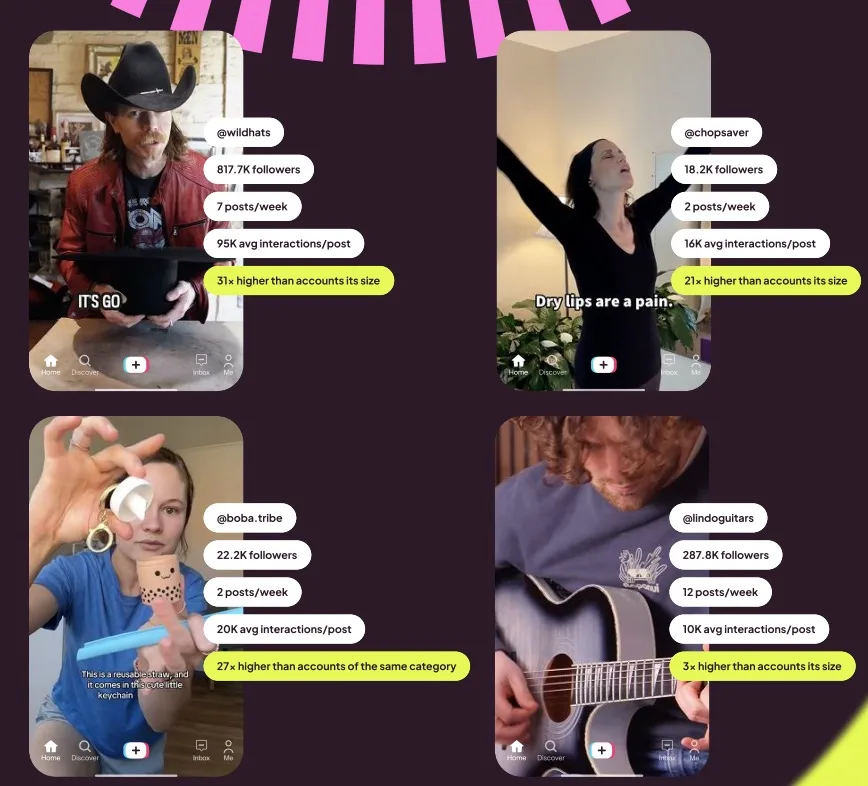
All three win the same way. A clear idea and a consistent format beat a big budget, and TikTok is one of the few platforms where that holds true even against much larger ad spend.
Put the Data to Work
Building a brand presence on TikTok is a repeatable process: understand the platform, know your audience, lead with video, feed the algorithm the right signals, and measure what connects.
Metricool helps you run that process from one dashboard. Schedule your TikToks for peak hours, find hashtags that fit your content, add tracks from the trending songs library, and see exactly what’s working with your own analytics. Create your Metricool account and start building a presence the data says will grow.
See Which Posts Are Building Your Presence
Most of a TikTok post’s reach arrives in the first few days. Metricool shows you what’s connecting while it still matters, so you can focus on that, and drop the rest.
