

Beauty Marketing on Social Media: What 10 Beauty Brands Do Differently
 Gretchen Oestreicher
11 November 2026
You’d expect the brands with the biggest audiences to get the most engagement, but on Instagram, beauty brands get more with fewer followers. In Metricool’s Social Media & Ecommerce Report 2026, food and beverage brands had the largest Instagram audience. A typical beauty post still got almost seven times as many interactions.
Most of that comes down to a few choices behind beauty marketing, and small brands in any category can make the same ones. These brands decide how often to post and which networks get the most attention. They decide what fills the feed, who gets a spot in it, and where their posts send people next. Here’s what each of those choices looks like for the 10 beauty brands in the report, and how to apply them to your own account.
The 10 Beauty Brands Behind the Data
The beauty group mixes established names and newer brands: Topicals, OSEA Malibu, Wonderskin, Bread Beauty Supply, Crown Affair, Kosas, Saie, Bubble Skincare, Merit Beauty, and Vacation. Together they cover skincare (sunscreen included), haircare, and makeup. In August 2026, they published 604 posts on Instagram, Facebook, TikTok, and YouTube. Only fashion brands published more.
Most of the numbers below are medians. A median shows what a typical post gets, and one viral video can’t artificially inflate the data. With 10 brands and one month of data, use these figures to compare their habits with how you post.
What Sets Beauty Marketing Apart on Social Media
They Post on Instagram More Than Any Other Industry
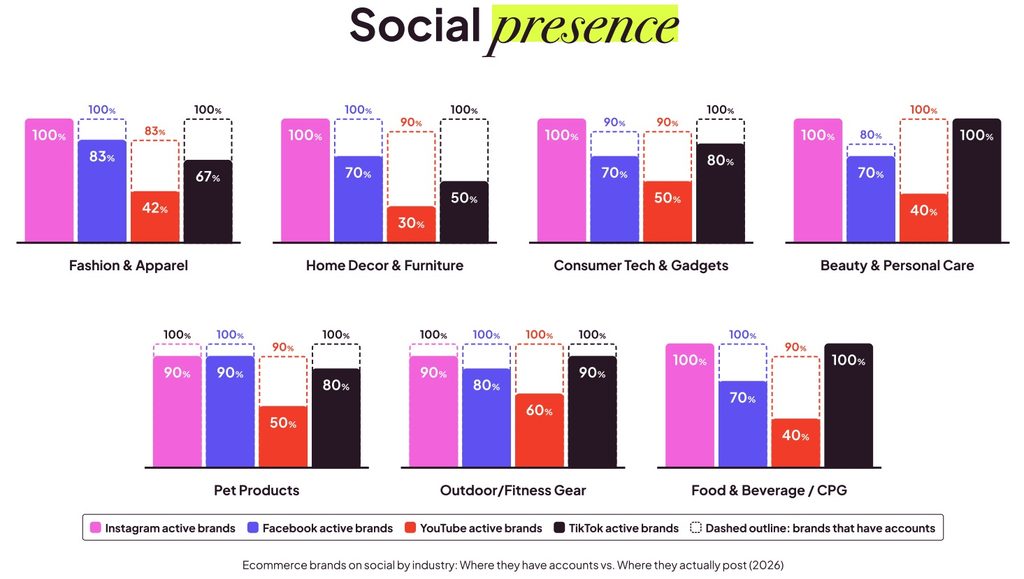
Beauty brands keep the busiest Instagram calendar in the study. They post 5.2 times a week, while most industries post about four times.
The category gives them plenty to talk about. New shades, collections, and collaborations come out so often that there’s nearly always something new to show. Launch posts are one of the two content types that beauty brands publish most.
That effort pays off on some networks more than others. Beauty brands post on Facebook almost four times a week, and a typical post there gets slightly fewer interactions than the study median. If your time is limited, put most of your effort into Instagram and TikTok, where beauty audiences respond. Facebook can run on adapted versions of those posts.
Their Instagram Posts Get More Interactions with Smaller Audiences
On Instagram, a bigger audience doesn’t mean more engagement. Food and beverage brands have the largest Instagram audience in the study, and a typical beauty post still gets almost seven times the interactions of a typical food post. Eight of the 10 beauty brands beat the study median, so the result comes from the category as a whole.
A likely reason is that people already use Instagram to see how a product looks on skin or hair before they buy it. Posts that show the product in use answer a question that followers already have, so they have a reason to stop, look, and comment.
Beauty brand Instagram accounts lean on carousels more than other industries do, and split their posts almost evenly between carousels and Reels. A carousel gives you room for a full shade range, a before and after, or each step of a routine. That’s the detail people look for before buying a product they’ve only seen on a screen.
When you shoot the product, show it on people with different skin tones and hair types, and get close enough that the texture is visible. In Reels, the sound of a product being pumped or swiped adds one more detail that helps followers picture it.
They Treat TikTok as a Main Channel
Most ecommerce brands post far less on TikTok than on Instagram. Beauty brands post on both at a similar pace. Counting ads, they publish more than four TikToks a week, and their audience responds. A typical organic beauty TikTok gets more than seven times the interactions of the study median. Seven of the eight beauty brands with organic TikToks get more than that median.
The way beauty brands use TikTok stands out most in where they send people. TikTok Shop lets people buy inside the app, yet beauty brands rarely tag products. Instead, about a third of their organic TikToks tell viewers which store carries the product. None of the fashion, tech, home decor, or pet brands did this at all.
Saie did this in almost half of its organic TikToks in August. If your products sit on the shelves of a store like Sephora or Target, naming the store gives followers a next step that they already know. Across the study, most posts with a Shop tag were ads, and they reached fewer views than a typical post from the same brand. For now, pointing to a retailer looks like the safer choice.
Trends are a small part of what beauty brands publish, so there’s room to do more with them on TikTok. Across the full study, TikTok posts split almost evenly between launches, product demos, and entertainment and trends. A trending sound or format with your product in it fits the way people use the platform.
To spot those trends early, watch comments, creator videos, and conversations in your category. They show which ingredients, looks, and routines are picking up interest while there’s still time to post about them.
They Ask for Something in Most Captions
Beauty brands are the most direct about what they want people to do next. More than half of their captions ask for something. Across the study, about a third do. Many of those asks point to a store. Bubble Skincare, for example, sent followers to Target for its collaboration with e.l.f.
Within the same brand, captions with a call to action performed as well as captions without one. So naming the store, the launch date, or the shade to pick gives a ready buyer the next step, and your engagement stays where it was.
They Give Creators More Space in the Feed
Beauty gives creators a bigger share of its feed than any other industry in the study. Creator posts make up 9% of what beauty brands publish. That’s about one post in 11, so the brand’s own content still leads.
Influencer marketing for beauty brands has an advantage few categories share. Each creator shows the product on a different face, skin type, or hair texture, so shoppers see results on people who look like them.
When you choose creators, look at who follows them before you look at how many. A creator whose audience shares one concern, like sensitive skin or curly hair, reaches people who already need what you sell. Smaller creators often have this kind of focused following. Ongoing partnerships let followers see the product used more than once, and a dermatologist or esthetician adds credibility to skincare claims.
Customer content gets much less space. Reviews, testimonials, and customer posts make up about 1% of what beauty brands publish. Creators introduce a product, and customers confirm that it does what it promises, so the two work well side by side. Ask permission before you repost a customer’s photo or video, credit them in the caption, and add their posts to the same rotation as your creator content.
They Turn Their TikToks into YouTube Shorts
YouTube is the network that beauty brands use least, and the ones that use it keep the effort low. All 10 beauty brands have a YouTube channel, and four posted in August. Those four post almost nothing but Shorts, and nearly half of their titles reuse a TikTok or Instagram caption. That’s about twice as often as brands across the full study.
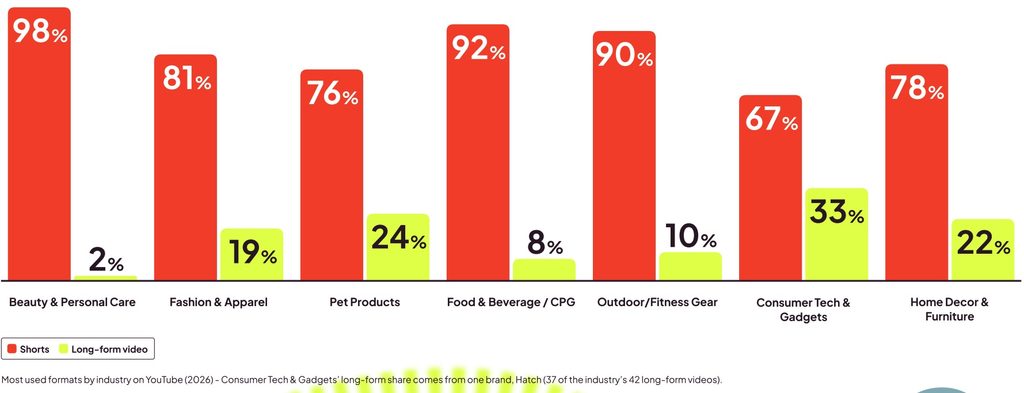
Reposting keeps a channel active for almost no extra work, since the video already exists. If you already post vertical video on TikTok or Instagram, publishing it as a Short gives your YouTube channel a steady flow of content without new filming.
Longer videos have room too. Across the full study, YouTube carried more tutorials and educational content than any other network. A full routine or a detailed tutorial gives your channel something that these beauty brands rarely post.
When you repost, rewrite the caption for each network. Across the study, 13 brands published Facebook posts that still said “link in bio.” That instruction only works on Instagram.
They Build Most Posts Around the Product
The product is at the center of the beauty feed. Launches and product demos together make up more than half of what these brands publish. Across the study as a whole, the share is closer to a third.
Because launches carry so much of the feed, the days before a launch deserve as much planning as the launch post itself. Outside the beauty group, BÉIS posted nine TikTok teasers with the launch date and time in the five days before a launch. Those teasers got about five times the views of its other posts. You can do the same for a beauty launch with creator previews, a countdown sticker in Instagram Stories, and the date in every caption.
Tutorials and community posts, the ones that ask a question or invite people in, have the most room to grow. Both make up a small part of the beauty feed, yet across the study they performed slightly better than a brand’s usual post. Promotions performed the worst of any category, and beauty brands publish them more often than most industries. Moving a few promotional posts to tutorials is an easy test to run.
Community includes what happens after you publish. Replying to comments and answering product questions gives people a reason to come back to your account, and the questions they ask are a ready list of tutorial ideas.
For skincare social media marketing, the most useful tutorials answer the questions people have before they buy. That includes what an ingredient does, which routine fits a skin type, and the order to layer products in.
Other Networks for Beauty Marketing
The report covers Instagram, Facebook, TikTok, and YouTube, and beauty audiences spend time on other networks as well. Three networks outside the report that are worth testing for beauty brands are:
- Pinterest: People use Pinterest to plan looks, routines, and purchases. Pins that show a finished look, a shade range, or a routine can keep sending visitors to your site long after you publish them.
- Reddit: Skincare, makeup, and haircare communities are full of detailed questions and candid product opinions. Reading them shows what people want to know about your category, and those questions can become posts on your other networks. If you post as a brand, check each community’s rules on self-promotion first.
- LinkedIn: LinkedIn suits the business side of a beauty brand, like founder stories, formulation and sourcing decisions, and retail partnerships. It reaches retail buyers, partners, and future employees.
Add a new network once your Instagram and TikTok calendars run smoothly, and start with content that you already have.
How to Build a Beauty Brand Marketing Strategy for a Small Team
You can borrow most of these habits without matching the posting volume of these brands. A weekly plan for a small beauty brand could look like this:
- Two Product Posts: Show one product in use on Instagram and TikTok, and name where to buy it in the caption.
- One Tutorial or Routine: Build the post around one skin type, concern, or hair type, so it speaks to the people most likely to buy.
- One Creator or Customer Post: Ask permission before you reshare a creator video or a customer review, and credit them in the caption.
- One Community or Trend Post: Ask a question your followers can answer, or use a trending format with your product in it.
- Reposts for Other Networks: Turn your best TikTok or Reel of the week into a YouTube Short and a Facebook post, and write a new caption for each.
At the end of each month, compare every post with your account’s median. Look at comments, shares, saves, and clicks, and move more of next month’s calendar toward the content types that perform above your median.
Plan and Measure Your Beauty Content with Metricool
Keeping several networks active is easier when the whole calendar lives in one place. Some of the Metricool features that fit a small beauty team are:
- Scheduling Across Networks: Upload a post once in the Planner, choose the networks, and adjust the caption for each one before it goes out.
- Trending Music for TikTok: If you have a TikTok Business account, you can add trending sounds to your TikTok posts from Metricool.
- Design Integrations: Canva and Adobe Express connect to Metricool, so the carousels and videos you create there are ready to schedule.
- SmartLinks: Build a link-in-bio page that sends followers to your site and to the stores that carry your products.
- Competitor Analysis: Track other beauty brands’ accounts and see which of their posts get the most interactions.
- Analytics for Every Network: See which posts and formats perform best on each network you post on.
For a small team, the Metricool MCP works like another person on your team. It connects your Metricool account to AI assistants such as Claude and ChatGPT, so you can ask for what you need in a normal conversation. From that one conversation, you can draft and schedule a week of posts at your best times, pull last month’s results, or check what competitors posted.
Whatever the size of your team, there’s a Metricool plan that fits. You can add brands, team members, and features as your social media grows.
What Any Brand Can Borrow from Beauty Marketing
Beauty brands show that a smaller account can get more interactions than a bigger one. They post often on the platforms where their audience is, build most of their feed around the product in use, and tell people where to buy. Creators get space in their feed, and their best TikToks go out again as YouTube Shorts. Tutorials and community posts are where most of them still have room to grow.
Those habits work for cookware, running shoes, houseplants, and most other products that people want to see before buying. So the easiest place to start is your next post. Show the product in someone’s hands and tell people where to find it. Then plan the post after that around a tutorial or a creator video.
Plan Your Beauty Content in One Calendar
Schedule posts for Instagram, TikTok, Facebook, YouTube, and Pinterest from one Planner, with a caption written for each network.
